


インドのEVバッテリー製造装置:市場シェア分析、産業動向・統計、成長予測(2025年~2030年)
India Electric Vehicle Battery Manufacturing Equipment - Market Share Analysis, Industry Trends & Statistics, Growth Forecasts (2025 - 2030)


- 発行日
- ページ情報
- 英文 100 Pages
- 納期
- 2~3営業日
- 商品コード
- 1636459
- カスタマイズ可能 お客様のご希望に応じて、既存データの加工や未掲載情報(例:国別セグメント)の追加などの対応が可能です。詳細はお問い合わせください。
- 適宜更新あり 本レポートは最新情報反映のため適宜更新し、内容構成変更を行う場合があります。ご検討の際はお問い合わせください。
- 翻訳ツール提供対象 PDF対応AI翻訳ツールの無料貸し出しサービスのご利用が可能です
概要
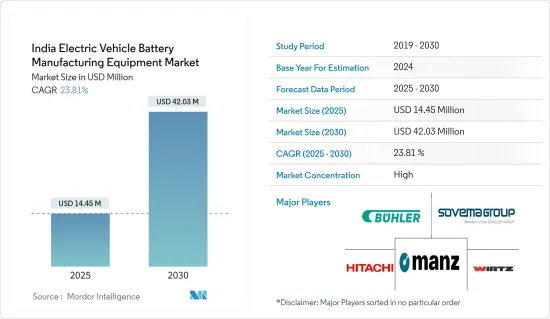
インドのEVバッテリー製造装置の市場規模は2025年に1,445万米ドルと推定され、予測期間(2025-2030年)のCAGRは23.81%で、2030年には4,203万米ドルに達すると予測されます。
主なハイライト
- 中期的には、電池製造に向けた政府の政策や投資の増加、電池原料コストの低下が、予測期間中のEVバッテリー製造装置の需要を牽引すると予想されます。
- 一方、新興経済諸国における技術ノウハウの不足は、EVバッテリー製造装置市場の成長を大きく抑制する可能性があります。
- とはいえ、生産能力の拡大、技術進歩の強化、コスト削減といった電気自動車の長期的な野心的目標は、近い将来、EVバッテリー製造装置市場のプレーヤーに大きなチャンスをもたらすと予想されます。
インドのEVバッテリー製造装置市場動向
電池原材料コストの低下が市場を牽引
- インドの電気自動車(EV)用バッテリー製造業界は、原材料コストの低下により変革の時期を迎えています。リチウム、コバルト、ニッケル、グラファイトなどの主要原材料が値下がりしています。この価格低下は、生産コスト全体を引き下げるだけでなく、EVバッテリーをより手頃な価格にし、EV市場の成長を促進しています。
- リチウムイオン(Li-ion)電池は、電気自動車(EV)市場革命の最前線にあり、電池製造の技術革新に拍車をかけてきました。近年、リチウムイオン電池の世界の価格は大幅に下落し、この動向は今後も続くとみられています。この価格下落は、より多くの消費者が電気自動車を手ごろな価格で購入できるようにする上で重要な役割を果たしています。
- 例えば、ブルームバーグNEFは、2023年のリチウムイオンバッテリー価格が顕著に下落していることを強調しました。価格は139米ドル/kWhまで下落し、13%の下落を反映しました。今後もこの下落傾向は続き、2025年には113米ドル/kWh、2030年には80米ドル/kWhまで下落すると予測されています。
- さらにインドは、リチウム、コバルト、ニッケルといった重要な材料の安定的かつ倫理的な供給を確保するために、協調的な努力を行っています。しかし、この追求には課題がつきまとう。原材料の難問に対処するため、インドは国内の埋蔵量を探り、国際的な協力関係を築こうとしています。同国の焦点は、EV用電池材料の急増する需要を満たすために、その鉱物資源を活用することです。
- 例えば、2023年2月、インド地質調査所(GSI)は、ジャンムー・カシミール州リーシ県のSalal-Haimana地域で590万トンと推定されるリチウムの埋蔵量を発見しました。非鉄金属であるリチウムは、バッテリーのエネルギー貯蔵システムや電気自動車(EV)のバッテリーに欠かせないです。この発見は、EV用リチウム需要の増加に対応するものであり、EVバッテリー製造の設備に対するニーズを増大させるものです。
- さらに、代替材料と電池化学の探求により、高価な原材料への依存度が低下しています。このシフトは経費を削減するだけでなく、電池生産の持続可能性と効率性を高める。企業はまた、電池の性能と寿命をさらに向上させる新材料を発見するための研究開発にも投資しています。
- 例えば、2023年11月、EVバッテリーの分野で著名なSKオン株式会社は、バッテリー材料の大手メーカーであるBASF SEと提携しました。両社の共同ミッションは、北米とアジア太平洋の市場をターゲットに、リチウムイオン電池用の先端材料を開拓することで、特にインドに力を入れています。この提携は、両社の市場ポジションを強化するだけでなく、環境対応自動車セクターが減速しているこの時期に実現しました。このような進歩は、バッテリー価格を押し下げ、EV用バッテリー製造装置に対する需要を当面高めると思われます。
- このようなプロジェクトや技術革新は、予測期間中に地域全体の原材料コストを低下させ、EVバッテリー製造装置の需要を増加させる可能性が高いです。
リチウムイオン電池が市場を独占
- インドでは、リチウムイオン電池の台頭が電気自動車(EV)バッテリー製造装置産業を大きく形成しています。EV用リチウムイオン電池の需要が高まるにつれ、特殊な製造装置のニーズも高まっています。これには、電極を製造する機械、セルを組み立てる機械、形成・エージング工程を行う機械、電池パックを組み立てる機械などが含まれます。インドではEVの販売台数が顕著に増加しており、それと並行して電池需要も急増していることから、効率的でスケーラブルな生産を確保するための高度な製造装置が急務であることが浮き彫りになっています。
- 例えば、国際エネルギー機関(IEA)の報告によると、2023年のインドの電気自動車販売台数は8万2,000台に達し、2022年比で70.8%、2019年比で119倍という驚異的な伸びを示しました。予測によると、EVの販売台数は今後も急増し、同地域のバッテリー製造装置に対する需要はさらに高まる。
- さらに、現地での投資と世界の技術プロバイダーとのパートナーシップの両方を背景に、最先端の製造施設を確立するための協調的な取り組みが行われています。この動きは、技術革新を推進し、生産能力を向上させ、高度なエネルギー貯蔵ソリューションに対する需要の高まりに対応するものです。
- 例えば、オラ・エレクトリックは2024年7月、タミル・ナードゥ州のギガファクトリーに1億米ドルを投資し、国産のリチウムイオン電池を生産する計画を発表しました。同社は来年初頭までに、韓国や中国からの輸入品から自社製のバッテリー・セルに移行する意向です。このような動きは、国内のバッテリー生産を後押しし、ひいては製造装置の需要を高めると予想されます。
- 国内のEV用バッテリー生産を強化するため、インド政府は一連の政策とインセンティブを導入しました。これには、製造装置への補助金、税制優遇措置、電池技術の研究開発支援などが含まれます。
- 例えば、政府は2023年に野心的なEV販売目標を設定し、2030年までに自家用車の30%、商用車の70%、二輪車と三輪車の80%を電動化することを目指しています。さらに、1kWhあたり1万インドルピー(120米ドル)から1万5,000インドルピー(180米ドル)までの補助金優遇措置も導入されました。こうした取り組みにより、EVの生産と販売が促進されるだけでなく、今後数年間はバッテリー製造装置の需要も大幅に増加する見通しです。
- 結論として、政府の後押しと業界の勢いにより、インドにおけるEVバッテリー製造装置の需要は、当分の間、大幅に増加することが予想されます。
インドのEVバッテリー製造装置産業の概要
インドのEVバッテリー製造装置は、適度に統合されています。主なプレーヤー(順不同)は、Manz AG、Wirtz Manufacturing、Buhler AG、Sovema Group S.p.A、日立製作所などです。
その他の特典:
- エクセル形式の市場予測(ME)シート
- 3ヶ月間のアナリスト・サポート
目次
第1章 イントロダクション
- 調査範囲
- 市場の定義
- 調査の前提
第2章 エグゼクティブサマリー
第3章 調査手法
第4章 市場概要
- イントロダクション
- 2029年までの市場規模および需要予測(単位:米ドル)
- 最近の動向と開発
- 政府の規制と政策
- 市場力学
- 促進要因
- 電池製造に向けた政府の政策と投資
- 電池原材料コストの低下
- 抑制要因
- 新興経済諸国における技術ノウハウの不足
- 促進要因
- サプライチェーン分析
- PESTLE分析
- 投資分析
第5章 市場セグメンテーション
- プロセス別
- 混合
- コーティング
- カレンダー
- スリット・電極加工
- その他のプロセス
- バッテリー別
- リチウムイオン
- 鉛蓄電池
- ニッケル水素電池
- その他の電池
第6章 競合情勢
- M&A、合弁事業、提携、協定
- 主要企業の戦略
- 企業プロファイル
- Manz AG
- Hitachi Ltd.
- Wirtz Manufacturing India Pvt. Ltd.
- Buhler AG
- Sovema Group S.p.A
- Tata Chemicals
- Luminous Power Technologies
- kaya Power Group
- ACME Cleantech Solutions
- Inobat
- その他の有名企業一覧
- 市場ランキング分析
第7章 市場機会と今後の動向
- 電気自動車の長期的な野心的目標
目次
Product Code: 50003726
The India Electric Vehicle Battery Manufacturing Equipment Market size is estimated at USD 14.45 million in 2025, and is expected to reach USD 42.03 million by 2030, at a CAGR of 23.81% during the forecast period (2025-2030).
Key Highlights
- Over the medium term, rising government policies and investments towards battery manufacturing and a decline in the cost of battery raw materials are expected to drive the demand for electric vehicle battery manufacturing equipment during the forecast period.
- On the other hand, the shortage of technological know-how in developing economies can significantly restrain the growth of the electric vehicle battery manufacturing equipment market.
- Nevertheless, the long-term ambitious targets for electric vehicles like scaling up production capacity, enhancing technological advancements, and reducing costs are expected to create significant opportunities for electric vehicle battery manufacturing equipment market players in the near future.
India Electric Vehicle Battery Manufacturing Equipment Market Trends
Decline in the Cost of Battery Raw Materials Drives the Market
- India's electric vehicle (EV) battery manufacturing industry is undergoing a transformation, driven by falling raw material costs. Key materials such as lithium, cobalt, nickel, and graphite have seen price reductions. This decline is not only lowering overall production costs but also making EV batteries more affordable, thus fueling the growth of the EV market.
- Lithium-ion (Li-ion) batteries have been at the forefront of the electric vehicle (EV) market revolution, spurring innovations in battery production. In recent years, global prices for lithium-ion batteries have dropped significantly, a trend that's set to continue. This price dip has played a crucial role in enhancing the affordability and accessibility of electric vehicles for a wider consumer base.
- For instance, Bloomberg NEF highlighted that, lithium-ion battery prices in 2023 marked a notable decline. Prices fell to USD 139/kWh, reflecting a 13% drop. Looking ahead, projections indicate this downward trend will continue, with prices expected to hit USD 113/kWh by 2025 and dive to USD 80/kWh by 2030, driven by relentless technological and manufacturing advancements.
- Moreover, India is making concerted efforts to ensure a stable and ethical supply of vital materials like lithium, cobalt, and nickel. However, this pursuit is fraught with challenges. To address the raw material conundrum, India is exploring its domestic reserves and establishing international collaborations. The country's focus is on harnessing its mineral wealth to meet the burgeoning demand for EV battery materials.
- For instance, in February 2023, the Geological Survey of India (GSI) discovered lithium reserves estimated at 5.9 million tonnes in the Salal-Haimana region of Jammu and Kashmir's Reasi district. Lithium, a non-ferrous metal, is crucial for battery energy storage systems and electric vehicle (EV) batteries. This find is set to cater to the rising lithium demand for EVs, subsequently amplifying the need for equipment in electric vehicle battery manufacturing.
- Additionally, the exploration of alternative materials and battery chemistries is diminishing the dependence on costly raw materials. This shift not only curtails expenses but also enhances the sustainability and efficiency of battery production. Companies are also investing in research and development to discover new materials that can further boost battery performance and longevity.
- For instance, in November 2023, SK On Co., a prominent player in the electric vehicle battery arena, teamed up with BASF SE, a leading battery materials producer. Their joint mission is to pioneer advanced materials for lithium-ion batteries, targeting markets in North America and the Asia-Pacific, with a keen focus on India. This partnership not only strengthens their market position but also comes at a time when the green automobile sector is witnessing a slowdown. Such advancements are poised to drive down battery prices and elevate the demand for EV battery manufacturing equipment in the foreseeable future.
- Such type of projects and inovations are likely to decline the cost of raw materials across the region and rising demand of EV battery manufacturing equipment during the forecast period.
Lithium-Ion Battery Type Dominate the Market
- In India, the rise of lithium-ion batteries has significantly shaped the electric vehicle (EV) battery manufacturing equipment industry. As the demand for lithium-ion batteries in EVs grows, so does the need for specialized manufacturing equipment. This includes machinery for producing electrodes, assembling cells, conducting formation and aging processes, and putting together battery packs. With a notable increase in EV sales in India, the parallel surge in battery demand highlights the urgent need for advanced manufacturing equipment to ensure efficient and scalable production.
- For instance, in 2023, the International Energy Agency (IEA) reported electric vehicle sales in India reached 82,000 units, marking a 70.8% increase from 2022 and an astonishing 119-fold jump from 2019. Projections indicate a continued surge in EV sales, further driving the demand for battery manufacturing equipment in the region.
- Moreover, there's a concerted effort to establish cutting-edge manufacturing facilities, backed by both local investments and partnerships with global technology providers. The focus is on producing high-quality lithium-ion batteries, a move set to drive innovation, enhance production capacity, and meet the growing appetite for advanced energy storage solutions.
- For instance, in July 2024, Ola Electric unveiled plans to invest USD 100 million in its Tamil Nadu gigafactory, aiming to produce indigenous lithium-ion batteries. The company intends to transition to its battery cells by early next year, moving away from current imports from Korea and China. Such strides are anticipated to boost the country's battery production and, in turn, elevate the demand for manufacturing equipment.
- In a bid to strengthen domestic EV battery production, the Indian government has introduced a suite of policies and incentives. These include subsidies for manufacturing equipment, tax incentives, and support for battery technology research and development.
- For instance, in 2023, the government set ambitious EV sales targets: by 2030, they aim for 30% of private cars, 70% of commercial vehicles, and a remarkable 80% of two and three-wheelers to be electric. Additionally, subsidy incentives have been introduced, ranging from INR 10,000 per kWh (USD 120) to INR 15,000 per kWh (USD 180). These initiatives are poised to not only boost EV production and sales but also significantly heighten the demand for battery manufacturing equipment in the coming years.
- In conclusion, with the government's backing and the industry's momentum, the demand for EV battery manufacturing equipment in India is set to witness a substantial rise in the foreseeable future.
India Electric Vehicle Battery Manufacturing Equipment Industry Overview
India's electric vehicle battery manufacturing equipment is moderately consolidated. Some key players (not in particular order) are Manz AG, Wirtz Manufacturing, Buhler AG, Sovema Group S.p.A, Hitachi Ltd., among others.
Additional Benefits:
- The market estimate (ME) sheet in Excel format
- 3 months of analyst support
TABLE OF CONTENTS
1 INTRODUCTION
- 1.1 Scope of the Study
- 1.2 Market Definition
- 1.3 Study Assumptions
2 EXECUTIVE SUMMARY
3 RESEARCH METHODOLOGY
4 MARKET OVERVIEW
- 4.1 Introduction
- 4.2 Market Size and Demand Forecast in USD, till 2029
- 4.3 Recent Trends and Developments
- 4.4 Government Policies and Regulations
- 4.5 Market Dynamics
- 4.5.1 Drivers
- 4.5.1.1 Government Policies and Investments towards battery manufacturing
- 4.5.1.2 Decline in cost of battery raw materials
- 4.5.2 Restraints
- 4.5.2.1 Dearth of technological know-how in developing economies
- 4.5.1 Drivers
- 4.6 Supply Chain Analysis
- 4.7 PESTLE ANALYSIS
- 4.8 Investment Analysis
5 MARKET SEGMENTATION
- 5.1 Process
- 5.1.1 Mixing
- 5.1.2 Coating
- 5.1.3 Calendering
- 5.1.4 Slitting and Electrode Making
- 5.1.5 Other Process
- 5.2 Battery
- 5.2.1 Lithium-ion
- 5.2.2 Lead-Acid
- 5.2.3 Nickel Metal Hydride Battery
- 5.2.4 Other Batteries
6 COMPETITIVE LANDSCAPE
- 6.1 Mergers and Acquisitions, Joint Ventures, Collaborations, and Agreements
- 6.2 Strategies Adopted by Leading Players
- 6.3 Company Profiles
- 6.3.1 Manz AG
- 6.3.2 Hitachi Ltd.
- 6.3.3 Wirtz Manufacturing India Pvt. Ltd.
- 6.3.4 Buhler AG
- 6.3.5 Sovema Group S.p.A
- 6.3.6 Tata Chemicals
- 6.3.7 Luminous Power Technologies
- 6.3.8 kaya Power Group
- 6.3.9 ACME Cleantech Solutions
- 6.3.10 Inobat
- 6.4 List of Other Prominent Companies
- 6.5 Market Ranking Analysis
7 MARKET OPPORTUNITIES AND FUTURE TRENDS
- 7.1 Long-term ambitious targets for electric vehicles
インドのEVバッテリー製造装置:市場シェア分析、産業動向・統計、成長予測(2025年~2030年)
- 発行日
- 発行
- Mordor Intelligence
- ページ情報
- 英文 100 Pages
- 納期
- 2~3営業日
