


中東・アフリカの医薬品プラスチックボトル:市場シェア分析、産業動向・統計、成長予測(2024年~2029年)
MEA Pharmaceutical Plastic Bottles - Market Share Analysis, Industry Trends & Statistics, Growth Forecasts (2024 - 2029)

- 発行日
- ページ情報
- 英文 114 Pages
- 納期
- 2~3営業日
- 商品コード
- 1550275
- カスタマイズ可能 お客様のご希望に応じて、既存データの加工や未掲載情報(例:国別セグメント)の追加などの対応が可能です。詳細はお問い合わせください。
- 適宜更新あり 本レポートは最新情報反映のため適宜更新し、内容構成変更を行う場合があります。ご検討の際はお問い合わせください。
- 翻訳ツール提供対象 PDF対応AI翻訳ツールの無料貸し出しサービスのご利用が可能です
概要
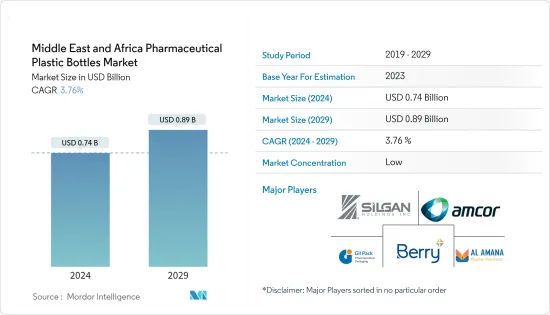
中東・アフリカの医薬品プラスチックボトル市場規模は2024年に7億4,000万米ドルと推定され、2029年には8億9,000万米ドルに達すると予測され、予測期間(2024-2029年)のCAGRは3.76%で成長する見込みです。
主なハイライト
- 消費者は、その軽量さと扱いやすさから、他の製品よりもプラスチック包装ソリューションを選ぶようになってきています。主要メーカーは、生産コストの低さからプラスチック包装ソリューションを選ぶようになってきています。PETとHDPEポリマーの出現により、プラスチックボトルの用途が拡大しています。
- 前述したように、プラスチック・パッケージング・ソリューションは通常、ガラスなどの他の素材よりも製造コストが高いです。これは、特にコストに敏感な中東やアフリカ諸国の製薬会社にとって有益です。製造コストが下がることで、医薬品の市場競争力が高まり、より多くの顧客を惹きつけ、市場の成長を促すことができます。
- さらに、全国製薬工業委員会(NCPI)は、サウジアラビアはビジョン2030によって医薬品の現地生産を奨励し、その結果ペットボトルの需要が増加すると述べています。ビジョン2030構想はヘルスケア分野の改革を目指しています。市場成長の復活が期待され、サウジアラビアのヘルスケアパッケージング市場を刺激する可能性が高いです。いくつかの地域企業は、ペットボトルのリサイクルを改善する協定を結んでいます。
- ペットボトルは、バリューチェーンの初期段階から長期にわたって、特に海洋において適切に管理されなければ、深刻な環境リスクをもたらします。アラビア湾におけるペットボトルの生産と使用の増加、および輸送と廃棄物処理の慣行により、海面や海岸のプラスチック廃棄物の量は増加しています。ペットボトル包装企業は、同地域で製品を導入する際に適切なリサイクル規制を遵守しなければならず、市場の成長を制限しています。
中東・アフリカの医薬品プラスチックボトル市場動向
ポリエチレンテレフタレート(PET)が著しい成長を遂げる見込み
- PETボトルは、ヘルスケアおよび製薬業界において、医薬品、シロップ、軟膏、その他の液体医薬品の保管、輸送、調剤に不可欠です。これらのボトルは厳しい品質基準を満たすように設計されており、製品の完全性と安全性を保証しています。多くの医薬品、特に小児用医薬品はシロップや懸濁液として処方されます。
- このような液体医薬品を正確に分注するために、投与量の目盛りが付いたペットボトルが使用されます。これらのボトルには、幼い患者の安全を確保するため、しばしば小児用耐性クロージャーが採用されています。
- アラブ首長国連邦の医薬品プラスチックボトル市場は、2025年までに47億米ドルに達すると予測されており、23の生産施設と2,500の国産医薬品があります。Pharmax Pharmaceuticals社は、市場の発展とその展望をモニターしています。
- アブダビの持ち株会社ADQによると、アラブ首長国連邦ではほぼ2,500品目が現地で製造され、23の医薬品製造施設が立地しています。このような市場の著しい成長は、様々なPETボトルベンダーが需要を獲得する大きな機会を生み出すと思われます。
- この地域の製薬会社の製造施設における拡張活動の高まりは、プラスチックボトルの需要を増加させると思われます。また、同地域の保健省では、二次包装を供給する地元ベンダーを戦略的に優先しており、製品の保管、販売、平準化に応用されることから、医薬品分野におけるプラスチックボトル市場普及の機会を生み出しています。
- ヘルスケア支出の増加は、一般的に医薬品の購入により多くの資金が割り当てられることを意味します。この需要の急増に比例して、医薬用ペットボトルを含む包装ソリューションも増加する必要があります。WHOによると、2020年のアラブ首長国連邦(UAE)の医療費は197億米ドルで、2027年には307億米ドルに達すると予測されています。
著しい成長が期待されるサウジアラビア
- サウジアラビアは中東における医薬品製造のハブとして広く知られています。国内外の多くのベンダーが現地のジェネリック医薬品メーカーと事業を立ち上げており、強固で確実な有機的成長の余地があり、これが包装需要を促進すると期待されています。
- ヘルスケア支出の増加は、包装技術の採用を促進する見通しです。特に、プラスチックボトル製造の進歩は安全性を高め、保存期間を延ばし、患者の服薬アドヒアランスを高める。2024年1月の国際貿易局のデータによると、サウジアラビアはGCCのヘルスケア支出の60%という大きなシェアを占めています。
- サウジアラビアはヘルスケアの需要を満たすために輸入医薬品に大きく依存していました。しかし、サウジアラビアは現在、自給自足を積極的に追求し、医薬品・治療薬の国内研究開発投資を奨励することで輸入の削減を目指しています。同時に、カタール、サウジアラビア、アラブ首長国連邦を含むGCC諸国は、世界の大手製薬メーカーと戦略的パートナーシップを結び、医薬品・薬剤生産能力の成長に拍車をかけています。
- Nahdi Medical Companyの予測によると、サウジアラビアの薬局小売市場は2026年までに376億SAR(100億1,000万米ドル)に達し、2021年の327億SAR(87億米ドル)から拡大します。薬局小売の拡大に伴い、医薬品を含む医薬品の需要が急増します。その結果、規制基準を確実に満たしながらこれらの製品を包装する医薬品プラスチックボトルのニーズが高まると思われます。
中東・アフリカの医薬品プラスチックボトル産業概要
中東・アフリカの医薬品プラスチックボトル市場は断片化されています。主な市場プレーヤーは、Amcor Group GmbH、Berry Global Inc.、Gil Plastic Products Ltd.、ALPLA Werke Alwin Lehner GmbH &Co KGなどです。市場を独占するために、プレーヤーはM&A、パートナーシップ、新製品の発売、コラボレーションなど様々な有機的・無機的戦略を採用しています。
- 2024年5月Amcor Rigid Packaging社は「Bottles of the Year」イニシアチブを開始。Amcorのイニシアチブは、消費者の動向に合わせたパッケージデザインに焦点を当てた。責任あるパッケージングへのコミットメントを強調するAmcorのデザインは、特にヘルスケア分野において、進化する消費者の嗜好に合わせて製造されています。
- 2023年2月ベリー世界ヘルスケアは、医薬品・ハーブ市場のシロップ剤・液剤の小児用包装(CRC)および開封防止包装(TE)に対する需要の高まりに対応するため、包括的なバンドルソリューションを発表しました。ベリーヘルスケアの新しいバンドルは、20mlから1,000mlまでのサイズと様々なデザインの28mmネックのPETボトルを7種類取り揃え、タンパーエビデントとチャイルドレジスタント機能を組み込んだ8種類のクロージャーを付属しています。
その他の特典:
- エクセル形式の市場予測(ME)シート
- 3ヶ月のアナリスト・サポート
目次
第1章 イントロダクション
- 調査の前提条件と市場定義
- 調査範囲
第2章 調査手法
第3章 エグゼクティブサマリー
第4章 市場洞察
- 市場概要
- 業界の魅力度-ポーターのファイブフォース分析
- 新規参入業者の脅威
- 買い手の交渉力
- 供給企業の交渉力
- 代替品の脅威
- 競争企業間の敵対関係の強さ
- 産業バリューチェーン分析
第5章 市場力学
- 市場促進要因
- 近代的で改善されたヘルスケアインフラの発展
- 環境意識の高まりに対応したリサイクル可能で環境に優しいプラスチックボトルの採用
- 市場抑制要因
- 安全な廃棄に関する環境上の懸念と原材料の価格変動
第6章 市場セグメンテーション
- 原材料別
- ポリエチレンテレフタレート(PET)
- ポリプロピレン(PP)
- 低密度ポリエチレン(LDPE)
- 高密度ポリエチレン(HDPE)
- タイプ別
- 固形容器
- スポイトボトル
- 点鼻薬ボトル
- 液体ボトル
- オーラルケア
- その他のタイプ
- 国別
- サウジアラビア
- アラブ首長国連邦
- 南アフリカ
- エジプト
第7章 競合情勢
- 企業プロファイル
- Amcor Group GmbH
- Berry Global Inc.
- AptarGroup Inc.
- Gil Plastic Products Ltd
- ALPLA Werke Alwin Lehner GmbH & Co KG
- Silgan Holdings Inc.
- AL AMANA PLASTICS
- B & I Polycontainers(Pty)Ltd
- Saudi Basic Industries Corporation
第8章 投資分析
第9章 市場機会と今後の動向
目次
The Middle East And Africa Pharmaceutical Plastic Bottles Market size is estimated at USD 0.74 billion in 2024, and is expected to reach USD 0.89 billion by 2029, growing at a CAGR of 3.76% during the forecast period (2024-2029).
Key Highlights
- Consumers are increasingly choosing plastic packaging solutions over other products due to their light weight and ease of handling. Major manufacturers are increasingly opting for plastic packaging solutions due to their lower production costs. The emergence of PET and HDPE polymers is expanding the scope of plastic bottle applications.
- As mentioned, plastic packaging solutions are typically more cost-efficient to manufacture than other materials, such as glass. This is especially beneficial for pharmaceutical companies, particularly in the Middle East and African countries, where cost sensitivity is a priority. Lower manufacturing costs can result in more competitive pricing of pharmaceutical products, thus attracting more customers and stimulating market growth.
- In addition, the National Committee of Pharmaceutical Industries (NCPI) stated that Saudi Arabia encourages the local production of pharmaceutical products by Vision 2030, thus increasing the demand for plastic bottles. The Vision 2030 initiative seeks to reform the healthcare sector. It is expected to revive market growth, likely stimulating the healthcare packaging market in Saudi Arabia. Several regional companies have concluded agreements to improve the recycling of their plastic bottles.
- Plastic bottles represent a severe environmental risk if they are not managed appropriately at the start of the value chain and throughout their prolonged existence, especially in the ocean. Due to increased plastic bottle production and use in the Arabian Gulf and shipping and waste disposal practices, the amount of plastic waste on the ocean's surface and beaches has increased. Plastic bottle packaging companies must adhere to suitable recycling regulations to introduce their products in the region, restricting the market growth.
MEA Pharmaceutical Plastic Bottles Market Trends
Polyethylene Terephthalate (PET) is Expected to Witness Significant Growth
- PET bottles are crucial in the healthcare and pharmaceutical industry for storing, transporting, and dispensing medicines, syrups, ointments, and other liquid pharmaceutical products. These bottles are designed to meet stringent quality standards, ensuring the integrity and safety of the products. Many medications, particularly those for children, are formulated as syrups or suspensions.
- PET bottles with calibrated dosage measurements are used to dispense these liquid medications accurately. These bottles often feature child-resistant closures to ensure the safety of young patients.
- The UAE pharmaceutical plastic bottles market is anticipated to reach USD 4.7 billion by 2025, with 23 production facilities and 2,500 domestically made medications. Pharmax Pharmaceuticals monitors the development of the market and its prospects.
- Almost 2,500 items are made locally, and 23 pharmaceutical manufacturing facilities are located in the United Arab Emirates, according to Abu Dhabi holding firm ADQ. Such significant growth in the market would create significant opportunities for various PET bottle vendors to capture the demand.
- The rising expansion activities in the manufacturing facilities of pharmaceutical companies in the region would increase the demand for plastic bottles. In addition, the country's strategic priority to local vendors for supplying secondary packaging in the region's health department is creating an opportunity for the proliferation of the plastic bottles market in the pharma sector due to their application in storing, selling, and leveling the products.
- Higher healthcare expenditure generally means more funds allocated toward purchasing pharmaceutical products. This surge in demand will require a proportional increase in packaging solutions, including pharmaceutical plastic bottles. According to WHO, in 2020, the expenditure on healthcare for the United Arab Emirates (UAE) totaled USD 19.7 billion, and it is forecasted to reach USD 30.7 billion by 2027.
Saudi Arabia is Expected to Witness Significant Growth
- Saudi Arabia is widely known as a pharma manufacturing hub in the Middle East. With many domestic and international vendors setting up businesses with local generic manufacturers, there is a scope for robust, secure, organic growth, which is expected to drive the demand for packaging.
- Rising healthcare spending is poised to drive the adoption of packaging technologies. Notably, advancements in plastic bottle manufacturing enhance safety, prolong shelf life, and boost patient adherence. As per the International Trade Administration's data from January 2024, Saudi Arabia commanded a significant 60% share of the GCC's healthcare expenditures.
- Saudi Arabia heavily relied on imported pharmaceuticals to meet its healthcare demands. However, the nation is now actively pursuing self-sufficiency, aiming to reduce imports by incentivizing local research and development investments for pharmaceutical and therapeutic products. Concurrently, several GCC nations, including Qatar, Saudi Arabia, and the United Arab Emirates, are forging strategic partnerships with leading pharmaceutical manufacturers globally, further fueling the growth of their medicine and drug production capabilities.
- Projections from Nahdi Medical Company indicate that by 2026, the pharmacy retailing market in Saudi Arabia will reach SAR 37.6 billion (USD 10.01 billion), up from SAR 32.7 billion (USD 8.70 billion) in 2021. With the expanding pharmacy retailing landscape, the demand for pharmaceuticals, including medications, is set to surge. Consequently, there will be a heightened need for pharmaceutical plastic bottles to package these products while meeting regulatory standards securely.
MEA Pharmaceutical Plastic Bottles Industry Overview
The Middle East and African pharmaceutical plastic bottles market is fragmented. Major market players include Amcor Group GmbH, Berry Global Inc., Gil Plastic Products Ltd, and ALPLA Werke Alwin Lehner GmbH & Co KG. To dominate the market, the players have adopted various organic and inorganic strategies, such as mergers and acquisitions, partnerships, new product launches, and collaborations.
- May 2024: Amcor Rigid Packaging launched the 'Bottles of the Year' initiative. Amcor's initiative highlighted packaging designs that were tailored to consumer trends. Emphasizing a commitment to responsible packaging, Amcor's designs are manufactured to align with evolving consumer preferences, especially in the healthcare sector.
- February 2023: Berry Global Healthcare introduced a comprehensive bundle solution to help customers capitalize on the increasing demand for child-resistant (CRC) and tamper-evident (TE) packaging for the pharmaceutical and herbal market for syrup and liquid medicines. The new Berry Healthcare bundle has seven ranges of 28 mm neck PET bottles in sizes from 20 ml to 1,000 ml and various designs, with eight accompanying closures incorporating tamper-evident and child-resistant features.
Additional Benefits:
- The market estimate (ME) sheet in Excel format
- 3 months of analyst support
TABLE OF CONTENTS
1 INTRODUCTION
- 1.1 Study Assumptions and Market Definition
- 1.2 Scope of the Study
2 RESEARCH METHODOLOGY
3 EXECUTIVE SUMMARY
4 MARKET INSIGHTS
- 4.1 Market Overview
- 4.2 Industry Attractiveness - Porter's Five Forces Analysis
- 4.2.1 Threat of New Entrants
- 4.2.2 Bargaining Power of Buyer
- 4.2.3 Bargaining Power of Suppliers
- 4.2.4 Threat of Substitute Products
- 4.2.5 Intensity of Competitive Rivalry
- 4.3 Industry Value Chain Analysis
5 MARKET DYNAMICS
- 5.1 Market Drivers
- 5.1.1 Development of Modern and Improved Healthcare Infrastructure
- 5.1.2 Adoption of Recyclable and Eco-Friendly Plastic Bottles in Response to Growing Environmental Awareness
- 5.2 Market Restraints
- 5.2.1 Environmental Concerns Related to Safe Disposal and Price Volatility of Raw Materials
6 MARKET SEGMENTATION
- 6.1 By Raw Material
- 6.1.1 Polyethylene Terephthalate (PET)
- 6.1.2 Polypropylene (PP)
- 6.1.3 Low-density Polyethylene (LDPE)
- 6.1.4 High-density Polyethylene (HDPE)
- 6.2 By Type
- 6.2.1 Solid Containers
- 6.2.2 Dropper Bottles
- 6.2.3 Nasal Spray Bottles
- 6.2.4 Liquid Bottles
- 6.2.5 Oral Care
- 6.2.6 Other Types
- 6.3 By Country
- 6.3.1 Saudi Arabia
- 6.3.2 United Arab Emirates
- 6.3.3 South Africa
- 6.3.4 Egypt
7 COMPETITIVE LANDSCAPE
- 7.1 Company Profiles
- 7.1.1 Amcor Group GmbH
- 7.1.2 Berry Global Inc.
- 7.1.3 AptarGroup Inc.
- 7.1.4 Gil Plastic Products Ltd
- 7.1.5 ALPLA Werke Alwin Lehner GmbH & Co KG
- 7.1.6 Silgan Holdings Inc.
- 7.1.7 AL AMANA PLASTICS
- 7.1.8 B & I Polycontainers (Pty) Ltd
- 7.1.9 Saudi Basic Industries Corporation
8 INVESTMENT ANALYSIS
9 MARKET OPPORTUNITIES AND FUTURE TRENDS
- 発行日
- 発行
- Mordor Intelligence
- ページ情報
- 英文 114 Pages
- 納期
- 2~3営業日