


欧州の医薬品プラスチックボトル市場:シェア分析、産業動向、成長予測(2024年~2029年)
Europe Pharmaceutical Plastic Bottles - Market Share Analysis, Industry Trends & Statistics, Growth Forecasts (2024 - 2029)

- 発行日
- ページ情報
- 英文 121 Pages
- 納期
- 2~3営業日
- 商品コード
- 1550240
- カスタマイズ可能 お客様のご希望に応じて、既存データの加工や未掲載情報(例:国別セグメント)の追加などの対応が可能です。詳細はお問い合わせください。
- 適宜更新あり 本レポートは最新情報反映のため適宜更新し、内容構成変更を行う場合があります。ご検討の際はお問い合わせください。
- 翻訳ツール提供対象 PDF対応AI翻訳ツールの無料貸し出しサービスのご利用が可能です
概要
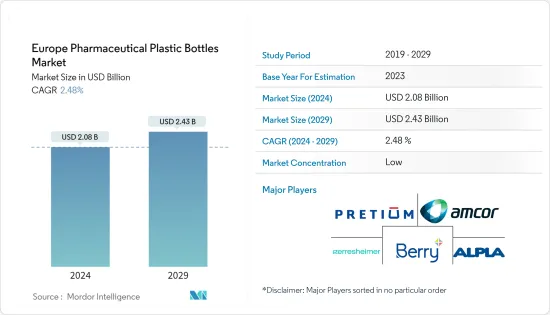
欧州の医薬品プラスチックボトル市場規模は2024年に20億8,000万米ドルと推定され、2029年には24億3,000万米ドルに達すると予測され、予測期間中(2024-2029年)のCAGRは2.48%で成長する見込みです。
主なハイライト
- 欧州の医薬品産業は、人々のライフスタイルの変化により常に変化しています。さまざまな病気と診断される人が増え、各国政府はヘルスケアにより多くの資金を投入しています。複数の病気と診断される人が増えるにつれ、医薬品の需要も増加しています。これには医薬品、栄養補助食品、その他の健康食品が含まれ、ペットボトルのような包装になっていることが多いです。
- ドイツは世界有数の医薬品研究開発・販売・製造拠点であり、その革新的な性質と「世界の薬局」としての長年の名声、そして着実に伸びているヘルスケア関連製品の需要に支えられています。欧州の医薬品市場は、人口動態の変化、慢性疾患の増加、予防やセルフメディケーションの重視などにより、ドイツ経済を上回るペースで成長しています。
- ドイツと欧州では、人口動態の変化(高齢化)、慢性疾患の増加、予防医療対策などを背景に、ヘルスケア関連製品に対する需要が高まっており、医薬品の生産量と消費量が増加しています。その結果、この需要増に対応するため、プラスチックボトルのような包装材料のニーズが高まっています。
- しかし、欧州は北米に次いで第2位で、世界市場の3分の1以上を占めています。中国をはじめとするアジア太平洋諸国が引き続き脅威となっている一方で、迅速な生産と保存性の向上に対する需要の高まりが市場を牽引しています。この市場に対する潜在的課題としては、欧州政府による医薬品包装に関する厳しい規制、プラスチック使用に関する環境問題、原材料コストの上昇などが挙げられます。
欧州医薬品プラスチックボトル市場動向
ポリエチレンテレフタレート(PET)セグメントが市場で大きな成長を遂げる見込み
- ポリエチレンテレフタレートは、透明で強度が高く、無毒性、非発ガン性、生体適合性、軽量性を備えたポリエステル系プラスチックです。PETは医薬用ペットボトルに使用されるユニークなプラスチックと考えられています。PETはCO2、光、微生物から保護します。PETはEU、NSF、FDAでテストされ、承認されています。PETは軽量で、外観は非常に透明で、固まるとガラスのように見えます。PETは強度があり、反応性がなく、飛散しにくいです。このため、医薬用ペットボトルは高い安全基準を満たしやすくなっています。
- さらに、PETを採用することで、ガラスに比べて90%もの軽量化につながり、より効率的な輸送が可能になります。製薬業界では、PETボトルはさまざまな液体に再利用できるため、重くて壊れやすいガラスボトルに代わるものとして使用されています。
- 進化する製薬業界が市場の課題に対応し、物理的損傷、劣化、生物学的汚染によるあらゆる性質の変化から医薬品を確実に保護すると同時に、より高い利益の恩恵を受けるために、この地域のペットボトル市場は重要な役割を果たしています。
- GOV.UKによると、英国政府は2017-2018年の2,151億7,000万米ドルに対し、2022-2023年には2,631億8,000万米ドル以上を医療に費やしています。ヘルスケアにより多くの資金が割り当てられることで、ペットボトル入り医薬品を含む医薬品の需要が増加する可能性があります。ヘルスケアサービスの拡大と改善に伴い、医薬品に対するニーズも増加し、医薬品包装市場の成長に寄与する可能性が高いです。
著しい成長が期待されるドイツ
- ドイツでは、ソリューション・プロバイダーや様々なエンドユーザーによるいくつかの開発により、プラスチック包装ソリューションの人気が高まっています。Made in Germany "の商品に対する消費者の認識により、プラスチック包装企業はドイツでより良い業績を上げることができるようになった。ドイツ政府はプラスチック包装分野でいくつかの厳しい規制を実施しています。
- ドイツ政府は、リサイクル可能な包装設計と再生可能でリサイクル可能な材料の利用を重視しており、持続可能な包装ソリューションのニーズが高まる可能性が高いです。
- ドイツはその環境条件から、高品質の製品の研究開発と生産に理想的な場所です。また、欧州製薬団体連合会(EFPIA)の数字によると、ドイツは医薬品分野の研究開発費でトップを走っており、その額は84億6,600万ユーロ(90億3,700万米ドル)で、スイス、英国、フランスを上回っています。医薬品分野におけるドイツの研究開発への取り組みは、技術革新と新薬・医療製品の開発を促進します。
- 製薬会社は研究に投資するため、製品の保管や輸送に医薬用プラスチックボトルなどの特殊なパッケージング・ソリューションを必要とすることがあります。このため、市場では高品質の包装材料に対する需要が生じています。
- ドイツの包装産業は、2016年に約270億8,000万米ドルの売上高を占めました。2023年には321億7,000万米ドルに達します。包装産業の成長は、しばしば研究開発への投資の増加を意味します。これは、医薬用ペットボトルを含む包装材料の技術革新につながる可能性があります。例えば、先進的で環境に優しいプラスチックボトル材料の開発が期待され、製薬業界の持続可能性の要求に応えています。
欧州の医薬品プラスチックボトル産業概要
欧州の医薬品プラスチックボトル市場は断片化されており、Amcor Group GmbH、Gerresheimer AG、Berry Group Inc.、Pretium Packaging、ALPLA Werke Alwin Lehner GmbH &Co KGなど多くのプレーヤーが存在します。プレーヤーは、新製品発売や提携など、市場を独占するために様々な有機的・無機的戦略を採用しています。
- 2024年5月-Amcorはベルギーに欧州イノベーションセンターを開設し、地域ブランドや小売業者とのコラボレーションを目指します。このセンターでは、消費者の体験を向上させ、環境の持続可能性を支持するパッケージング・ソリューションの構築に注力します。また、ユーザーエクスペリエンスを向上させる先進パッケージングを創造します。これには、より使いやすいボトル、より優れたシール、医薬品にとって重要な改ざん防止デザインなどの機能が含まれる可能性があります。
- 2023年2月-ベリー世界ヘルスケアは、医薬品・ハーブ市場におけるシロップや液体医薬品の耐小児用(CRC)包装や開封防止(TE)包装の需要増に対応するための包括的なバンドルソリューションの発売を発表しました。ベリーヘルスケア・バンドルには、20mlから1000mlまでの7種類の28mmネックPETボトルが含まれ、幅広いデザインと8種類のクロージャーが付属しています。
その他の特典:
- エクセル形式の市場予測(ME)シート
- 3ヶ月のアナリスト・サポート
目次
第1章 イントロダクション
- 調査の前提条件と市場定義
- 調査範囲
第2章 調査手法
第3章 エグゼクティブサマリー
第4章 市場洞察
- 市場概要
- 業界の魅力度-ポーターのファイブフォース分析
- 新規参入業者の脅威
- 買い手の交渉力
- 供給企業の交渉力
- 代替品の脅威
- 競争企業間の敵対関係の強さ
- 産業バリューチェーン分析
第5章 市場力学
- 市場促進要因
- 高いヘルスケア支出が医薬品と包装ソリューションの需要を押し上げる
- 革新的な医薬品プラスチックボトル設計による患者のコンプライアンス強化
- 市場抑制要因
- 欧州における健康規制への対応と環境保護の両立
第6章 市場セグメンテーション
- 原材料別
- ポリエチレンテレフタレート(PET)
- ポリプロピレン(PP)
- 低密度ポリエチレン(LDPE)
- 高密度ポリエチレン(HDPE)
- タイプ別
- 固形容器
- スポイトボトル
- 点鼻薬ボトル
- 液体ボトル
- オーラルケア
- その他のタイプ
- 国別
- 英国
- ドイツ
- フランス
- イタリア
第7章 競合情勢
- 企業プロファイル
- Amcor Group GmbH
- Gerresheimer AG
- Berry Global Inc.
- AptarGroup Inc.
- Comar LLC
- Frapak Packaging
- ALPLA Werke Alwin Lehner GmbH & Co. KG
- Silgan Holdings Inc.
- Pretium Packaging
- Greiner Packaging International GmbH
第8章 投資分析
第9章 市場機会と今後の動向
目次
The Europe Pharmaceutical Plastic Bottles Market size is estimated at USD 2.08 billion in 2024, and is expected to reach USD 2.43 billion by 2029, growing at a CAGR of 2.48% during the forecast period (2024-2029).
Key Highlights
- The European pharmaceutical industry is constantly changing due to the changes in people's lifestyles. More people are being diagnosed with various illnesses, and governments are putting more money into healthcare. As more people are diagnosed with multiple diseases, the demand for medicines also increases. This includes medications, nutritional supplements, and other health products, which often come in packaging such as plastic bottles.
- Germany is one of the world's most prestigious pharmaceutical research, development, sales, and manufacturing sites, owing to its innovative nature and long-standing reputation as the "world pharmacy" and steadily growing demand for healthcare-related products. The European pharmaceutical market is growing faster than the German economy, driven by demographic shifts, an increase in chronic conditions, and a greater emphasis on preventive and self-medicating measures.
- The increasing demand for healthcare-related products in Germany and Europe, driven by demographic shifts (aging populations), an increase in chronic conditions, and preventive healthcare measures, translates into higher production and consumption of pharmaceuticals. As a result, there's an increased need for packaging materials like plastic bottles to cater to this rising demand.
- However, Europe ranks second behind North America, with over one-third of the global market. China and other Asian-Pacific nations continue to pose a threat, while the increasing demand for quicker production and improved shelf appeal is driving the market forward. Potential challenges to this market include strict regulations on pharmaceutical packaging by European governments, environmental concerns about the use of plastic, and increasing raw material costs.
Europe Pharmaceutical Plastic Bottles Market Trends
The Polyethylene Terephthalate (PET) Segment is Expected to Witness a Significant Growth in the Market
- Polyethylene terephthalate is a transparent, strong, non-toxic, non-cancerous, bio-compatible, and lightweight plastic part of the polyester family. PET is considered a unique plastic used in pharmaceutical plastic bottles. PET protects against CO2, light, and microorganisms. It has been tested and approved by the EU, NSF, and FDA. PET is lightweight, has a very clear appearance, and looks like glass once set. PET is strong, non-reactive, and shatterproof. This makes it easier for pharmaceutical plastic bottles to meet high safety standards.
- Furthermore, the adoption of PET can lead to a reduction in weight as high as 90% compared with glass, which would allow more efficient transport. In the pharmaceutical industry, PET plastic bottles are being used as an alternative to heavy and fragile glass bottles because of their ability to be reused for different liquids.
- In order to help the evolving pharmaceutical sector respond to the impacts of market challenges, ensuring that medicines are protected against all kinds of alteration in properties caused by physical damage, degradation, and biological contamination while, at the same time, benefiting from higher profits, the region's plastic bottles market play a key role.
- According to the GOV.UK, the government of the United Kingdom spent over USD 263.18 billion on health in 2022-2023, compared to USD 215.17 billion in 2017-2018. With more funding allocated to healthcare, there may be an increase in the demand for pharmaceuticals, including medications packaged in PET bottles. As healthcare services expand and improve, there's likely to be a corresponding rise in the need for medicines, contributing to the growth of the pharmaceutical packaging market.
Germany is Expected to Show Significant Growth
- Due to several developments in Germany by solution providers and various end users, plastic packaging solutions are becoming increasingly popular. Consumer perception of "Made in Germany" goods gave plastic packaging companies better performance space in Germany. The German government has implemented several stringent regulations in the plastics packaging sector.
- The German government's emphasis on packaging design for recyclability and the utilization of renewable and recyclable materials is likely to lead to an increase in the need for sustainable packaging solutions, which, in turn, encourage the pharmaceutical sector in Germany and Europe to search for pharmaceutical plastic bottles that fulfill these sustainability criteria.
- Due to its environmental conditions, Germany is the ideal place for R&D and production of high-quality products. In addition, according to the figures provided by the European Federation of Pharmaceutical Industries and Associations (EFPIA), Germany leads the way in research and development spending in the pharmaceutical sector, spending EUR 8,466 million (USD 9,037 million), ahead of Switzerland, the United Kingdom, and France. Germany's commitment to R&D in the pharmaceutical sector fosters innovation and the development of new drugs and medical products.
- As pharmaceutical companies invest in research, they may require specialized packaging solutions, such as pharmaceutical plastic bottles, to store and transport their products. This creates a demand for high-quality packaging materials in the market.
- The German packaging industry accounted for about USD 27.08 billion in revenue in 2016. In 2023, it amounted to USD 32.17 billion. A growing packaging industry often means increased investments in research and development. This can lead to innovations in packaging materials, including pharmaceutical plastic bottles. For instance, the development of advanced and environmentally friendly plastic bottle materials is expected to occur, meeting the sustainability demands of the pharmaceutical industry.
Europe Pharmaceutical Plastic Bottles Industry Overview
The European pharmaceutical plastic bottles market is fragmented, with many players like Amcor Group GmbH, Gerresheimer AG, Berry Group Inc., Pretium Packaging, and ALPLA Werke Alwin Lehner GmbH & Co KG. Players have adopted various organic and inorganic strategies to dominate the market, such as new product launches and collaborations.
- May 2024 - Amcor opened its European Innovation Center in Belgium, aiming to collaborate with regional brands and retailers. The center will focus on crafting packaging solutions that enhance consumer experiences and champion environmental sustainability. It will also create advanced packaging that improves the user experience. This could include features like easier-to-use bottles, better seals, or tamper-evident designs, which are crucial for pharmaceuticals.
- February 2023 - Berry Global Healthcare announced the launch of a comprehensive bundle solution designed to assist customers in capitalizing on the increasing demand for child-resistant (CRC) packaging and tamper-evident (TE) packaging for the pharmaceutical and herbal market for syrup and liquid medicinal products. The Berry Healthcare bundle includes seven different ranges of 28mm Neck PET Bottles in sizes ranging from 20ml to 1000ml, with a wide selection of designs and eight accompanying closures that include tamper-proof and child-resistant capabilities.
Additional Benefits:
- The market estimate (ME) sheet in Excel format
- 3 months of analyst support
TABLE OF CONTENTS
1 INTRODUCTION
- 1.1 Study Assumptions and Market Definition
- 1.2 Scope of the Study
2 RESEARCH METHODOLOGY
3 EXECUTIVE SUMMARY
4 MARKET INSIGHTS
- 4.1 Market Overview
- 4.2 Industry Attractiveness - Porter's Five Forces Analysis
- 4.2.1 Threat of New Entrants
- 4.2.2 Bargaining Power of Buyer
- 4.2.3 Bargaining Power of Suppliers
- 4.2.4 Threat of Substitute Products
- 4.2.5 Intensity of Competitive Rivalry
- 4.3 Industry Value Chain Analysis
5 MARKET DYNAMICS
- 5.1 Market Drivers
- 5.1.1 High Healthcare Spending Boosts the Demand for Pharmaceutical Products and Packaging Solutions
- 5.1.2 Enhancing Patient Compliance Through Innovative Pharmaceutical Plastic Bottle Design
- 5.2 Market Restraints
- 5.2.1 Balancing Health Regulatory Compliance and Environmental Imperatives in Europe
6 MARKET SEGMENTATION
- 6.1 By Raw Material
- 6.1.1 Polyethylene Terephthalate (PET)
- 6.1.2 Polypropylene (PP)
- 6.1.3 Low-density Polyethylene (LDPE)
- 6.1.4 High-density Polyethylene (HDPE)
- 6.2 By Type
- 6.2.1 Solid Containers
- 6.2.2 Dropper Bottles
- 6.2.3 Nasal Spray Bottles
- 6.2.4 Liquid Bottles
- 6.2.5 Oral Care
- 6.2.6 Other Types
- 6.3 By Country
- 6.3.1 United Kingdom
- 6.3.2 Germany
- 6.3.3 France
- 6.3.4 Italy
7 COMPETITIVE LANDSCAPE
- 7.1 Company Profiles
- 7.1.1 Amcor Group GmbH
- 7.1.2 Gerresheimer AG
- 7.1.3 Berry Global Inc.
- 7.1.4 AptarGroup Inc.
- 7.1.5 Comar LLC
- 7.1.6 Frapak Packaging
- 7.1.7 ALPLA Werke Alwin Lehner GmbH & Co. KG
- 7.1.8 Silgan Holdings Inc.
- 7.1.9 Pretium Packaging
- 7.1.10 Greiner Packaging International GmbH
8 INVESTMENT ANALYSIS
9 MARKET OPPORTUNITIES AND FUTURE TRENDS
- 発行日
- 発行
- Mordor Intelligence
- ページ情報
- 英文 121 Pages
- 納期
- 2~3営業日


