



北米の缶詰食品包装:市場シェア分析、産業動向と統計、成長予測(2025~2030年)
North America Canned Food Packaging - Market Share Analysis, Industry Trends & Statistics, Growth Forecasts (2025 - 2030)


- 発行日
- ページ情報
- 英文 90 Pages
- 納期
- 2~3営業日
- 商品コード
- 1628719
- カスタマイズ可能 お客様のご希望に応じて、既存データの加工や未掲載情報(例:国別セグメント)の追加などの対応が可能です。詳細はお問い合わせください。
- 適宜更新あり 本レポートは最新情報反映のため適宜更新し、内容構成変更を行う場合があります。ご検討の際はお問い合わせください。
- 翻訳ツール提供対象 PDF対応AI翻訳ツールの無料貸し出しサービスのご利用が可能です
概要
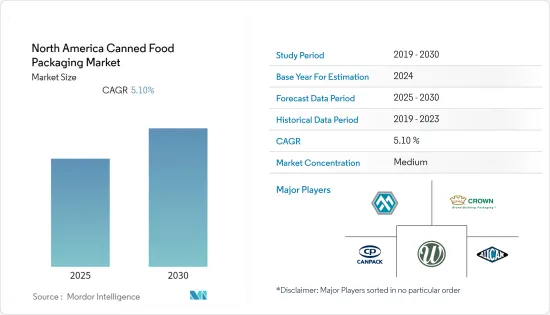
北米の缶詰食品包装市場は予測期間中にCAGR 5.1%を記録する見込み
主要ハイライト
- ほとんどの食品缶はスチール製で、飲食品缶はアルミ製です。スチールの代わりにクロムやニッケルが使われることもあるが、その量は極微量からゼロに近いです。機能性と保存性を向上させた金属缶を提供するのに役立つ包装技術の先進性も、北米の缶詰食品包装市場の成長を促す大きな要因となっています。
- 高品質な製品への注目、ライフスタイルの変化、アメリカ全土の消費支出の増加といった主要な促進要因も、調査された市場の成長に寄与しています。包装は常に製品の売上を増加させる上で重要な役割を果たしているため、金属ベースの缶のリサイクル可能で再利用可能な特性は、缶詰食品を安価にします。さらに、包装食品または加工食品に対する需要の高まりと、レディトゥイート、すぐに調理できる、すぐに提供できる、すぐに加熱できるなど、さまざまな便利な食品オプションの利用可能性が、市場の成長に拍車をかけています。
- さらに、缶詰食品には準備時間が少なくて済み、使い勝手が良いとされるなど多くの利点があるため、社会人の間で人気が高まっています。北米では1億6,000万人以上が働いており、社会人の多忙なライフスタイルのため、缶は今後さらに重要性を増すと予想されます。また、有害なバクテリアから食品を守るため、この地域では密封され、いたずらできないスチール容器食品の需要が高いです。缶の製造プロセスは食品の品質を保ち、腐敗を防いで保存期間を延ばすのに役立ちます。
- しかし、いくつかの主要な抑制要因は、代替包装ソリューションの利用可能性、金属の高コスト、PET、高密度ポリエチレン材料の採用のような地域の缶詰食品包装市場に影響を与える可能性があります。加えて、金属缶は食品を再加熱するために電子レンジで使用することができないため、缶詰食品の需要がある程度制限されると予想されます。
- 非営利団体コンシューマーズ・ユニオンが一般的な缶詰食品を分析したところ、「BPAフリー」のラベルが貼られたものも含め、幅広い商品から測定可能なレベルのBPAが検出されました。ある研究では、BPAはすでに肥満誘発物質であることが確認されています。これらの要因は、調査対象市場の成長を阻害する可能性があります。
- COVID-19の大流行により、2020年の果物・野菜加工缶産業の需要は大幅に増加します。社会的な距離とレストランの閉鎖は、オンライン缶詰食品ショッピングと消費者が優先する食品のきっかけを作った。しかし、包装メーカーは、サプライチェーンの混乱や鉄鋼、アルミニウムなどの原料の低い利用可能性に直面しています。米国地質調査所によると、2020年の鉄鋼生産量は8,780万トンから7,200万トンへと18%減少しました。
北米の缶詰食品包装市場の動向
スチール缶の使用が大きく伸びる見込み
- この地域で缶詰食品に最も理想的な容器は、主にスチール製の金属缶です。表面に薄い錫の層がある1トンのスチールにはわずか5~6ポンドの錫しか使われていないです。今でもこの包装を「スズ缶」と呼ぶ人もいます。製缶業者協会によると、1,500種類以上の食品が様々な形やサイズのスチール缶に詰められているといいます。ツイストトップの缶、リシーラブルの蓋、蓋にプルタブの付いたイージーオープンの缶は、最近のいくつかのイノベーションです。
- スチール缶は、安全で栄養価の高い高品質の農産物やタンパク質を求める人々のニーズに応える身近なソリューションです。金属製の食品は、環境にやさしく、食品廃棄を抑制し、経済を活性化することができます。スチール缶は100%リサイクル可能で、最低25%のリサイクル原料から作られています。
- 2021年10月、Ball Metalpackは米国のミルウォーキー工場に新しい食品缶の生産設備を設置しました。新しい高速2ピースラインは、スチール缶の生産を含め、年間数百万個の食品缶を生産するために稼働を開始しました。これにより、同社は食品・栄養産業の顧客からの高まる需要に対応できるようになります。
- 開けやすいプルタブ缶やリシーラブル缶などのイノベーションは、スチール製食品缶市場を拡大することができます。缶アライアンス(CFA)は、その設立以来、何10億ものメディアの意見を生み出し、何千人もの栄養専門家や地域の連邦政府、州政府、地方政府のメンバーに缶とスチール包装の利点を伝えてきました。
- さらに、北米中の多くの栄養学者専門家が、アルミ缶を避けるよう推奨しています。また、これらの専門家は、アルミ缶の摂取量を減らし、可能な限りガラス瓶や食品グレードの缶に置き換えるよう人々に勧めています。専門家によれば、アルミ缶詰食品は、アルミニウムへの暴露、BPAの溶出から、高ナトリウム、栄養レベルの低下まで、多くの潜在的な健康リスクをもたらすといわれています。こうした要因がアルミ缶の市場を制限し、スチール缶の成長を後押ししています。
米国が大きな市場シェアを占める見込み
- 食品加工は米国の主要製造業のひとつであり、同地域の缶需要を牽引しています。食品缶は、廃棄のしやすさ、リサイクルの利点、保存可能期間の長さなどから、豆類、ツナなどの加工食品包装の第一選択肢となっています。24/7 Wall Streetによると、米国人の98%が缶詰食品をキッチンに常備しており、米国ではスープが最大の缶保存食品カテゴリーとなっています。
- 缶市場の成長動向は、包装の革新です。化学品不使用の缶詰食品に対する需要の増加に伴い、メーカーは包装の革新に力を入れています。Health Valley、AMY's Kitchen、Juanita's Foodなど、米国中の缶詰食品の多くのブランドが、BPAフリーの容器で食品を提供し始めています。
- さらに、「USA Today in 2020」が実施した調査によると、缶詰食品は非常に人気があり、アメリカ人は家庭で食事を用意する際にも缶を使用しています。平均すると、アメリカ人の98%がキッチンに缶を24缶置いています。アメリカ人の約63%が自宅でトウモロコシの缶を作っています。食費は生活費の中で3番目に高いが、缶は生鮮食品や冷凍食品よりも安いことが多いです。冷凍食品の約半額、生鮮冷凍食品の5分の1です。
- 例えば、2021年7月、米国で缶・冷凍野菜の加工・販売を手がけるBonduelle USA, Inc.は、ペンシルベニア州での事業拡大のため、少なくとも500万米ドルを投資する計画を発表しました。同社は、大手プライベートブランド向けに冷凍製品を包装し、プライベートブランドで野菜を販売しています。
- 有機果物・野菜缶の動向の高まりと、ソーシャルメディア・マーケティングとプロモーションへの注力は、米国缶市場の収益創出要因にさらに拍車をかけています。さらに、この地域の人口の間で有機食品の需要が増加しています。さらに、この地域にはCostcoやWal-Martなど多くの大手小売業者があり、予測期間中の缶詰食品地域市場の成長を促進すると予想されます。
北米の缶詰食品包装産業概要
北米の缶詰食品包装市場の競争は中程度です。大きな市場シェアを持つ大手企業は、様々な地域で顧客基盤を拡大しています。また、多くの企業が市場シェアと収益性を高めるため、複数の企業と戦略的・協力的な取り組みを形成しています。市場の最近の動向をいくつか発表します。
- 2022年2月-トリビウム包装は、米国とブラジルの施設に4,000万米ドルを投資し、アルミ製エアロゾル缶と飲料ボトルの生産を拡大します。オハイオ州ヤングスタウンとブラジルのイトゥペバの施設に新ラインを設置し、2023年に新たな機能を追加して生産能力を増強します。このイニシアチブは、エアロゾルと飲料市場の優良顧客からの長期的なコミットメントの直接的な結果です。
- 2021年5月-Can-Pack S.A.(米国)は、2023年までに米国インディアナ州マンシーに米国で2番目となる最新鋭の飲料用アルミ缶ボディ製造工場を建設し、高賃金の地元雇用を創出すると発表しました。このプロジェクトは、デラウェア郡とインディアナ州への3億8,000万米ドルの投資を意味し、2025年までに425人の雇用と4億9,000万米ドルに拡大する可能性があります。
その他の特典
- エクセル形式の市場予測(ME)シート
- 3ヶ月間のアナリストサポート
目次
第1章 イントロダクション
- 調査の前提条件と市場定義
- 調査範囲
第2章 調査手法
第3章 エグゼクティブサマリー
第4章 市場力学
- 市場概要
- 産業バリューチェーン分析
- 産業の魅力-ポーターのファイブフォース分析
- 新規参入業者の脅威
- 買い手の交渉力
- 供給企業の交渉力
- 代替品の脅威
- 競争企業間の敵対関係
- 市場促進要因
- コンビニエンスフードの消費拡大
- 食品缶のイメージを変えるイノベーションと付加価値の提供
- 市場課題
- 缶詰食品の低い栄養価
- COVID-19の市場への影響評価
第5章 市場セグメンテーション
- 材料別
- 金属
- スチール
- アルミニウム
- その他
- 製品タイプ別
- レディメイドミール
- 食肉
- 魚介類
- その他
- 国別
- 米国
- カナダ
第6章 競合情勢
- 企業プロファイル
- Crown Holdings Inc.
- Can-Pack S.A.
- Wells Can Company Ltd
- Ball Metalpack
- Allstate Can Corp.
- Trivium Packaging
- Container Supply Co. Inc.
- Independent Can Co.
- The Giorgi Companies, Inc.
- Heartland Products Group
第7章 投資分析
第8章 市場の将来
目次
Product Code: 52002
The North America Canned Food Packaging Market is expected to register a CAGR of 5.1% during the forecast period.
Key Highlights
- Most food cans are made of steel, while beverage cans are made of aluminum. Sometimes, chromium and nickel can be used in place of steel, but the amounts would be minuscule to nil. Advancements in packaging technology, which aid in offering metal cans with improved functional and storage features, have also been a major factor triggering the growth in the North American canned food packaging market.
- Some of the major driving factors, like focus on high-quality products, changing lifestyles, and rising consumer spending power across America contribute to the market studied growth. Since packaging always plays a vital role in increasing the sales of products, recyclable and reusable properties of metal-based can make canned food cheaper. Moreover, the growing demand for packaged or processed food and the availability of various convenient food options such as ready-to-eat, ready-to-cook, ready-to-serve, and ready-to-heat is adding fuel to market growth.
- Moreover, canned food has many benefits, such as it requires less preparation time and is considered convenient to use, which has led to its popularity among working professionals. More than 160 million people are employed in North America, and due to the busy lifestyles of working people, canned food is expected even to gain more importance in the future. Also, the region's demand for sealed and tamper-proof steel container food is high, as they protect food from harmful bacteria. The process of canning helps preserve the quality of food products and prevent food spoilage, subsequently increasing their shelf life.
- However some of the major restraining factors can affect the region's canned food packaging market, such as the availability of alternative packaging solutions, the high cost of metals, the introduction of PET, and high-density polyethylene materials. In addition, metal cans cannot be used in the microwave to reheat food which is expected to limit the demand for canned food to a certain extent.
- An analysis of common canned foods by the non-profit Consumers Union found measurable levels of BPA in a wide range of items, including some bearing a "BPA Free" label. In a study, BPA had already been identified as an obesogen. These factors can hinder the growth of the studied market.
- The COVID-19 pandemic precipitated a substantial increase in demand for the Canned Fruit and Vegetable Processing industry in 2020. Social distancing and restaurant closures have created a catalyst for online canned food shopping and what food consumers prioritize. But, packaging manufacturers face supply chain disruption and low availability of raw materials like steel, aluminum, etc. As per United States Geological Survey, steel production in 2020 fell by 18%, from 87.8 to 72 million metric tons.
North America Canned Food Packaging Market Trends
Use of Steel Cans is Expected to Grow Significantly
- The most ideal container for canning food in the area is a metal can, which is primarily made of steel. Only 5-6 lbs of tin are used in one ton of steel, even though there is a thin layer of tin on the surface. Some still use the term "tin can" to describe this packaging. More than 1,500 food items are reportedly packed into steel cans of various shapes and sizes, according to the Can Manufacturers Institute. Cans with twist-tops, resealable lids, and the easy-open variety with pull-tabs on the lids are a few recent innovations.
- Steel Canned food is an accessible solution to people's needs for safe, nutritious, quality produce and protein. Metal food can be environmentally friendly, curb food waste, and fuel the economy. Steel cans are 100% recyclable and made from a minimum of 25% recycled content.
- In October 2021, Ball Metalpack installed new food can production at the Milwaukee facility in the United States. The new high-speed two-piece line has begun operations to produce millions of food cans annually, including steel can production. This will enable the company to meet the growing demand from customers in the food and nutrition industry.
- Innovations such as easy-to-open pull-tab and resealable cans can expand the steel food cans market. Since its beginning, the Canned Food Alliance (CFA) has generated billions of media opinions and communicated the benefits of canning and steel packaging to thousands of nutrition experts and members of the region's federal, state, and local governments.
- Moreover many nutritionists experts across North America recommend to avoid aluminum canned food. Also these experts suggest people to reduce their intake of aluminum canned food, replacing it with glass jars and food grade cans wherever possible. According to experts, aluminum canned foods bring many potential health risks ranging from aluminum exposure, and BPA leaching to high sodium and reduced nutrient levels. Such factors are limiting the market for aluminum cans and boosting the growth for steel cans.
United States is Expected to Hold a Significant Market Share
- Food processing is one of the major manufacturing sectors in the United States, driving the demand for canned food in the region. Food cans are the first choice for processed food packaging, such as beans, tuna, etc., due to their ease of disposal, recycling advantages, and increased shelf life. According to 24/7 Wall Street, 98% of Americans keep canned foods in their kitchens, and soup is the biggest food category preserved in a can in the United States.
- The growing trend in the canned food market is innovations in packaging. With the increase in demand for chemical-free canned foods, manufacturers are focusing on innovations in packaging. Many brands across the United States of canned food products, like Health Valley, AMY's Kitchen, Juanita's Food, etc., have started offering food in BPA-free containers.
- Additionally, according to a survey conducted by "USA Today in 2020," canned foods are so popular that Americans use them even when preparing meals at home. On average, 98% of Americans have canned food in the kitchen-24 cans. About 63% of Americans make canned corn at home. Food is the third-highest cost of living, and canned food is often cheaper than fresh or frozen food. It's about half the price of frozen foods and one-fifth the price of fresh frozen foods.
- For instance, in July 2021, Bonduelle USA, Inc., a company involved in the processing and marketing of canned and frozen vegetables in the United States, has announced plans to invest at least USD 5.0 million to expand its business in Pennsylvania. The company packs frozen products for large private labels and sells vegetables on private labels.
- The growing trend for organic canned fruits and vegetables and focus on social media marketing and promotions further add to the revenue-generating factors in the United States canned food market. Moreover, demand for organic foods is increasing among the population of the region. In addition, many major retailers in the area, such as Costco and Wal-Mart, are expected to drive canned food regional market growth during the forecast period.
North America Canned Food Packaging Industry Overview
The North American Canned Food Packaging Market is moderately competitive. The major players with a significant market share are expanding their customer base across various regions. In addition, many companies are forming strategic and collaborative initiatives with multiple companies to increase their market share and profitability. Some of the recent developments in the market are:
- February 2022 - Trivium Packaging invested USD 40 million in facilities in the United States and Brazil to expand the production of aluminum aerosol cans and beverage bottles. New lines will be installed in the Youngstown, Ohio, and Itupeva, Brazil facilities, adding new capabilities and increasing capacity in 2023. The initiative is a direct result of long-term commitments from standing customers in the aerosol and beverage markets.
- May 2021 - Can-Pack S.A., United States, announced it would build its second U.S.-based, state-of-the-art aluminum beverage can body manufacturing plant in Muncie, Indiana, United States creating high-paying local jobs over time by 2023. The proposed project represents a USD 380 million investment in Delaware County and the State of Indiana with the potential to expand to 425 jobs and USD 490 million by 2025.
Additional Benefits:
- The market estimate (ME) sheet in Excel format
- 3 months of analyst support
TABLE OF CONTENTS
1 INTRODUCTION
- 1.1 Study Assumptions and Market Definition
- 1.2 Scope of the Study
2 RESEARCH METHODOLOGY
3 EXECUTIVE SUMMARY
4 MARKET DYNAMICS
- 4.1 Market Overview
- 4.2 Industry Value Chain Analysis
- 4.3 Industry Attractiveness - Porter's Five Forces Analysis
- 4.3.1 Threat of New Entrants
- 4.3.2 Bargaining Power of Buyers
- 4.3.3 Bargaining Power of Suppliers
- 4.3.4 Threat of Substitute Products
- 4.3.5 Intensity of Competitive Rivalry
- 4.4 Market Drivers
- 4.4.1 Increasing Consumption of Convenience Food
- 4.4.2 Innovation and Added Value Offering to Change the Image of Food Cans
- 4.5 Market Challenges
- 4.5.1 Low Nutritional Value of Canned Food
- 4.6 Assessment of the Impact of COVID-19 on the Market
5 MARKET SEGMENTATION
- 5.1 By Material
- 5.1.1 Metal
- 5.1.2 Steel
- 5.1.3 Aluminium
- 5.1.4 Others
- 5.2 By Product Type
- 5.2.1 Readymade Meals
- 5.2.2 Meat
- 5.2.3 Sea Food
- 5.2.4 Others
- 5.3 By Country
- 5.3.1 United States
- 5.3.2 Canada
6 COMPETITIVE LANDSCAPE
- 6.1 Company Profiles
- 6.1.1 Crown Holdings Inc.
- 6.1.2 Can-Pack S.A.
- 6.1.3 Wells Can Company Ltd
- 6.1.4 Ball Metalpack
- 6.1.5 Allstate Can Corp.
- 6.1.6 Trivium Packaging
- 6.1.7 Container Supply Co. Inc.
- 6.1.8 Independent Can Co.
- 6.1.9 The Giorgi Companies, Inc.
- 6.1.10 Heartland Products Group
7 INVESTMENT ANALYSIS
8 FUTURE OF THE MARKET
北米の缶詰食品包装:市場シェア分析、産業動向と統計、成長予測(2025~2030年)
- 発行日
- 発行
- Mordor Intelligence
- ページ情報
- 英文 90 Pages
- 納期
- 2~3営業日


