
|
市場調査レポート
商品コード
1642054
リビング・ダイニングルーム用家具:市場シェア分析、産業動向、成長予測(2025~2030年)Living And Dining Room Furniture - Market Share Analysis, Industry Trends & Statistics, Growth Forecasts (2025 - 2030) |
||||||
カスタマイズ可能
適宜更新あり
|
|||||||
| リビング・ダイニングルーム用家具:市場シェア分析、産業動向、成長予測(2025~2030年) |
|
出版日: 2025年01月05日
発行: Mordor Intelligence
ページ情報: 英文 148 Pages
納期: 2~3営業日
|
全表示
- 概要
- 目次
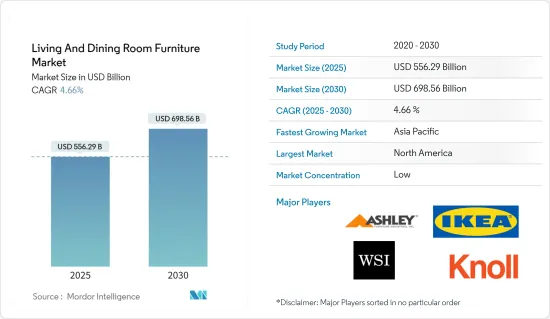
リビング・ダイニングルーム用家具の市場規模は2025年に5,562億9,000万米ドルと推定され、2030年には6,985億6,000万米ドルに達すると予測され、予測期間(2025-2030年)のCAGRは4.66%です。
ミニマリスト、スカンジナビア、インダストリアル、ヴィンテージスタイルなど、インテリアデザインの動向の変化は、リビングルームやダイニングルームのデザインや家具に影響を与えます。消費者は一般的なデザイン美学に沿った家具や内装を求めることが多いです。年齢、世帯規模、所得水準、ライフスタイルの好みといった人口統計学的要因は、リビング・ダイニング用家具の需要に影響を与えます。例えば、ミレニアル世代は都市部の狭い住居では多機能で省スペースの家具を好むかもしれないし、富裕層は豪華で高級な家具に投資するかもしれないです。新築、住宅の改築、住宅の値ごろ感などの住宅市場の動向は、リビング・ダイニング用家具の需要に影響を与えます。オープンコンセプトの間取りや狭いリビングスペースなど、住宅嗜好の変化が家具の選択やレイアウトを形成します。環境問題に対する意識の高まりから、消費者はリビング・ダイニングルームに持続可能で環境に優しい家具を求めるようになります。持続可能な素材、倫理的な製造方法、環境認証は、環境意識の高い消費者にとってますます重要な検討事項となっています。スマートホーム技術、統合エンターテインメントシステム、ワイヤレス充電機能などの技術進歩は、リビング・ダイニングルーム用家具のデザインや機能性に影響を与えます。消費者は、デジタルライフスタイルやホームオートメーションシステムとシームレスに統合する家具を優先するかもしれないです。オンライン小売店、実店舗、家具マーケットプレースの普及は、消費者にリビング・ダイニング用家具の多様な買い物の選択肢を提供しています。eコマース・プラットフォームは利便性と豊富な品揃えを提供し、実店舗では消費者が購入前に実際に家具を体験できます。
全体として、リビング・ダイニング市場は、デザイン動向、人口動態の変化、住宅動態、経済状況、持続可能性への配慮、技術の進歩、小売チャネル、文化的影響などの組み合わせの影響を受けています。これらの要因を理解することは、家具メーカー、小売業者、デザイナーが消費者のニーズを満たし、市場競争力を維持するために不可欠です。
リビング・ダイニングルーム用家具市場の動向
eコマースがリビング・ダイニングルーム用家具市場を独占し、価格を押し下げる
eコマースは、リビング・ダイニングルーム用家具市場において支配的な流通チャネルとして急速に台頭しています。その成長を後押ししているのは、技術の進歩、インターネットアクセスの増加、消費者の嗜好の進化です。今日、顧客はオンラインで便利に家具を閲覧・購入することができ、さらに玄関先まで配送してくれるという特典もあります。
eコマースの台頭は、リビング・ダイニングルーム用家具の価格ダイナミクスに顕著な影響を与えています。主要な推進力は、オンライン小売業者間の熾烈な競争であり、価格競争の激化につながっています。
さらに、仲介業者を介さないeコマースの直接調達モデルが、価格引き下げに極めて重要な役割を果たしています。メーカーから直接調達することで、eコマース小売企業は追加コストを削減し、顧客に低価格を提供することができます。
さらに、eコマース・プラットフォームは、特にブラック・フライデーやサイバー・マンデーのようなイベント時に、プロモーション、割引、クーポンを頻繁に展開します。このような戦略は、急な値下げを伴うことが多く、顧客の大量購入を促し、家具の価格をさらに引き下げます。
アジア太平洋地域が最も高い成長を遂げると予想される
成長著しい不動産、住宅建設の増加、新興国市場における個人の可処分所得の増加といった要因が、予測期間中にアジア太平洋地域のリビングルーム用家具市場を押し上げると予想されます。さらに、特に中国とインドにおける熟練労働者の不足、より良い輸送設備の必要性、不十分なインフラ設備が市場成長の妨げになると思われます。
住宅戸数の増加、中間層人口の増加、家計支出の増加、ライフスタイルの変化、ブランド家具への嗜好の高まりは、予測期間中に同地域の市場需要を増加させる主な要因の一部です。
リビング・ダイニングルーム用家具産業の概要
本レポートでは、主要な国際的リビング・ダイニングルーム用家具市場プレイヤーを取り上げています。市場シェアでは、現在少数の大手企業が市場を独占しています。しかし、需要は消費者の所得によって左右されます。大企業は大量仕入れ、幅広い製品、効果的なマーチャンダイジングとマーケティングで競争しています。小規模企業は、市場セグメントに焦点を絞り、製品の充実度と優れた顧客サービスによって競争しています。
その他の特典:
- エクセル形式の市場予測(ME)シート
- 3ヶ月間のアナリスト・サポート
目次
第1章 イントロダクション
- 調査の前提条件と市場定義
- 調査範囲
第2章 調査手法
第3章 エグゼクティブサマリー
第4章 市場力学
- 市場概要
- 市場促進要因
- 市場抑制要因
- バリューチェーン/サプライチェーン分析
- ポーターのファイブフォース分析
- 供給企業の交渉力
- 買い手/消費者の交渉力
- 新規参入業者の脅威
- 代替品の脅威
- 競争企業間の敵対関係の強さ
- リビング・ダイニングルーム用家具市場に影響を与える動向についての洞察
- 市場における技術革新に関する洞察
- COVID-19が市場に与える影響
第5章 市場セグメンテーション
- タイプ別
- シートとソファ
- 椅子とテーブル
- その他
- エンドユーザー別
- 家庭
- 業務
- 流通チャネル別
- 百貨店
- 個人家具小売店
- 工場アウトレット
- オンライン
- その他
- 地域別
- 北米
- 南米
- アジア太平洋
- 中東・アフリカ
- 欧州
第6章 競合情勢
- 市場集中度の概要
- 企業プロファイル
- Ashley Furniture
- IKEA
- Williams-Sonoma
- Knoll Inc.
- Masco Corp
- Sears Holdings Corp
- KOKUYO Furniture Co. Ltd
- Herman Miller Inc.
- Bernhardt Furniture Company
- Vogue Furniture 4U*
第7章 市場機会と今後の動向
第8章 免責事項
The Living And Dining Room Furniture Market size is estimated at USD 556.29 billion in 2025, and is expected to reach USD 698.56 billion by 2030, at a CAGR of 4.66% during the forecast period (2025-2030).
Changing interior design trends, such as minimalist, Scandinavian, industrial, or vintage styles, influence the design and furnishings of living and dining rooms. Consumers often seek furniture and decor that align with popular design aesthetics. Demographic factors such as age, household size, income levels, and lifestyle preferences impact the demand for living and dining room furniture. For example, millennials may prefer multifunctional and space-saving furniture for smaller urban dwellings, while affluent households may invest in luxury and high-end furnishings. Housing market trends, including new construction, home renovations, and housing affordability, influence the demand for living and dining room furniture. Changes in housing preferences, such as open-concept floor plans or smaller living spaces, shape furniture choices and layouts. Growing awareness of environmental issues prompts consumers to seek sustainable and eco-friendly furniture options for their living and dining rooms. Sustainable materials, ethical manufacturing practices, and eco-certifications are increasingly important considerations for environmentally conscious consumers. Technological advancements, such as smart home technology, integrated entertainment systems, and wireless charging capabilities, influence the design and functionality of living and dining room furniture. Consumers may prioritize furniture that seamlessly integrates with their digital lifestyles and home automation systems. The proliferation of online retailers, brick-and-mortar stores, and furniture marketplaces provides consumers with diverse shopping options for living and dining room furniture. E-commerce platforms offer convenience and a wide selection of products, while physical stores allow consumers to experience furniture in person before making a purchase.
Overall, the living and dining room market is influenced by a combination of design trends, demographic shifts, housing dynamics, economic conditions, sustainability considerations, technological advancements, retail channels, and cultural influences. Understanding these factors is essential for furniture manufacturers, retailers, and designers to meet consumer needs and stay competitive in the market.
Living and Dining Room Furniture Market Trends
E-commerce Dominates Living and Dining Furniture Market, Driving Down Prices
E-commerce is rapidly emerging as the dominant distribution channel in the living and dining furniture market. Its growth is propelled by technological advancements, rising internet access, and evolving consumer preferences. Today, customers can conveniently browse and buy furniture online, with the added perk of doorstep delivery.
The ascent of e-commerce has notably influenced the pricing dynamics of living and dining furniture. A key driver is the fierce competition among online retailers, leading to heightened price competitiveness.
Moreover, the direct sourcing model of e-commerce, bypassing intermediaries, has played a pivotal role in price reductions. By sourcing directly from manufacturers, e-commerce retailers trim additional costs, enabling them to offer lower prices to customers.
Furthermore, e-commerce platforms frequently roll out promotions, discounts, and coupons, especially during events like Black Friday and Cyber Monday. These strategies, often accompanied by steep price drops, incentivize customers to make bulk purchases, further driving down furniture prices.
Asia-Pacific is Anticipated to Witness the Highest Growth
Factors like escalating real estate growth, increasing residential construction, and growing personal disposable income in developing countries, are anticipated to boost the living room furniture market in Asia-Pacific over the forecast period. Moreover, the shortage of skilled labor, especially in China and India, the need for better transport facilities, and insufficient infrastructural facilities will likely hamper the market growth.
Growth in housing units, increasing middle-class population, rise in household expenditure, change in lifestyle, and the increased preference for branded furniture, are some of the major factors that will increase the demand for the market in the region during the forecast period.
Living and Dining Room Furniture Industry Overview
The report covers major international living and dining room furniture market players. In terms of market share, few of the major players currently dominate the market. However, demand is driven by consumer income. Large companies compete through volume purchasing, breadth of products, and effective merchandising and marketing. Small companies focus on a market segment and compete through the depth of products and superior customer service.
Additional Benefits:
- The market estimate (ME) sheet in Excel format
- 3 months of analyst support
TABLE OF CONTENTS
1 INTRODUCTION
- 1.1 Study Assumptions and Market Definition
- 1.2 Scope of the Study
2 RESEARCH METHODOLOGY
3 EXECUTIVE SUMMARY
4 MARKET DYNAMICS
- 4.1 Market Overview
- 4.2 Market Drivers
- 4.3 Market Restraints
- 4.4 Value Chain / Supply Chain Analysis
- 4.5 Porter's Five Forces Analysis
- 4.5.1 Bargaining Power of Suppliers
- 4.5.2 Bargaining Power of Buyers/Consumers
- 4.5.3 Threat of New Entrants
- 4.5.4 Threat of Substitute Products
- 4.5.5 Intensity of Competitive Rivalry
- 4.6 Insights on Trends Influencing the Living and Dining Room Furniture Market
- 4.7 Insights on Technological Innovations in the Market
- 4.8 Impact of COVID-19 on the Market
5 MARKET SEGMENTATION
- 5.1 By Type
- 5.1.1 Seats and Sofas
- 5.1.2 Chairs and Tables
- 5.1.3 Others
- 5.2 By End User
- 5.2.1 Household
- 5.2.2 Commercial
- 5.3 By Distribution Channel
- 5.3.1 Departmental Stores
- 5.3.2 Independent Furniture Retailers
- 5.3.3 Factory Outlets
- 5.3.4 Online
- 5.3.5 Others
- 5.4 Geography
- 5.4.1 North America
- 5.4.2 South America
- 5.4.3 Asia-Pacific
- 5.4.4 Middle East & Africa
- 5.4.5 Europe
6 COMPETITIVE LANDSCAPE
- 6.1 Market Concentration Overview
- 6.2 Company Profiles
- 6.2.1 Ashley Furniture
- 6.2.2 IKEA
- 6.2.3 Williams-Sonoma
- 6.2.4 Knoll Inc.
- 6.2.5 Masco Corp
- 6.2.6 Sears Holdings Corp
- 6.2.7 KOKUYO Furniture Co. Ltd
- 6.2.8 Herman Miller Inc.
- 6.2.9 Bernhardt Furniture Company
- 6.2.10 Vogue Furniture 4U*