
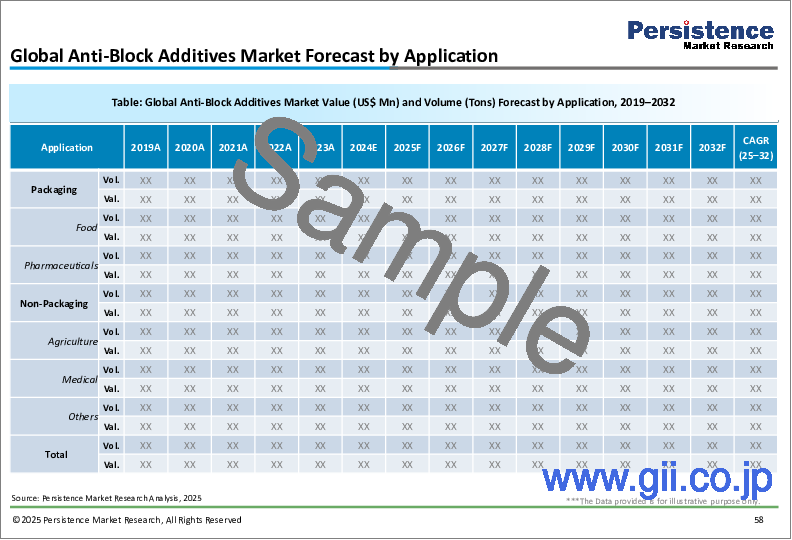
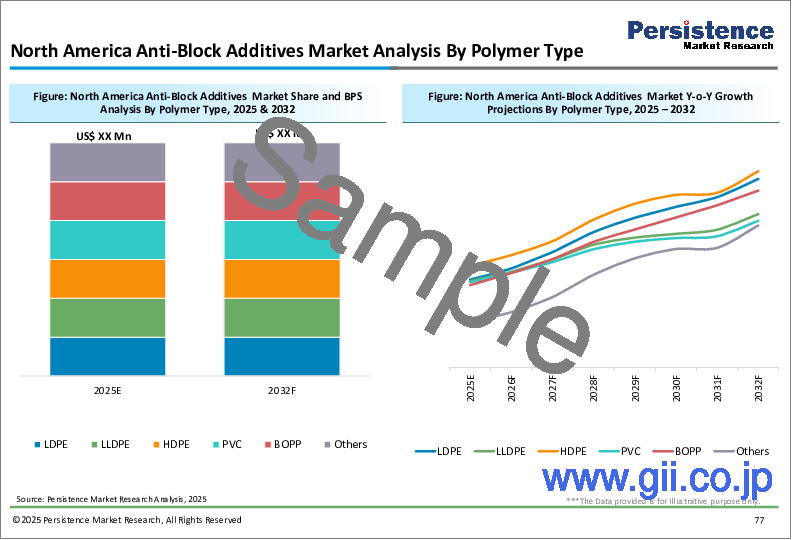
|
市場調査レポート
商品コード
1555599
アンチブロック添加剤市場:世界の産業分析、規模、シェア、成長、動向、予測、2024年~2033年Anti-Block Additives Market: Global Industry Analysis, Size, Share, Growth, Trends, and Forecast, 2024-2033 |
||||||
|
|
|||||||
カスタマイズ可能
|
|||||||
| アンチブロック添加剤市場:世界の産業分析、規模、シェア、成長、動向、予測、2024年~2033年 |
|
出版日: 2024年09月06日
発行: Persistence Market Research
ページ情報: 英文 300 Pages
納期: 2~5営業日
|
全表示
- 概要
- 目次
Persistence Market Researchはこのほど、世界のアンチブロック添加剤市場に関する詳細な調査レポートを発表し、主要促進要因、動向、機会・課題などの市場ダイナミクスを詳細に分析しました。本レポートは、市場構造とその様々な構成要素の包括的な概要を提供しています。
主要な洞察
- アンチブロック添加剤の市場規模(2024年):8億3,250万米ドル
- 予測市場金額(2033年):13億9,920万米ドル
- 世界市場成長率(CAGR 2024年~2033年):7.7%
アンチブロック添加剤市場:調査範囲
アンチブロック添加剤は、様々なポリマー製品の製造において、加工中や取り扱い中のフィルムやシートの粘着を防止するために使用される必須成分です。これらの添加剤は、ポリマー材料の層間の表面粘着を最小限に抑えることで、生産工程の効率を高めます。市場には、無機化合物や有機化合物などさまざまな種類の添加剤があり、それぞれが特定の産業要件に対応しています。アンチブロック添加剤の需要は、円滑な加工と品質管理が最も重要な包装、自動車、消費財などの産業で重要な役割を担っていることが背景にあります。
市場成長の促進要因:
世界のアンチブロック添加剤市場は、先進パッケージング・ソリューションに対する需要の増加や、多様な用途におけるポリマーフィルムの使用拡大など、いくつかの主要な要因によって支えられています。消費者向けパッケージング要件の高まりと製品品質向上のニーズが、アンチブロック添加剤の採用を後押ししています。さらに、添加剤技術と配合の進歩は、性能の向上と様々なポリマーとの適合性を提供することで、市場の成長に寄与しています。食品・飲料、医薬品、エレクトロニクスなどの最終用途産業の拡大が、市場の成長をさらに後押ししています。
市場抑制要因:
アンチブロック添加剤市場は有望な市場であるにもかかわらず、原料価格の変動や環境規制など、いくつかの課題に直面しています。高品質の添加剤や原材料のコストは、メーカーの生産コストや利益率に影響を与える可能性があります。さらに、厳しい環境規制と環境に優しいソリューションの推進により、添加剤メーカーに対する持続可能で適合性の高い製品の開発圧力が高まる可能性があります。性能と規制要件のバランスをとることが、市場関係者の課題となっています。
市場機会:
アンチブロック添加剤市場は、技術革新と様々な分野での用途拡大により、大きな成長機会をもたらしています。特性と持続可能性を強化した新しい添加剤処方の開拓は、市場拡大の道を開きます。自動車産業やエレクトロニクス産業では、軽量で高性能な材料を求める傾向が強まっており、潜在的な成長機会がもたらされています。さらに、添加剤メーカーとエンドユーザー業界との戦略的提携や協力関係は、技術革新と市場成長を促進する可能性があります。
本レポートで扱う主要な質問
- アンチブロック添加剤市場の世界的成長を促進する主要な要因は何か?
- さまざまな産業で最も需要のあるアンチブロック添加剤はどのタイプか?
- 技術の進歩はアンチブロック添加剤市場の競合情勢にどのような影響を与えているか?
- アンチブロック添加剤市場の主要企業はどこで、市場ポジションを維持するためにどのような戦略を取っているのか?
- 世界のアンチブロック添加剤市場の新たな動向と将来性は?
目次
第1章 エグゼクティブサマリー
第2章 市場概要
- 市場範囲 / 分類
- 市場の定義 / 範囲 / 制限
第3章 主要な市場動向
- 市場に影響を与える主要な動向
- イノベーション / 開発動向
第4章 主要な成功要因
- 製品の採用 / 使用状況分析
- 製品の革新と多様化
- マーケティング・ブランド管理
- サプライチェーンマネジメント
第5章 世界市場の需要分析
- 過去の市場数量(トン)分析、2019年~2023年
- 現在および将来の市場数量(トン)予測、2024年~2033年
- 前年比成長動向分析
第6章 世界市場 - 価格分析
- 価格分析:製品タイプ別
- 価格分析:地域別
- 世界平均価格分析ベンチマーク
第7章 世界市場の需要(金額または規模、百万米ドル)分析
- 過去の市場金額(百万米ドル)分析、2019年~2023年
- 現在および将来の市場金額(百万米ドル)予測、2024年~2033年
- 前年比成長動向分析
- 絶対額の機会分析
第8章 市場背景
- マクロ経済要因
- 予測要因 - 関連性と影響
- バリューチェーン分析
- 需要供給分析
- 市場力学
- COVID-19危機の影響
第9章 世界市場分析、製品タイプ別
- イントロダクション / 主要な調査結果
- 過去の市場規模(百万米ドル)と数量分析、製品タイプ別、2019年~2023年
- 現在および将来の市場規模(百万米ドル)と数量分析と予測、製品タイプ別、2024年~2033年
- 有機
- 無機
- 市場の魅力分析、製品タイプ別
第10章 世界市場分析、ポリマータイプ別
- イントロダクション / 主要な調査結果
- 過去の市場規模(百万米ドル)と数量分析、ポリマータイプ別、2019年~2023年
- 現在および将来の市場規模(百万米ドル)と数量分析と予測、ポリマータイプ別、2024年~2033年
- LDPE
- LLDPE
- HDPE
- PVC
- BOPP
- その他
- 市場の魅力分析、ポリマータイプ別
第11章 世界市場分析、用途別
- イントロダクション / 主要な調査結果
- 過去の市場規模(百万米ドル)と数量分析、用途別、2019年~2023年
- 現在および将来の市場規模(百万米ドル)と数量分析と予測、用途別、2024年~2033年
- 包装
- 非包装
- 市場の魅力分析:用途別
第12章 世界市場分析、地域別
- イントロダクション
- 過去の市場規模(百万米ドル)と数量分析、地域別、2019年~2023年
- 現在の市場規模(百万米ドル)と数量分析と予測、地域別、2024年~2033年
- 北米
- ラテンアメリカ
- 欧州
- 東アジア
- 南アジア・太平洋
- 中東・アフリカ
- 市場の魅力分析:地域別
第13章 北米市場分析
第14章 ラテンアメリカ市場分析
第15章 欧州市場分析
第16章 南アジア・太平洋市場分析
第17章 東アジア市場分析
第18章 中東・アフリカ市場分析
第19章 国別市場分析
- 米国市場分析
- カナダ市場分析
- メキシコ市場分析
- ブラジル市場分析
- ドイツ市場分析
- イタリア市場分析
- フランス市場分析
- 英国市場分析
- スペイン市場分析
- ロシア市場分析
- ベネルクス市場分析
- 中国市場分析
- 日本市場分析
- 韓国市場分析
- インド市場分析
- ASEAN市場分析
- ANZ市場分析
- GCC諸国市場分析
- トルコ市場分析
- 南アフリカ市場分析
第20章 市場構造分析
- 市場分析:企業階層別(アンチブロック添加剤)
- 市場集中
- 主要企業の市場シェア分析
- 主要企業の生産能力推定
- 市場プレゼンス分析
第21章 競合分析
- 競合ダッシュボード
- 競合ベンチマーク
- 競合の主要な発展
- 競合の詳細情報 - 企業プロファイル
- BASF SE
- The Dow Chemical Company
- Arkema S.A.
- Honeywell International Inc.
- W R Grace
- ExxonMobil Corporation
- Mitsui Chemicals, Inc.
- Evonik Industries AG
- BYK
- Croda International Plc
- INEOS
- SABIC
- Reliance Industries
第22章 使用される前提条件と頭字語
第23章 調査手法
Persistence Market Research has recently released a detailed report on the global Anti-Block Additives Market, offering an in-depth analysis of market dynamics, including key drivers, trends, opportunities, and challenges. This report provides a comprehensive overview of the market structure and its various components.
Key Insights:
- Anti-Block Additives Market Size (2024E): USD 832.5 Mn
- Projected Market Value (2033F): USD 1,399.2 Mn
- Global Market Growth Rate (CAGR 2024 to 2033): 7.7%
Anti-Block Additives Market - Report Scope:
Anti-block additives are essential components used in the manufacturing of various polymer products to prevent the sticking of films and sheets during processing and handling. These additives enhance the efficiency of production processes by minimizing surface adhesion between layers of polymer materials. The market includes a range of additive types, such as inorganic and organic compounds, each catering to specific industry requirements. The demand for anti-block additives is driven by their critical role in industries such as packaging, automotive, and consumer goods, where smooth processing and quality control are paramount.
Market Growth Drivers:
The global anti-block additives market is bolstered by several key factors, including the increasing demand for advanced packaging solutions and the growing use of polymer films in diverse applications. The rise in consumer packaging requirements and the need for enhanced product quality drive the adoption of anti-block additives. Additionally, advancements in additive technologies and formulations contribute to market growth by offering improved performance and compatibility with various polymers. The expansion of end-use industries such as food and beverage, pharmaceuticals, and electronics further fuels the market's growth.
Market Restraints:
Despite its promising prospects, the anti-block additives market faces several challenges, including fluctuations in raw material prices and environmental regulations. The cost of high-quality additives and raw materials can impact production costs and profit margins for manufacturers. Additionally, stringent environmental regulations and the push for eco-friendly solutions may lead to increased pressure on additive producers to develop sustainable and compliant products. Balancing performance with regulatory requirements poses a challenge for market players.
Market Opportunities:
The anti-block additives market presents significant growth opportunities driven by technological innovations and increasing applications across various sectors. The development of new additive formulations with enhanced properties and sustainability features opens avenues for market expansion. The growing trend towards lightweight and high-performance materials in the automotive and electronics industries offers potential growth opportunities. Furthermore, strategic collaborations and partnerships between additive producers and end-user industries can drive innovation and market growth.
Key Questions Answered in the Report:
- What are the primary factors driving the growth of the anti-block additives market globally?
- Which types of anti-block additives are most in demand across different industries?
- How are technological advancements influencing the competitive landscape of the anti-block additives market?
- Who are the key players in the anti-block additives market, and what strategies are they employing to maintain their market position?
- What are the emerging trends and future prospects in the global anti-block additives market?
Competitive Intelligence and Business Strategy:
Leading players in the global anti-block additives market, including [Insert Key Players], focus on innovation, product differentiation, and strategic partnerships to maintain a competitive edge. These companies invest in research and development to create advanced additive solutions that meet diverse industry needs and regulatory standards. Collaborations with polymer manufacturers and end-user industries facilitate market access and foster technological advancements. Emphasis on sustainability and performance enhancement is central to driving growth and maintaining market relevance.
Key Companies Profiled:
- BASF SE
- The Dow Chemical Company
- Arkema S.A.
- Honeywell International Inc.
- W R Grace
- ExxonMobil Corporation
- Mitsui Chemicals, Inc.
- Evonik Industries AG
- BYK
- Croda International Plc
- INEOS
- SABIC
- Reliance Industries
Anti-block Additives Market Segmentation
Product Type:
- Organic
- Inorganic
Polymer Type:
- LDPE
- LLDPE
- HDPE
- PVC
- BOPP
Application:
- Packaging
- Non-Packaging
By Region:
- North America
- Latin America
- Europe
- East Asia
- South Asia & Pacific
- Middle East & Africa
Table of Contents
1. Executive Summary
- 1.1. Global Market Outlook
- 1.2. Demand Side Trends
- 1.3. Supply Side Trends
- 1.4. Technology Roadmap
- 1.5. Analysis and Recommendations
2. Market Overview
- 2.1. Market Coverage / Taxonomy
- 2.2. Market Definition / Scope / Limitations
3. Key Market Trends
- 3.1. Key Trends Impacting the Market
- 3.2. Innovation / Development Trends
4. Key Success Factors
- 4.1. Product Adoption / Usage Analysis
- 4.2. Product innovation & Diversification
- 4.3. Marketing and Brand management
- 4.4. Supply Chain Management
5. Global Market Demand Analysis 2019-2023 and Forecast, 2024-2033
- 5.1. Historical Market Volume (Tons) Analysis, 2019-2023
- 5.2. Current and Future Market Volume (Tons) Projections, 2024-2033
- 5.3. Y-o-Y Growth Trend Analysis
6. Global Market - Pricing Analysis
- 6.1. Pricing Analysis By Product Type
- 6.2. Pricing Analysis By Regions
- 6.3. Global Average Pricing Analysis Benchmark
7. Global Market Demand (in Value or Size in US$ Mn) Analysis 2019-2023 and Forecast, 2024-2033
- 7.1. Historical Market Value (US$ Mn) Analysis, 2019-2023
- 7.2. Current and Future Market Value (US$ Mn) Projections, 2024-2033
- 7.2.1. Y-o-Y Growth Trend Analysis
- 7.2.2. Absolute $ Opportunity Analysis
8. Market Background
- 8.1. Macro-Economic Factors
- 8.1.1. Global GDP Growth Outlook
- 8.1.2. Global Chemical Industry Overview
- 8.1.3. Global Packaging Industry Overview
- 8.1.4. Other Key Macroeconomic Factors
- 8.2. Forecast Factors - Relevance & Impact
- 8.2.1. Historic Growth Rate of Companies
- 8.2.2. Impact of Regulations
- 8.2.3. Competitive Intensity
- 8.2.4. Other Key Forecast Factors
- 8.3. Value Chain Analysis
- 8.4. Demand-Supply Analysis
- 8.5. Market Dynamics
- 8.5.1. Drivers
- 8.5.2. Restraints
- 8.5.3. Opportunity Analysis
- 8.6. Impact of COVID - 19 Crisis
- 8.6.1. Introduction
- 8.6.2. World Economy / Cluster Projections
- 8.6.3. Potential of Impact by Taxonomy
- 8.6.4. Recovery Scenario (Short, Mid, and Long term)
- 8.6.5. Key Strategies
9. Global Market Analysis 2019-2023 and Forecast 2024-2033, By Product Type
- 9.1. Introduction / Key Findings
- 9.2. Historical Market Size (US$ Mn) and Volume Analysis By Product Type, 2019-2023
- 9.3. Current and Future Market Size (US$ Mn) and Volume Analysis and Forecast By Product Type, 2024-2033
- 9.3.1. Organic
- 9.3.2. Inorganic
- 9.4. Market Attractiveness Analyses, By Product Type
10. Global Market Analysis 2019-2023 and Forecast 2024-2033, By Polymer Type
- 10.1. Introduction / Key Findings
- 10.2. Historical Market Size (US$ Mn) and Volume Analysis By Polymer Type, 2019-2023
- 10.3. Current and Future Market Size (US$ Mn) and Volume Analysis and Forecast By Polymer Type, 2024-2033
- 10.3.1. LDPE
- 10.3.2. LLDPE
- 10.3.3. HDPE
- 10.3.4. PVC
- 10.3.5. BOPP
- 10.3.6. Others
- 10.4. Market Attractiveness Analyses, By Polymer Type
11. Global Market Analysis 2019-2023 and Forecast 2024-2033, By Application
- 11.1. Introduction / Key Findings
- 11.2. Historical Market Size (US$ Mn) and Volume Analysis By Application, 2019-2023
- 11.3. Current and Future Market Size (US$ Mn) and Volume Analysis and Forecast By Application, 2024-2033
- 11.3.1. Packaging
- 11.3.1.1. Food
- 11.3.1.2. Pharmaceuticals
- 11.3.2. Non-Packaging
- 11.3.2.1. Agriculture
- 11.3.2.2. Medical
- 11.3.2.3. Others
- 11.3.1. Packaging
- 11.4. Market Attractiveness Analysis By Application
12. Global Market Analysis 2019-2023 and Forecast 2024-2033, by Region
- 12.1. Introduction
- 12.2. Historical Market Size (US$ Mn) and Volume Analysis By Region, 2019-2023
- 12.3. Current Market Size (US$ Mn) and Volume Analysis and Forecast By Region, 2024-2033
- 12.3.1. North America
- 12.3.2. Latin America
- 12.3.3. Europe
- 12.3.4. East Asia
- 12.3.5. South Asia & Pacific
- 12.3.6. Middle East & Africa
- 12.4. Market Attractiveness Analysis By Region
13. North America Market Analysis 2019-2023 and Forecast 2024-2033
- 13.1. Introduction
- 13.2. Historical Market Size (US$ Mn) and Volume Trend Analysis By Market Taxonomy, 2019-2023
- 13.3. Market Size (US$ Mn) and Volume Forecast By Market Taxonomy, 2024-2033
- 13.3.1. By Product Type
- 13.3.2. By Polymer Type
- 13.3.3. By Application
- 13.3.4. By Country
- 13.3.4.1. U.S.
- 13.3.4.2. Canada
- 13.4. Market Attractiveness Analysis
- 13.4.1. By Product Type
- 13.4.2. By Polymer Type
- 13.4.3. By Application
- 13.4.4. By Country
- 13.5. Market Trends
14. Latin America Market Analysis 2019-2023 and Forecast 2024-2033
- 14.1. Introduction
- 14.2. Historical Market Size (US$ Mn) and Volume Trend Analysis By Market Taxonomy, 2019-2023
- 14.3. Market Size (US$ Mn) and Volume Forecast By Market Taxonomy, 2024-2033
- 14.3.1. By Product Type
- 14.3.2. By Polymer Type
- 14.3.3. By Application
- 14.3.4. By Country
- 14.3.4.1. Brazil
- 14.3.4.2. Mexico
- 14.3.4.3. Rest of Latin America
- 14.4. Market Attractiveness Analysis
- 14.4.1. By Product Type
- 14.4.2. By Polymer Type
- 14.4.3. By Application
- 14.4.4. By Country
- 14.5. Market Trends
15. Europe Market Analysis 2019-2023 and Forecast 2024-2033
- 15.1. Introduction
- 15.2. Historical Market Size (US$ Mn) and Volume Trend Analysis By Market Taxonomy, 2019-2023
- 15.3. Market Size (US$ Mn) and Volume Forecast By Market Taxonomy, 2024-2033
- 15.3.1. By Product Type
- 15.3.2. By Polymer Type
- 15.3.3. By Application
- 15.3.4. By Country
- 15.3.4.1. Germany
- 15.3.4.2. Italy
- 15.3.4.3. France
- 15.3.4.4. U.K.
- 15.3.4.5. Spain
- 15.3.4.6. Russia
- 15.3.4.7. Rest of Europe
- 15.4. Market Attractiveness Analysis
- 15.4.1. By Product Type
- 15.4.2. By Polymer Type
- 15.4.3. By Application
- 15.4.4. By Country
- 15.5. Market Trends
16. South Asia & Pacific Market Analysis 2019-2023 and Forecast 2024-2033
- 16.1. Introduction
- 16.2. Historical Market Size (US$ Mn) and Volume Trend Analysis By Market Taxonomy, 2019-2023
- 16.3. Market Size (US$ Mn) and Volume Forecast By Market Taxonomy, 2024-2033
- 16.3.1. By Product Type
- 16.3.2. By Polymer Type
- 16.3.3. By Application
- 16.3.4. By Country
- 16.3.4.1. India
- 16.3.4.2. ASEAN
- 16.3.4.3. ANZ
- 16.3.4.4. Rest of South Asia & Pacific
- 16.4. Market Attractiveness Analysis
- 16.4.1. By Product Type
- 16.4.2. By Polymer Type
- 16.4.3. By Application
- 16.4.4. By Country
- 16.5. Market Trends
17. East Asia Market Analysis 2019-2023 and Forecast 2024-2033
- 17.1. Introduction
- 17.2. Historical Market Size (US$ Mn) and Volume Trend Analysis By Market Taxonomy, 2019-2023
- 17.3. Market Size (US$ Mn) and Volume Forecast By Market Taxonomy, 2024-2033
- 17.3.1. By Product Type
- 17.3.2. By Polymer Type
- 17.3.3. By Application
- 17.3.4. By Country
- 17.3.4.1. China
- 17.3.4.2. Japan
- 17.3.4.3. South Korea
- 17.4. Market Attractiveness Analysis
- 17.4.1. By Product Type
- 17.4.2. By Polymer Type
- 17.4.3. By Application
- 17.4.4. By Country
- 17.5. Market Trends
18. Middle East and Africa Market Analysis 2019-2023 and Forecast 2024-2033
- 18.1. Introduction
- 18.2. Historical Market Size (US$ Mn) and Volume Trend Analysis By Market Taxonomy, 2019-2023
- 18.3. Market Size (US$ Mn) and Volume Forecast By Market Taxonomy, 2024-2033
- 18.3.1. By Product Type
- 18.3.2. By Polymer Type
- 18.3.3. By Application
- 18.3.4. By Country
- 18.3.4.1. GCC Countries
- 18.3.4.2. Turkey
- 18.3.4.3. South Africa
- 18.3.4.4. Rest of Middle East and Africa
- 18.4. Market Attractiveness Analysis
- 18.4.1. By Product Type
- 18.4.2. By Polymer Type
- 18.4.3. By Application
- 18.4.4. By Country
- 18.5. Market Trends
19. Country-wise Market Analysis
- 19.1. U.S. Market Analysis
- 19.1.1. By Product Type
- 19.1.2. By Polymer Type
- 19.1.3. By Application
- 19.2. Canada Market Analysis
- 19.2.1. By Product Type
- 19.2.2. By Polymer Type
- 19.2.3. By Application
- 19.3. Mexico Market Analysis
- 19.3.1. By Product Type
- 19.3.2. By Polymer Type
- 19.3.3. By Application
- 19.4. Brazil Market Analysis
- 19.4.1. By Product Type
- 19.4.2. By Polymer Type
- 19.4.3. By Application
- 19.5. Germany Market Analysis
- 19.5.1. By Product Type
- 19.5.2. By Polymer Type
- 19.5.3. By Application
- 19.6. Italy Market Analysis
- 19.6.1. By Product Type
- 19.6.2. By Polymer Type
- 19.6.3. By Application
- 19.7. France Market Analysis
- 19.7.1. By Product Type
- 19.7.2. By Polymer Type
- 19.7.3. By Application
- 19.8. U.K. Market Analysis
- 19.8.1. By Product Type
- 19.8.2. By Polymer Type
- 19.8.3. By Application
- 19.9. Spain Market Analysis
- 19.9.1. By Product Type
- 19.9.2. By Polymer Type
- 19.9.3. By Application
- 19.10. Russia Market Analysis
- 19.10.1. By Product Type
- 19.10.2. By Polymer Type
- 19.10.3. By Application
- 19.11. BENELUX Market Analysis
- 19.11.1. By Product Type
- 19.11.2. By Polymer Type
- 19.11.3. By Application
- 19.12. China Market Analysis
- 19.12.1. By Product Type
- 19.12.2. By Polymer Type
- 19.12.3. By Application
- 19.13. Japan Market Analysis
- 19.13.1. By Product Type
- 19.13.2. By Polymer Type
- 19.13.3. By Application
- 19.14. S. Korea Market Analysis
- 19.14.1. By Product Type
- 19.14.2. By Polymer Type
- 19.14.3. By Application
- 19.15. India Market Analysis
- 19.15.1. By Product Type
- 19.15.2. By Polymer Type
- 19.15.3. By Application
- 19.16. ASEAN Market Analysis
- 19.16.1. By Product Type
- 19.16.2. By Polymer Type
- 19.16.3. By Application
- 19.17. ANZ Market Analysis
- 19.17.1. By Product Type
- 19.17.2. By Polymer Type
- 19.17.3. By Application
- 19.18. GCC Countries Market Analysis
- 19.18.1. By Product Type
- 19.18.2. By Polymer Type
- 19.18.3. By Application
- 19.19. Turkey Market Analysis
- 19.19.1. By Product Type
- 19.19.2. By Polymer Type
- 19.19.3. By Application
- 19.20. South Africa Market Analysis
- 19.20.1. By Product Type
- 19.20.2. By Polymer Type
- 19.20.3. By Application
20. Market Structure Analysis
- 20.1. Market Analysis by Tier of Companies [Anti-Block Additive]
- 20.2. Market Concentration
- 20.3. Market Share Analysis of Top Players
- 20.4. Production Capacity Estimates of Top Players
- 20.5. Market Presence Analysis
- 20.5.1. By Regional footprint of Players
- 20.5.2. Product foot print by Players
21. Competition Analysis
- 21.1. Competition Dashboard
- 21.2. Competition Benchmarking
- 21.3. Competition Key Developments
- 21.4. Competition Deep Dive - Company Profiles
- 21.4.1. BASF SE
- 21.4.1.1. Overview
- 21.4.1.2. Product Portfolio
- 21.4.1.3. Key Financials
- 21.4.1.4. Sales Footprint
- 21.4.1.5. Recent Developments
- 21.4.1.6. Strategy Overview
- 21.4.2. The Dow Chemical Company
- 21.4.2.1. Overview
- 21.4.2.2. Product Portfolio
- 21.4.2.3. Key Financials
- 21.4.2.4. Sales Footprint
- 21.4.2.5. Recent Developments
- 21.4.2.6. Strategy Overview
- 21.4.3. Arkema S.A.
- 21.4.3.1. Overview
- 21.4.3.2. Product Portfolio
- 21.4.3.3. Key Financials
- 21.4.3.4. Sales Footprint
- 21.4.3.5. Recent Developments
- 21.4.3.6. Strategy Overview
- 21.4.4. Honeywell International Inc.
- 21.4.4.1. Overview
- 21.4.4.2. Product Portfolio
- 21.4.4.3. Key Financials
- 21.4.4.4. Sales Footprint
- 21.4.4.5. Recent Developments
- 21.4.4.6. Strategy Overview
- 21.4.5. W R Grace
- 21.4.5.1. Overview
- 21.4.5.2. Product Portfolio
- 21.4.5.3. Key Financials
- 21.4.5.4. Sales Footprint
- 21.4.5.5. Recent Developments
- 21.4.5.6. Strategy Overview
- 21.4.6. ExxonMobil Corporation
- 21.4.6.1. Overview
- 21.4.6.2. Product Portfolio
- 21.4.6.3. Key Financials
- 21.4.6.4. Sales Footprint
- 21.4.6.5. Recent Developments
- 21.4.6.6. Strategy Overview
- 21.4.7. Mitsui Chemicals, Inc.
- 21.4.7.1. Overview
- 21.4.7.2. Product Portfolio
- 21.4.7.3. Key Financials
- 21.4.7.4. Sales Footprint
- 21.4.7.5. Recent Developments
- 21.4.7.6. Strategy Overview
- 21.4.8. Evonik Industries AG
- 21.4.8.1. Overview
- 21.4.8.2. Product Portfolio
- 21.4.8.3. Key Financials
- 21.4.8.4. Sales Footprint
- 21.4.8.5. Recent Developments
- 21.4.8.6. Strategy Overview
- 21.4.9. BYK
- 21.4.9.1. Overview
- 21.4.9.2. Product Portfolio
- 21.4.9.3. Key Financials
- 21.4.9.4. Sales Footprint
- 21.4.9.5. Recent Developments
- 21.4.9.6. Strategy Overview
- 21.4.10. Croda International Plc
- 21.4.10.1. Overview
- 21.4.10.2. Product Portfolio
- 21.4.10.3. Key Financials
- 21.4.10.4. Sales Footprint
- 21.4.10.5. Recent Developments
- 21.4.10.6. Strategy Overview
- 21.4.11. INEOS
- 21.4.11.1. Overview
- 21.4.11.2. Product Portfolio
- 21.4.11.3. Key Financials
- 21.4.11.4. Sales Footprint
- 21.4.11.5. Recent Developments
- 21.4.11.6. Strategy Overview
- 21.4.12. SABIC
- 21.4.12.1. Overview
- 21.4.12.2. Product Portfolio
- 21.4.12.3. Key Financials
- 21.4.12.4. Sales Footprint
- 21.4.12.5. Recent Developments
- 21.4.12.6. Strategy Overview
- 21.4.13. Reliance Industries
- 21.4.13.1. Overview
- 21.4.13.2. Product Portfolio
- 21.4.13.3. Key Financials
- 21.4.13.4. Sales Footprint
- 21.4.13.5. Recent Developments
- 21.4.13.6. Strategy Overview
- 21.4.1. BASF SE