

|
市場調査レポート
商品コード
1553407
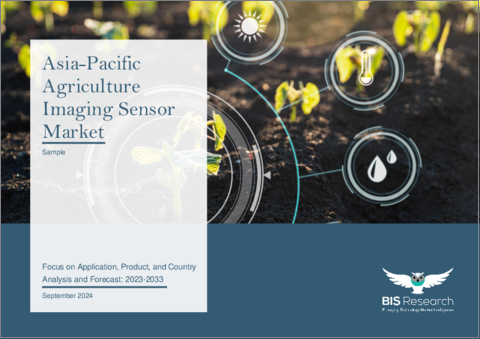
アジア太平洋の農業用画像センサー市場:用途・製品・国別の分析・予測 (2023-2033年)Asia-Pacific Agriculture Imaging Sensor Market: Focus on Application, Product, and Country - Analysis and Forecast, 2023-2033 |
||||||
|
|
|||||||
カスタマイズ可能
|
|||||||
| アジア太平洋の農業用画像センサー市場:用途・製品・国別の分析・予測 (2023-2033年) |
|
出版日: 2024年09月12日
発行: BIS Research
ページ情報: 英文 63 Pages
納期: 1~5営業日
|
全表示
- 概要
- 図表
- 目次
アジア太平洋の農業用画像センサーの市場規模は、2023年の1億6,690万米ドルから、2033年には6億220万米ドルの規模に成長すると予測されています。
同地域の大幅な市場拡大は、農業用画像センサー技術の採用と進歩が原動力となっています。同地域では、最近の動向からも明らかなように、土壌マップ、収量マップ、可変レート技術 (VRT) のようなデジタル農業技術が主な作物でより多く使用されています。このパターンは、同地域の画像センサーのニーズが大幅に増加していることを示唆しています。
さまざまな波長のデータを記録できるマルチスペクトルセンサーは、農業用画像センサーの世界市場において重要な製品カテゴリーになりつつあります。これらのセンサーの助けにより、作物の健康状態、栄養レベル、害虫の発生に関する有益な情報が得られ、正確な意思決定がサポートされます。
| 主要市場統計 | |
|---|---|
| 予測期間 | 2023-2033年 |
| 2023年評価 | 1億6,690万米ドル |
| 2033年予測 | 6億220万米ドル |
| CAGR | 13.69% |
アジア太平洋地域の農業部門では、最先端技術の利用が増加しており、農業用画像センサーの急成長に拍車をかけています。同地域の農業部門が持続可能性と生産性の向上を目指す中で、画像センサーの統合はますます重要になっています。土壌マップ、収量マップ、可変レート技術 (VRT) などのデジタルマッピング技術の使用により、これらのセンサーは農業管理とモニタリングをより正確にする有用なデータを供給します。
複数の波長にわたってデータを取得するマルチスペクトルセンサーなど、最近のセンサー技術の進歩により、農業慣行は大きく変化しています。これらのセンサーは、害虫の発生、栄養レベル、作物の健康状態に関する重要な情報を提供し、農家が収量を最大化し、資源の使用を最小限に抑える決定を下すことを可能にします。
同地域が技術革新と環境に優しい農法を重視していることも、画像センサーの需要の拡大に寄与しています。デジタル農業のためのインフラ投資が進んでおり、政府のイニシアチブが市場の成長を後押ししています。同地域による農業のデジタルトランスフォーメーションの受け入れから、農業用画像センサーの市場は大きく成長すると予想されます。これにより、同地域全体で技術の進歩と農業の効率化が進む機会が数多くもたらされています。
市場の分類
セグメンテーション1:エンドユーザー別
- 農業ロボットメーカー
- 農業用ドローンメーカー
- 家畜モニタリング機器メーカー
- その他
セグメンテーション2:製品別
- RGBセンサー
- ハイパースペクトルセンサ
- マルチスペクトルセンサー
- その他
セグメンテーション3:地域別
- 日本、中国、オーストラリア、その他
当レポートでは、アジア太平洋の農業用画像センサーの市場を調査し、業界の動向、技術・特許の動向、法規制環境、市場成長促進要因・抑制要因、市場規模の推移・予測、各種区分・主要国別の詳細分析、競合情勢、主要企業のプロファイルなどをまとめています。
目次
エグゼクティブサマリー
第1章 市場
- 動向:現在および将来の影響評価
- AIの進歩
- ドローンと自動化機械との統合
- コスト効率の高いイメージングセンサーの台頭
- サプライチェーンの概要
- バリューチェーン分析
- マーケットマップ
- R&Dレビュー
- 特許出願動向 (国・企業別)
- 規制状況
- 市場力学の概要
- 市場促進要因
- 市場抑制要因
- 市場機会
第2章 地域
- 地域別概要
- 促進要因と抑制要因
- アジア太平洋
- 地域概要
- 市場成長推進因子
- 市場課題
- 用途
- 製品
- 中国
- オーストラリア
- 日本
- その他
第3章 市場:競合ベンチマーキングと企業プロファイル
- 次なるフロンティア
- 地理的評価
- Sony Semiconductor Solutions Corporation
- Hamamatsu Photonics K.K.
第4章 調査手法
List of Figures
- Figure 1: Agriculture Imaging Sensor Market (by Region), $Million, 2022, 2023, and 2033
- Figure 2: Asia-PacificAgriculture Imaging Sensor Market (by End User), $Million, 2022, 2023, and 2033
- Figure 3: Asia-Pacific Agriculture Imaging Sensor Market (by Product), $ Million, 2022, 2023, and 2033
- Figure 4: Agriculture Imaging Sensor, Recent Developments
- Figure 5: Investments in Artificial Intelligence, $Billion, 2019-2022
- Figure 6: Supply Chain and Risks within the Supply Chain
- Figure 7: Patent Analysis (by Country), January 2020-December 2023
- Figure 8: Patent Analysis (by Company), January 2020-December 2023
- Figure 9: Impact Analysis of Market Navigating Factors, 2023-2033
- Figure 10: China Agriculture Imaging Sensor Market, $Million, 2022-2033
- Figure 11: Australia Agriculture Imaging Sensor Market, $Million, 2022-2033
- Figure 12: Japan Agriculture Imaging Sensor Market, $Million, 2022-2033
- Figure 13: Rest-of-Asia-Pacific Agriculture Imaging Sensor Market, $Million, 2022-2033
- Figure 14: Data Triangulation
- Figure 15: Top-Down and Bottom-Up Approach
- Figure 16: Assumptions and Limitations
List of Tables
- Table 1: Market Snapshot
- Table 2: Opportunities across Region
- Table 3: Agriculture Imaging Sensor Market (by Region), $Million, 2022-2033
- Table 4: Asia-Pacific Agriculture Imaging Sensor Market (by End User), $Million, 2022-2033
- Table 5: Asia-Pacific Agriculture Imaging Sensor Market (by End User), Units, 2022-2033
- Table 6: Asia-Pacific Agriculture Imaging Sensor Market (by Product), $Million, 2022-2033
- Table 7: Asia-Pacific Agriculture Imaging Sensor Market (by Product), Units, 2022-2033
- Table 8: China Agriculture Imaging Sensor Market (by End User), $Million, 2022-2033
- Table 9: China Agriculture Imaging Sensor Market (by End User), Units, 2022-2033
- Table 10: China Agriculture Imaging Sensor Market (by Product), $Million, 2022-2033
- Table 11: China Agriculture Imaging Sensor Market (by Product), Units, 2022-2033
- Table 12: Australia Agriculture Imaging Sensor Market (by End User), $Million, 2022-2033
- Table 13: Australia Agriculture Imaging Sensor Market (by End User), Units, 2022-2033
- Table 14: Australia Agriculture Imaging Sensor Market (by Product), $Million, 2022-2033
- Table 15: Australia Agriculture Imaging Sensor Market (by Product), Units, 2022-2033
- Table 16: Japan Agriculture Imaging Sensor Market (by End User), $Million, 2022-2033
- Table 17: Japan Agriculture Imaging Sensor Market (by End User), Units, 2022-2033
- Table 18: Japan Agriculture Imaging Sensor Market (by Product), $Million, 2022-2033
- Table 19: Japan Agriculture Imaging Sensor Market (by Product), Units, 2022-2033
- Table 20: Rest-of-Asia-Pacific Agriculture Imaging Sensor Market (by End User), $Million, 2022-2033
- Table 21: Rest-of-Asia-Pacific Agriculture Imaging Sensor Market (by End User), Units, 2022-2033
- Table 22: Rest-of-Asia-Pacific Agriculture Imaging Sensor Market (by Product), $Million, 2022-2033
- Table 23: Rest-of-Asia-Pacific Agriculture Imaging Sensor Market (by Product), Units, 2022-2033
Introduction to Asia-Pacific Agriculture Imaging Sensor Market
The Asia-Pacific agriculture imaging sensor market was valued at $166.9 million in 2023 and is expected to reach $602.2 million by 2033. The significant market expansion in Asia-Pacific is being driven by the growing adoption and advancement of agriculture imaging sensor technology. The region is using more digital agriculture technologies, like soil maps, yield maps, and variable rate technologies (VRT), in key crops, as evidenced by recent developments. This pattern suggests that APAC's need for imaging sensors is significantly increasing.
With the ability to record data at various wavelengths, multispectral sensors are becoming a vital product category in the global market for agricultural imaging sensors. With the help of these sensors, accurate decision-making is supported by useful information about crop health, nutrient levels, and pest infestations. By increasing yields and maximizing resource use, this cutting-edge technology improves agricultural practices and demonstrates the region's dedication to utilizing technological advancements for more productive and sustainable farming.
| KEY MARKET STATISTICS | |
|---|---|
| Forecast Period | 2023 - 2033 |
| 2023 Evaluation | $166.9 Million |
| 2033 Forecast | $602.2 Million |
| CAGR | 13.69% |
Market Introduction
The increasing use of cutting-edge technologies in the region's agricultural sector is fueling the rapid growth of the APAC market for agriculture imaging sensors. The integration of imaging sensors is becoming increasingly important as the agriculture sector in Asia-Pacific looks to increase sustainability and productivity. With the use of digital mapping technologies like soil maps, yield maps, and variable rate technologies (VRT), these sensors supply useful data that makes agricultural management and monitoring more accurate.
Agricultural practices are being revolutionized by recent advances in sensor technology, such as multispectral sensors that capture data across multiple wavelengths. These sensors provide vital information about pest infestations, nutrient levels, and crop health, enabling farmers to make decisions that maximize yields and minimize resource usage.
The region's emphasis on technological innovation and environmentally friendly farming methods also contributes to the growing demand for imaging sensors. The infrastructure for digital agriculture is being invested in and government initiatives are driving the market's growth. The market for agriculture imaging sensors is expected to grow significantly as APAC continues to embrace digital transformation in agriculture. This presents a number of opportunities for technological advancements and increased agricultural efficiency throughout the region.
Market Segmentation:
Segmentation 1: by End User
- Agriculture Robot Manufacturer
- Agriculture Drone Manufacturer
- Livestock Monitoring Equipment Manufacturer
- Others
Segmentation 2: by Product
- RGB Sensor
- Hyperspectral Sensor
- Multispectral Sensor
- Others
Segmentation 3: by Region
- Asia-Pacific - Japan, China, Australia, and Rest-of-Asia-Pacific
How can this report add value to an organization?
Product/Innovation Strategy: The market is poised for significant expansion with ongoing technological advancements, increased investments, and growing awareness of precision agriculture. Therefore, the agriculture imaging sensor business is a high-investment and high-revenue generating model.
Growth/Marketing Strategy: The Asia-Pacific agriculture imaging sensor market has been growing at a rapid pace. The market offers enormous opportunities for existing and emerging market players. Some of the strategies covered in this segment are mergers and acquisitions, product launches, partnerships and collaborations, business expansions, and investments. The strategies preferred by companies to maintain and strengthen their market position primarily include partnerships and collaborations.
Competitive Strategy: The key players in the Asia-Pacific agriculture imaging sensor market analyzed and profiled in the study include imaging sensor manufacturers. Additionally, a comprehensive competitive landscape such as partnerships, agreements, and collaborations are expected to aid the reader in understanding the untapped revenue pockets in the market.
Key Market Players and Competition Synopsis
The companies that are profiled have been selected based on inputs gathered from primary experts and analyzing company coverage, product portfolio, and market penetration.
Some of the prominent names in this market are:
- Sony Semiconductor Solutions Corporation
- Hamamatsu Photonics K.K.
Table of Contents
Executive Summary
Scope and Definition
1 Markets
- 1.1 Trends: Current and Future Impact Assessment
- 1.1.1 Advancements in Artificial Intelligence
- 1.1.2 Integration with Drones and Automated Machinery
- 1.1.3 Rising Trend of Cost-Effective Imaging Sensors
- 1.2 Supply Chain Overview
- 1.2.1 Value Chain Analysis
- 1.2.2 Market Map
- 1.3 Research and Development Review
- 1.3.1 Patent Filing Trend (by Country and Company)
- 1.4 Regulatory Landscape
- 1.5 Market Dynamics Overview
- 1.5.1 Market Drivers
- 1.5.1.1 Increasing Use of Precision Agriculture and Yield Optimization
- 1.5.1.2 Innovations in Imaging Technologies
- 1.5.1.3 Government Initiatives and Support
- 1.5.2 Market Restraints
- 1.5.2.1 High Initial Investment Cost
- 1.5.2.2 Lack of Technical Skills in Farmers
- 1.5.3 Market Opportunities
- 1.5.3.1 Collaborations in Agri-Tech Startups
- 1.5.3.2 Expansion in Developing Economies
- 1.5.1 Market Drivers
2 Regions
- 2.1 Regional Summary
- 2.2 Drivers and Restraints
- 2.3 Asia-Pacific
- 2.3.1 Regional Overview
- 2.3.2 Driving Factors for Market Growth
- 2.3.3 Factors Challenging the Market
- 2.3.4 Application
- 2.3.5 Product
- 2.3.6 China
- 2.3.7 Australia
- 2.3.8 Japan
- 2.3.9 Rest-of-Asia-Pacific
3 Markets - Competitive Benchmarking & Company Profiles
- 3.1 Next Frontiers
- 3.2 Geographic Assessment
- 3.2.1 Sony Semiconductor Solutions Corporation
- 3.2.1.1 Overview
- 3.2.1.2 Top Products/Product Portfolio
- 3.2.1.3 Top Competitors
- 3.2.1.4 Target Customers
- 3.2.1.5 Key Personnel
- 3.2.1.6 Analyst View
- 3.2.1.7 Market Share
- 3.2.2 Hamamatsu Photonics K.K.
- 3.2.2.1 Overview
- 3.2.2.2 Top Products/Product Portfolio
- 3.2.2.3 Top Competitors
- 3.2.2.4 Target Customers
- 3.2.2.5 Key Personnel
- 3.2.2.6 Analyst View
- 3.2.2.7 Market Share
- 3.2.1 Sony Semiconductor Solutions Corporation
4 Research Methodology
- 4.1 Data Sources
- 4.1.1 Primary Data Sources
- 4.1.2 Secondary Data Sources
- 4.1.3 Data Triangulation
- 4.2 Market Estimation and Forecast