
|
市場調査レポート
商品コード
1644888
インドのD2C eコマース-市場シェア分析、産業動向と統計、成長予測(2025年~2030年)India D2C E-commerce - Market Share Analysis, Industry Trends & Statistics, Growth Forecasts (2025 - 2030) |
||||||
カスタマイズ可能
適宜更新あり
|
|||||||
| インドのD2C eコマース-市場シェア分析、産業動向と統計、成長予測(2025年~2030年) |
|
出版日: 2025年01月05日
発行: Mordor Intelligence
ページ情報: 英文 100 Pages
納期: 2~3営業日
|
全表示
- 概要
- 目次
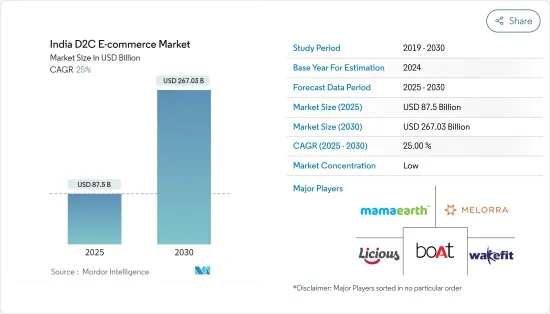
インドのD2C eコマース市場規模は2025年に875億米ドルと推定され、予測期間(2025~2030年)のCAGRは25%で、2030年には2,670億3,000万米ドルに達すると予測されます。
主要ハイライト
- 消費者直接販売(D2C)eコマースは、企業が従来の小売店を迂回して購入者に直接製品を販売するビジネスモデルです。この直接的なアプローチにより、購入者とブランド間の直接的なコミュニケーションが促進され、ブランドロイヤルティが育まれ、顧客の嗜好が理解され、リピート購入が促進されます。D2Cのeコマースは極めて重要であり、メーカーがオンラインストアを通じて消費者に直接販売することを可能にする(B2Cと呼ばれる)。
- D2Cのeコマース戦略を採用することで、メーカーは包装からマーケティングまで、エンド・ツー・エンドでコントロールできるようになります。堅調な個人消費とeコマース普及率の急上昇により、インドのD2C市場は予測期間中に成長する見込みです。さらに、D2Cプラットフォームは消費者に好みの商品を購入する柔軟性を与え、オンラインショッピングの魅力を増幅させています。デジタルeコマース製品への意欲が高まるにつれ、インド市場の勢いはさらに加速します。
- 消費者直接販売(D2C)モデルは、ブランドにとって製品テストの選択肢の幅が広がります。ブランドは、特定の製品の先行販売や期間限定オファーの導入、新開発製品のベータテスト、どの製品をどのような数量でどこで製造するかを決定することができます。さらに、D2Cモデルを通じて、ブランドは、サステイナブル包装を含む包装を戦略化し、経費を削減し、顧客の需要を満たし、全体的な顧客体験を向上させることができます。
- 近年、インドのD2C(Direct to Consumer)ビジネスモデルの台頭は、eコマース産業に大きな動揺と変化をもたらしています。この拡大の背景には、eコマースやインターネット利用の急増、ラストワンマイルロジスティクスの改善、消費者の技術意識の高まり、特にミレニアル世代やZ世代の消費者層の増加があります。その結果、この地域の消費者は、買い物の必要条件をデジタルプラットフォームに求めるようになっており、D2Cブランドは、独創的な商品やオーダーメイドのサービスを提供することで、この動向を活用しています。
- パンデミックは、インドにおけるオフラインとオンラインショッピングの融合を加速させました。ブランドは現在、顧客にスムーズなショッピング体験を保証するため、オンライン流通チャネルを組み込んでいます。さらに、多くのD2Cブランドが、サプライチェーンと倉庫管理プロセスを最適化するために、技術主導のソリューションを導入しています。IBEFによると、eコマース市場全体は2030年までに3,500億米ドルに達し、D2Cなどの主要セグメントは2027年度までに600億米ドルに達すると予測されています。
- ファッションの嗜好が変化し続ける中、D2C(Direct-to-Consumer:消費者直接取引)ブランドは、国内のファッション産業の成長促進に大きな影響を与えると予想されています。eコマースプラットフォームのMyntraによると、インドではデジタルファーストの企業が牽引力を増しており、ファッションのD2C市場は2025年までに432億米ドルに達すると予測されています。また、インドのD2Cブランドは、世界第3位のデジタル購買基盤を持つ市場を対象にする機会があることも強調しています。さらに、インドの消費者基盤は2027年までに4億~4億5,000万人に達すると予測されています。
- インドのパーソナルケア産業は、消費者の意識や健康志向の高まりとともに進歩しています。さらに、美容・パーソナルケア産業の企業は、新製品、新成分、新メッセージングを導入するとともに、技術やインターネットを活用して幅広い消費者に効果的にリーチすることで、消費者市場の先陣を切っています。手頃な価格のスマートフォンが普及し、高速インターネットサービスへのアクセスが拡大したことで、何百万人ものインド人がデジタル接続され、パーソナルケア製品を購入できるようになりました。
- D2Cモデルを活用することで、新しい企業は消費者に直接製品を発表し、仲介者なしで販売を行うことができます。この方法によって、従来のサプライチェーンの非効率性が解消され、ブランドは顧客との直接的なつながりを築くことができます。D2C市場で注目すべきブランドには、評価額が10億米ドルを超えた新興企業のMamaearthがあります。この新興企業は、顧客に対して効果的に直接販売を行い、短期間で信頼を育んでいます。
- D2Cオンラインプラットフォーム、特に新興企業は、顧客が注文に完全な透明性を求めているため、サプライチェーンの可視性に関する困難に遭遇します。このため、どのD2Cブランドにとっても、効果的な配送追跡システムの導入が必要となります。
インドのD2C eコマース市場動向
パーソナルケアセグメントが最大の市場シェアを占める見込み
- インドのパーソナルケア産業は急速な成長を遂げており、COVID-19の大流行がいくつかの面で起爆剤となりました。インドでは、スタイリッシュな身だしなみや外見を重視する文化的変化が顕著であり、これはソーシャルメディアで美容動向に触れる機会が増え、国際的な美容ブランドにアクセスできるようになったことと関連しています。このような需要に応えるため、ブランドや市場は、実店舗とデジタルの両プラットフォームを通じて商品を開発し、体験を提供するための決定的なステップを踏んでいます。
- デジタルプラットフォームを優先するD2C企業は、パンデミックによって大きな成長を遂げ、オフラインビジネスの減速を引き起こしています。この成長の要因としては、化学品を使用せず環境に優しい製品へのシフト、ウェルネス製品の需要増につながる個人衛生への関心の高まり、柔軟でオーダーメイドのソリューションを提供するD2C(Direct-to-Customer)モデルの出現など、さまざまなものが挙げられます。さらに、パーソナルケアブランドによる投資の増加が、このセグメントの成長を後押しする上で重要な役割を果たしています。
- 美容インフルエンサーやオンラインレビュアーの急速な拡大により、現代の消費者は、危険な成分、より安全な代替品、自分のニーズに合った製品について十分な情報を得ています。Avendus Capitalによると、インドの美容・パーソナルケア産業には80を超えるD2C(Direct-to-Consumer)ブランドが存在し、その数は今後数年で急増すると予想されています。この開発を踏まえ、D2Cの美容・パーソナルケアサイトは、製造方法から成分に至るまで、製品のあらゆる側面を透明性をもって共有し、消費者とのより深い信頼関係を育んでいます。
- 2023年3月、D2Cヴィーガン美容ブランドのPlumは、インド全土に100店舗を設立する意向を明らかにしました。スキンケア、ヘアケア、ボディケア、フレグランス、メーキャップなど多様な製品ラインで知られる同ブランドは、新製品を投入し、オンラインとオフラインの両方でマーケティング活動を強化することで、提供する製品の幅を広げたいと考えています。さらにPlumは、2024年までにスーラト、カーンプル、高知、ファリダバードなどの第2級都市に進出する計画を明らかにしました。このようなベンダーの活動は、市場の成長をさらに促進すると予想されます。
- インドでは、D2Cパーソナルケア産業における参入企業の台頭が目立っています。Mamaearth、mCaffeine、Oziva、Sugar Cosmetics、Habbit、Plumm、MyGlamm、その他デジタルファーストのパーソナルケア企業などのブランドが、市場で効果的に存在感を示しています。これらのブランドは、顧客ベースと強いつながりを築くことに成功しています。2023年8月、D2CパーソナルケアブランドのMamaearthは、新規株式公開(IPO)に先立ち、今後の資金調達ラウンドで約1億2,000万~1億5,000万米ドルを調達する計画を発表しました。
- シンプルによると、2023年にはシンプルのチェックアウトソリューションを通じた取引が2022年の54倍に急増したため、女性主導のD2C(消費者直接取引)ブランドのビジネスが大幅に増加しました。同レポートは、特に美容、スキンケア、衛生、パーソナルケア産業におけるD2Cブランドに対する需要の高まりを強調しており、その背景には消費者行動の変化があるとしています。顧客は現在、手っ取り早い解決策よりもサステイナブル解決策を優先しており、これが産業全体の成長を後押ししています。この変化は、消費者が変化するニーズを満たすためにインターネットを利用するようになった、第2、第3の都市におけるeコマースの人気の高まりを示すものです。このような重要な開発は、今後数年間、このセグメントの成長を促進すると予想されます。
顧客とのブランドエンゲージメントの強化が市場を牽引する見込み
- 市場の潜在力を最大限に引き出すには、顧客とのエンゲージメントが重要な要素となります。そのためには、オムニチャネル・マーケティングを活用し、より幅広い顧客層とつながる必要があります。顧客は、マーケティングオートメーションとパーソナライズされたコミュニケーションの活用を通じて、マーケティングファネルの各ステップを通じて誘導されます。データによる洞察を活用し、機敏なマーケティング戦術を実施することで、ブランドは効果的に市場に参入することができます。数多くのD2C企業が、顧客と対話するための多様なアプローチに多額の投資を行っています。
- Data Labsが実施した最近の調査によると、インドのD2C(Direct to Consumer)産業は急速な成長を遂げています。2025年には1,000億米ドルの市場規模に達すると予測されています。ここ数年、従来の小売の手段を省き、オンラインプラットフォームやソーシャルメディアチャネル、さまざまなデジタル媒体を通じて消費者に直接製品を販売することを選択する企業が増えています。ソーシャルメディア、コンテンツ・マーケティング、インフルエンサーとのコラボレーション、集中的な広告活動などを戦略的に活用することで、このセグメントの企業は独自の価値提案を伝え、顧客との交流を深めることに成功しています。
- 例えば、民生用電子機器ブランドのBoatは、わずか2年で10億インドルピーを達成した最も早いD2Cブランドとなりました。また、によるD2CファッションブランドであるBewakoofは、2025年までに売上高200億インドルピーを達成することを目指しています。これらのブランドは、顧客エンゲージメントとパーソナライズされた体験を重視しているため、消費者の間で急速に人気を集めています。さらに、D2Cブランドの台頭は、材料調達のためにティアIIとティアIII都市に注目し、これらの都市で十分なサービスを受けていない市場にサービスを提供していることが背景にあります。こうした重要な要因が市場を刺激すると予想されます。
- シューズ・アパレル企業は、多様なマーケティング戦術を通じて顧客エンゲージメントに多額の投資を行っています。例えばNeemanは、化学繊維をオーガニック材料に置き換えたインドでは珍しい靴ブランドの一つとして際立っています。ペットボトルやゴムをリサイクルして靴を作ることで、この環境に優しい靴ブランドは、メディアからも環境意識の高い消費者からも注目を集めています。Neemanの顧客は、履き心地が良く、長持ちし、臭いがなく、靴下を履く必要がない軽量な靴を常に評価しています。
- インドにおけるD2C eコマース産業の目覚ましい成長は、インターネットへのアクセス、スマートフォンの普及、消費者の嗜好の変化によるオンラインショッピングへのシフトによるところが大きいです。同地域におけるインターネット接続の増加に伴い、D2Cブランドはデジタルマーケティングへの投資を増やすと予想されます。インターネットの普及が拡大するにつれて、さまざまなセグメントのD2Cブランドの存在感が国内で高まると考えられます。同地域では、インターネットの普及が急速に進み、スマートフォンの生産への投資が拡大しています。
- GSMA Intelligenceによると、2023年初頭のインドの携帯電話接続数は11億でした。5Gのダウンロード速度の中央値では、2023年第4四半期のデータに基づき、インドは301.86Mbpsで世界第14位でした。さらに、政府の「生産連動インセンティブ(PLI)スキーム」の支援により、この地域は携帯電話製造能力において著しい成長を遂げています。同地域は、世界第2位の携帯電話製造ハブになる勢いです。このような開発により、同地域の消費者直接販売(D2C)ビジネスにビジネス機会が生まれると期待されています。
インドD2C eコマース産業概要
インドのD2C eコマース市場には多くの地場企業が進出しており、熾烈な競争が繰り広げられています。主要参入企業としては、Mamaearth、BoAt(Imagine Marketing Services Pvt. Ltd)、Bewakoof Brands Pvt. Ltd.などが挙げられます。製品投入、研究開発費の高騰、買収や提携は、激しい競争を維持するために各社が採用している成長戦略です。
- 2024年3月-eコマース企業のPOPは、厳選された最新のデジタルファーストブランドを集めた市場の開設を発表しました。顧客は特典通貨を利用して割引を受けることができます。同社の目標は、この消費者直結型(D2C)市場を分かりやすいアプローチで確立し、ブランドが貴重なデータと洞察、POPコインを活用できるようにすることです。さらに、同社は市場アプリ内で日常的な決済と消費者直接取引のeコマースを統合する計画であり、これは産業に革命を起こすと期待されています。
- 2023年11月-Reliance Retail傘下のファッションeコマースプラットフォームAJIOは、D2Cに特化したインタラクティブなオンラインプラットフォームAJIOGRAMを発表しました。その目的は、独自のビジョンと革新的な製品で限界を押し広げようとしているインドのファッション新興企業を支援することです。AJIOは、ストリートウェアからファストファッション、職人的なデザイン、ミニマルなアイテム、静かなラグジュアリー、スローでサステイナブルファッションまで、多様なスタイルのセレクションを顧客に提供するため、来年中に200のローカルD2Cブランドとのコラボレーションを計画しています。
その他の特典
- エクセル形式の市場予測(ME)シート
- 3ヶ月間のアナリストサポート
目次
第1章 イントロダクション
- 調査の前提条件と市場定義
- 調査範囲
第2章 調査手法
第3章 エグゼクティブサマリー
第4章 市場洞察
- 市場概要
- 産業バリューチェーン分析
- 産業の魅力-ポーターのファイブフォース分析
- 供給企業の交渉力
- 買い手の交渉力
- 新規参入業者の脅威
- 代替品の脅威
- 競争企業間の敵対関係の強さ
- COVID-19が市場に与える影響の評価
第5章 市場力学
- 市場促進要因
- 中間業者の削減による利益率の向上が、複数の企業の市場参入を促した
- 顧客とのブランドエンゲージメントの強化がリテンションの向上につながった
- 市場課題
- 顧客獲得コストの上昇
第6章 市場セグメンテーション
- 産業別
- アパレルとフットウェア
- 食料品・グルメ
- パーソナルケア
- 家庭装飾品・家庭用品
- 医療
- 宝飾品
第7章 競合情勢
- 企業プロファイル
- Mamaearth(Honasa Consumer Private Limited)
- BoAt lifestyle(Imagine Marketing Services Pvt. Ltd)
- Licious(Delightful Gourmet Pvt Ltd)
- Melorra
- SUGAR Cosmetics
- Noise
- Bewakoof Brands Pvt. Ltd
- Country Delight
- Nykaa E-Retail Pvt. Ltd
- Wakefit Innovations Pvt. Ltd
第8章 投資分析
第9章 市場の将来
The India D2C E-commerce Market size is estimated at USD 87.5 billion in 2025, and is expected to reach USD 267.03 billion by 2030, at a CAGR of 25% during the forecast period (2025-2030).
Key Highlights
- Direct-to-consumer (D2C) e-commerce is a business model where companies sell their products directly to buyers, bypassing traditional retail stores. This direct approach fosters direct communication between the buyer and the brand, fostering brand loyalty, understanding customer preferences, and driving repeat purchases. D2C e-commerce is pivotal, allowing manufacturers to sell directly to consumers via their online storefronts (referred to as business-to-consumer or B2C).
- Embracing a D2C e-commerce strategy empowers manufacturers with end-to-end control, spanning from packaging to marketing. With robust consumer spending and a surging e-commerce penetration rate, the Indian D2C market is poised for growth during the forecast period. Moreover, D2C platforms grant consumers the flexibility to purchase products of their preference, amplifying the allure of online shopping. As the appetite for digital e-commerce products grows, it further fuels the Indian market's momentum.
- The direct-to-consumer (D2C) model offers brands a wider range of choices for product testing. Brands have the ability to conduct pre-sales or introduce limited-time offers for specific products, beta test newly developed products, and decide on which products to manufacture, in what quantities, and where. Additionally, through the D2C model, brands can strategize their packaging, including sustainable packaging, to lower expenses, meet customer demands, and enhance their overall customer experience.
- In recent years, India's rising direct-to-consumer (D2C) business model has caused significant upheaval and change within the e-commerce industry. This expansion can be credited to the surge in e-commerce and internet usage, improved last-mile logistics, and a rise in consumer technology awareness, particularly among the growing millennial and Gen Z consumer base. As a result, consumers in the area are progressively turning to digital platforms for their shopping requirements, and D2C brands are capitalizing on this trend by providing inventive products and tailored services.
- The pandemic accelerated the merging of offline and online shopping in India. Brands are now incorporating online sales channels to guarantee a smooth shopping experience for customers. Additionally, numerous D2C brands are implementing technology-driven solutions to optimize supply chain and warehouse management processes. According to IBEF, the overall e-commerce market is projected to reach USD 350 billion by 2030, with major segments such as D2C expected to reach USD 60 billion by FY 2027.
- As fashion preferences continue to change, direct-to-consumer (D2C) brands are expected to have a significant impact on driving the growth of the fashion industry in the country. According to the e-commerce platform Myntra, digital-first companies are gaining more traction in India, with the fashion D2C market projected to reach USD 43.2 billion by 2025. It also highlights that Indian D2C brands have the opportunity to target a market with the third-largest digital purchasing base globally. Furthermore, India's consumer base is anticipated to reach 400-450 million by 2027.
- The personal care industry in India is advancing in tandem with increasing awareness and health consciousness among consumers. Furthermore, companies in the beauty and personal care industry are spearheading the consumer market by introducing new products, ingredients, and messaging, as well as utilizing technology and the internet to effectively reach a wide audience. The widespread availability of affordable smartphones and growing access to high-speed internet services has digitally connected millions of Indians, enabling them to purchase personal care products.
- Utilizing the D2C model allows a new company to present its product directly to consumers and make sales without intermediaries. This method eradicates the inefficiencies of the traditional supply chain and enables brands to establish a direct connection with their customers. Notable D2C brands in the market under examination include Mamaearth, a startup that has reached a valuation exceeding USD 1 billion. This startup has effectively conducted direct sales to its clientele, fostering trust in a short period of time.
- Nevertheless, D2C online platforms, particularly startups, encounter difficulties related to supply chain visibility as customers expect complete transparency in their orders. This necessitates the implementation of an effective delivery tracking system for any D2C brand.
India D2C E-commerce Market Trends
The Personal Care Segment is Expected to Hold the Largest Market Share
- The personal care industry in India is experiencing rapid growth, and the COVID-19 pandemic served as a catalyst in several aspects. There has been a noticeable cultural change in India toward a focus on stylish grooming and appearance, which is linked to greater exposure to beauty trends on social media and access to international beauty brands. To meet this demand, brands and marketplaces are taking decisive steps to develop products and provide experiences through both physical and digital platforms.
- D2C companies prioritizing digital platforms have experienced significant growth due to the pandemic, causing a slowdown in offline businesses. This growth can be attributed to various factors, including the shift toward chemical-free and eco-friendly products, heightened focus on personal hygiene leading to increased demand for wellness products, and the emergence of the direct-to-customer (D2C) model, which offers flexible and tailored solutions. Additionally, increased investments by personal care brands are playing a significant role in boosting the growth of this segment.
- With the rapid expansion of beauty influencers and online reviewers, modern consumers are well-informed about dangerous components, safer alternatives, and products that suit their needs. Avendus Capital states that there are over 80 direct-to-consumer (D2C) brands in India's beauty and personal care industry, a number that is expected to surge in the coming years. In light of this development, D2C beauty and personal care websites are transparently sharing every aspect of their products, from production methods to ingredients, fostering a deeper and more trustworthy relationship with consumers.
- In March 2023, Plum, the D2C vegan beauty brand, revealed its intention to establish 100 stores throughout India. The brand, known for its diverse product line encompassing skincare, hair care, body care, fragrances, and makeup, is eager to broaden its offerings by introducing new products and enhancing its marketing efforts both online and offline. Additionally, Plum disclosed its plans to expand its presence to tier 2 cities such as Surat, Kanpur, Kochi, and Faridabad by 2024. Such vendor activities are further expected to drive the market's growth.
- India is witnessing a notable emergence of players in the D2C personal care industry. Brands such as Mamaearth, mCaffeine, Oziva, Sugar Cosmetics, Habbit, Plumm, MyGlamm, and other digital-first personal care companies have effectively established a presence in the market. These brands have managed to build strong connections with their customer base. In August 2023, Mamaearth, a D2C personal care brand, announced its plans to raise around USD 120-150 million in an upcoming funding round ahead of its planned initial public offering (IPO).
- According to Simpl, there was a significant increase in business for women-led direct-to-consumer (D2C) brands, as transactions through Simpl's Checkout Solutions surged by 54 times in 2023 compared to 2022. The report highlighted the rising demand for D2C brands, particularly in the beauty, skincare, hygiene, and personal care industries, attributed to shifting consumer behavior. Customers are now prioritizing sustainable solutions over quick fixes, which is propelling the growth of the industry as a whole. This shift indicates the growing popularity of e-commerce in tier 2 and tier 3 cities, where consumers are turning to the internet to fulfill their changing needs. Such significant developments are expected to drive the segment's growth in the coming years.
Enhanced Brand Engagement with Customers is Expected to Drive the Market
- Engaging customers is considered a crucial element for the market to maximize its potential. This entails utilizing omnichannel marketing to connect with a wider range of audiences. Customers are guided through each step of the marketing funnel through the use of marketing automation and personalized communication. By utilizing data-driven insights and implementing agile marketing tactics, brands can effectively enter the market. Numerous D2C enterprises are making substantial investments in diverse approaches to interact with customers.
- According to a recent study conducted by Data Labs, the direct-to-consumer (D2C) industry in India is experiencing rapid growth. It is projected to reach a market size of USD 100 billion by 2025. Over the past few years, an increasing number of businesses have opted to skip conventional retail avenues and are now directly selling their products to consumers via their online platforms, social media channels, and various digital mediums. Through the strategic use of social media, content marketing, influencer collaborations, and focused advertising efforts, companies in the area are successfully conveying their unique value propositions and enhancing customer interaction.
- For instance, Boat, a consumer electronics brand, became the quickest D2C brand to reach INR 100 crore in just two years. Another D2C fashion brand, Bewakoof, aims to achieve INR 2,000 crore in sales by 2025. These brands have quickly become popular among consumers due to their focus on customer engagement and personalized experiences. Furthermore, the rise of D2C brands is driven by their attention to tier-II and tier-III cities for sourcing materials and serving the underserved markets in these cities. These important factors are anticipated to stimulate the market.
- Footwear and clothing companies are making substantial investments in customer engagement through diverse marketing tactics. Neeman, for example, stands out as one of the rare shoe brands in India that has replaced synthetic fibers with organic materials. By recycling PET plastic bottles and rubber to create shoes, this eco-friendly footwear brand has garnered attention from both the media and environmentally conscious consumers. Neeman's customers consistently praise the brand for its comfortable, long-lasting, odor-free, and lightweight shoes that eliminate the necessity of wearing socks.
- The remarkable growth in the D2C e-commerce industry in India can be largely credited to the shift toward online shopping due to accessible internet, widespread smartphone usage, and evolving consumer preferences. With the rising internet connectivity in the region, D2C brands are expected to invest more in digital marketing efforts. As internet penetration expands, the presence of D2C brands across different sectors is set to increase in the country. The region is witnessing rapid growth in the adoption of the internet and growing investments in the production of smartphones.
- According to GSMA Intelligence, India had 1.10 billion cellular mobile connections at the beginning of 2023. In terms of 5G median download speeds, India ranked 14th globally with 301.86 Mbps based on Q4 2023 data. Additionally, with the support of the government's "Production Linked Incentive (PLI) Scheme," the region is experiencing significant growth in mobile phone manufacturing capabilities. It is on track to become the second-largest mobile manufacturing hub in the world. These developments are expected to create opportunities for direct-to-consumer (D2C) businesses in the region.
India D2C E-commerce Industry Overview
Many local firms have expanded in the Indian D2C e-commerce market, resulting in fierce competition. Some key players are Mamaearth, BoAt (Imagine Marketing Services Pvt. Ltd), and Bewakoof Brands Pvt. Ltd. Product launches, high expenses on R&D, and acquisitions and partnerships are the growth strategies adopted by such companies to sustain the intense competition.
- March 2024 - POP, an e-commerce company, announced the upcoming launch of a marketplace featuring a carefully selected collection of modern digital-first brands. Customers will have the opportunity to receive discounts by using reward currency. The company's goal is to establish this direct-to-consumer (D2C) marketplace through a straightforward approach, allowing brands to take advantage of valuable data and insights, as well as POPcoins. Additionally, the company plans to integrate everyday payments and direct-to-consumer e-commerce within its marketplace app, which is expected to revolutionize the industry.
- November 2023 - AJIO, the fashion e-commerce platform under Reliance Retail, introduced AJIOGRAM, a D2C-focused interactive online platform. The goal is to support Indian fashion startups that are pushing boundaries with their unique vision and innovative products. AJIO plans to collaborate with 200 local D2C brands in the upcoming year to provide customers with a diverse selection of styles ranging from streetwear to fast fashion, artisanal designs, minimalistic pieces, quiet luxury, and slow and sustainable fashion.
Additional Benefits:
- The market estimate (ME) sheet in Excel format
- 3 months of analyst support
TABLE OF CONTENTS
1 INTRODUCTION
- 1.1 Study Assumptions and Market Definition
- 1.2 Scope of the Study
2 RESEARCH METHODOLOGY
3 EXECUTIVE SUMMARY
4 MARKET INSIGHT
- 4.1 Market Overview
- 4.2 Industry Value Chain Analysis
- 4.3 Industry Attractiveness - Porter's Five Forces Analysis
- 4.3.1 Bargaining Power of Suppliers
- 4.3.2 Bargaining Power of Buyers
- 4.3.3 Threat of New Entrants
- 4.3.4 Threat of Substitutes
- 4.3.5 Intensity of Competitive Rivalry
- 4.4 An Assessment of the Impact of COVID-19 on the Market
5 MARKET DYNAMICS
- 5.1 Market Drivers
- 5.1.1 Higher Profit Margins by Cutting Down Intermediaries Have Encouraged Several Companies to Enter the Market
- 5.1.2 Enhanced Brand Engagement with Customers Has Led to Higher Retention
- 5.2 Market Challenges
- 5.2.1 Higher Customer Acquisition Costs
6 MARKET SEGMENTATION
- 6.1 By End-User Vertical
- 6.1.1 Apparel and Footwear
- 6.1.2 Grocery and Gourmet
- 6.1.3 Personal Care
- 6.1.4 Home Decor and Household Supplies
- 6.1.5 Healthcare
- 6.1.6 Jewelry
7 COMPETITIVE LANDSCAPE
- 7.1 Company Profiles
- 7.1.1 Mamaearth (Honasa Consumer Private Limited)
- 7.1.2 BoAt lifestyle (Imagine Marketing Services Pvt. Ltd)
- 7.1.3 Licious (Delightful Gourmet Pvt Ltd)
- 7.1.4 Melorra
- 7.1.5 SUGAR Cosmetics
- 7.1.6 Noise
- 7.1.7 Bewakoof Brands Pvt. Ltd
- 7.1.8 Country Delight
- 7.1.9 Nykaa E-Retail Pvt. Ltd
- 7.1.10 Wakefit Innovations Pvt. Ltd