
|
市場調査レポート
商品コード
1520926
性器ヘルペス市場 - 競合情勢Genital Herpes: Competitive Landscape |
||||||
|
|
|||||||
カスタマイズ可能
適宜更新あり
|
|||||||
| 性器ヘルペス市場 - 競合情勢 |
|
出版日: 2024年05月22日
発行: GlobalData
ページ情報: 英文 71 Pages
納期: 即納可能
|
全表示
- 概要
- 目次
概要
2024年には、16カ国で5,200万人以上のHSV-2感染症有病者診断例が予測されています。
ヌクレオシド・アナログ系抗ウイルス薬は、20年以上にわたって性器ヘルペス治療の主流となっています。性器ヘルペスのパイプラインは中後期開発段階の製品数が限られており、第III相は1製品、第II相は4製品のみです。
過去10年間、米国は治験実施施設のトップ国であり、世界で実施されたGH臨床試験の50%近くが米国で実施されました。買収は北米、欧州、アジア太平洋で最も多い取引形態でした。
当レポートでは、世界の性器ヘルペス市場について調査し、疾患の概要とともに、治験動向、パイプライン概要、将来の見通しなどを提供しています。
目次
第1章 序文
第2章 主な調査結果
第3章 病気の情勢
- 疾患の概要
- 疫学の概要
- 治療の概要
第4章 上市済み薬剤評価
- 主要な上市済み薬剤
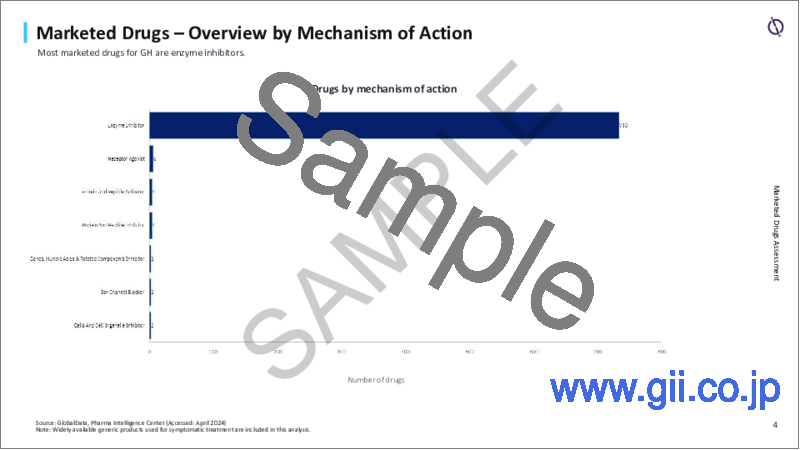
- 作用機序別概要
- 投与経路別概要
- 製品プロファイルと売上予測
第5章 価格設定と償還評価
- 年間治療費
- 価格設定と償還までの時間
第6章 パイプライン薬剤の評価
- 中期から後期段階のパイプライン薬剤
- 開発段階別概要
- 作用機序別概要
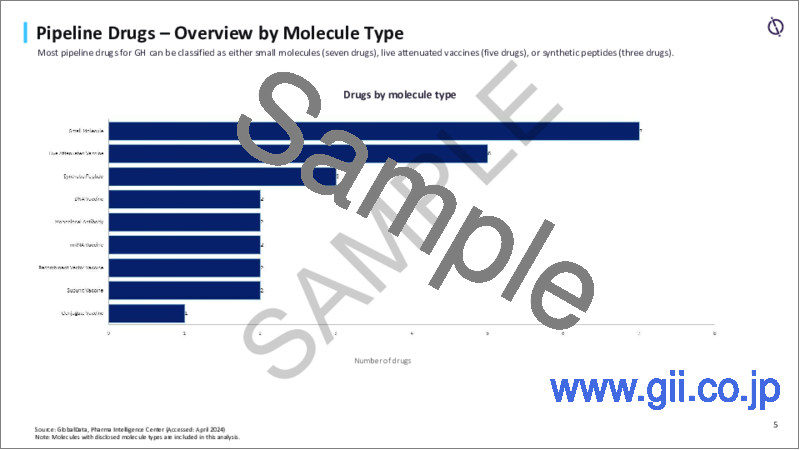
- 分子タイプ別概要
- 薬剤固有の相転移成功率(PTSR)と承認可能性(LoA)
- 治療領域と適応症別のPTSRとLoA
第7章 臨床試験の評価
- 歴史的概要
- 相別概要
- ステータス別概要
- 進行中および計画中の試験の相別概要
- 仮想コンポーネントを使用した治験
- 地理的概要
- 地域別の単一国および多国籍試験
- 上位20のスポンサーと相別内訳
- 上位20のスポンサーのステータス別内訳
- エンドポイントステータス別概要
- 人種および民族別の概要
- 登録データ
- 治験サイトの上位20か国
- 世界のトップ20サイト
- 実現可能性分析- 地理的概要
- 実現可能性分析- ベンチマークモデル
第8章 取引の情勢
第9章 商業的評価
- 主要な市場参入企業
第10章 将来の市場カタリスト
第11章 付録
目次
Product Code: GDHC154CL
This reports provides a data-driven overview of the current and future competitive landscape in genital herpes therapeutics.
- In 2024, more than 52 million diagnosed prevalent cases of HSV-2 infection are anticipated in the 16 countries covered in GlobalData's epidemiology forecast for GH.
- Nucleoside analogue antiviral drugs have been the mainstay of GH treatment for over two decades.
- The GH pipeline has a limited number of products in mid-to late-stage development, with only one product in Phase III and four products in Phase II.
- In the last 10 years, the US has been the top country for trial sites, as it hosted nearly 50% of the sites for GH clinical trials conducted globally.
- Acquisitions were the most prevalent deal type in North America, Europe, and Asia-Pacific.
Scope
GlobalData's genital herpes: Competitive Landscape combines data from the Pharma Intelligence Center with in-house analyst expertise to provide a competitive assessment of the disease marketplace.
Components of the report include -
- Disease Landscape
- Disease Overview
- Epidemiology Overview
- Treatment Overview
- Marketed Products Assessment
- Breakdown by Mechanism of Action, Route of Administration
- Product Profiles with Sales Forecast
- Pricing and Reimbursement Assessment
- Annual Therapy Cost
- Time to Pricing and Time to Reimbursement
- Pipeline Assessment
- Breakdown by Development Stage, Mechanism of Action, Molecule Type, Route of Administration
- Product Profiles with Sales Forecast
- Late-to-mid-stage Pipeline Drugs
- Phase Transition Success Rate and Likelihood of Approval
- Clinical Trials Assessment
- Breakdown of Trials by Phase, Status, Virtual Components, Sponsors, Geography, and Endpoint Status
- Enrolment Analytics, Site Analytics, Feasibility Analysis
- Deals Landscape
- Mergers, Acquisitions, and Strategic Alliances by Region
- Overview of Recent Deals
- Commercial Assessment
- Key Market Players
- Future Market Catalysts
Reasons to Buy
- Develop and design your in-licensing and out-licensing strategies through a review of pipeline products and technologies, and by identifying the companies with the most robust pipeline.
- Develop business strategies by understanding the trends shaping and driving the genital herpes market.
- Drive revenues by understanding the key trends, innovative products and technologies, and companies likely to impact the global genital herpes market in the future.
- Formulate effective sales and marketing strategies by understanding the competitive landscape and analyzing the performance of various competitors.
- Identify emerging players with potentially strong product portfolios and create effective counter-strategies to gain a competitive advantage.
- Organize your sales and marketing efforts by identifying the market categories that present the maximum opportunities for consolidations, investments, and strategic partnerships.
Table of Contents
1 Table of Contents
1 Preface
- 1.1 Contents
- 1.2 Report Scope
- 1.3 List of Tables and Figures
- 1.4 Abbreviations
2 Key Findings
3 Disease Landscape
- 3.1 Disease Overview
- 3.2 Epidemiology Overview
- 3.3 Treatment Overview
4 Marketed Drugs Assessment
- 4.1 Leading Marketed Drugs
- 4.2 Overview by Mechanism of Action
- 4.3 Overview by Molecule Type
- 4.4 Product Profiles and Sales Forecast
5 Pricing and Reimbursement Assessment
- 5.1 Annual Cost of Therapy
- 5.2 Time to Pricing and Reimbursement
6 Pipeline Drugs Assessment
- 6.1 Mid-to-late-stage Pipeline Drugs
- 6.2 Overview by Development Stage
- 6.3 Overview by Mechanism of Action
- 6.4 Overview by Molecule Type
- 6.5 Drug Specific Phase Transition Success Rate (PTSR) and Likelihood of Approval (LoA)
- 6.6 Therapy Area and Indication-specific PTSR and LoA
7 Clinical Trials Assessment
- 7.1 Historical Overview
- 7.2 Overview by Phase
- 7.3 Overview by Status
- 7.4 Overview by Phase for Ongoing and Planned Trials
- 7.5 Trials with Virtual Components
- 7.6 Overview of Trials by Geography
- 7.7 Single-Country and Multinational Trials by Region
- 7.8 Top 20 Sponsors with Breakdown by Phase
- 7.9 Top 20 Sponsors with Breakdown by Status
- 7.10 Overview by Endpoint Status
- 7.11 Overview by Race and Ethnicity
- 7.12 Enrollment Data
- 7.13 Top 20 countries for Trial Sites
- 7.14 Top 20 Sites Globally
- 7.15 Feasibility Analysis - Geographic Overview
- 7.16 Feasibility Analysis - Benchmark Models
8 Deals Landscape
- 8.1 Mergers, Acquisitions, and Strategic Alliances by Region
- 8.2 Recent Mergers, Acquisitions, and Strategic Alliances
9 Commercial Assessment
- 9.1 Key Market Players
10 Future Market Catalysts
11 Appendix
- 11.1 Methodology
- 11.2 Methodology - Sales Forecast
- 11.3 Methodology - Pricing and Reimbursement
- 11.4 Methodology - PTSR and LoA Analysis
- 11.5 About the Authors
- 11.6 Contact Us
- 11.7 Disclaimer