|
市場調査レポート
商品コード
1553390
末梢神経障害性疼痛 - 市場の洞察、疫学、市場予測:2034年Peripheral Neuropathic Pain - Market Insight, Epidemiology, and Market Forecast - 2034 |
||||||
|
|
|||||||
カスタマイズ可能
|
|||||||
| 末梢神経障害性疼痛 - 市場の洞察、疫学、市場予測:2034年 |
|
出版日: 2024年08月01日
発行: DelveInsight
ページ情報: 英文 260 Pages
納期: 1~3営業日
|
全表示
- 概要
- 図表
- 目次
主要7ヶ国における末梢神経障害性疼痛(PNP)の総市場規模は、2023年に120億米ドルとなりました。同市場は、予測期間中(2024年~2034年)に大きなCAGRで2034年までに増加すると予測されています。
末梢神経障害には、末梢神経細胞および線維の障害が含まれ、さまざまな病態によって二次的に発現します。これらの神経には、脳神経、脊髄神経根および神経節、神経幹および神経分裂、ならびに自律神経系神経が含まれます。末梢神経障害を分類するには、単発性神経障害、多巣性神経障害、多発性神経障害など、いくつかの方法が用いられます。神経障害のなかには、1本の神経にのみ障害が起こるものもあります(単神経障害)。異なる部位の2つ以上の神経に影響を及ぼす神経障害は、多発性単神経障害または多発性単神経障害と呼ばれます。多くの神経またはほとんどの神経が侵されることも多いです(多発性神経炎)。
症状にばらつきがあるため、末梢神経障害の特徴的な臨床表現型を区別することができ、それに応じて診断作業を層別化するために認識されるべきです。神経伝導検査は、表現型(軸索性か脱髄性か)と重症度を決定するために不可欠です。遺伝子検査、髄液検査、神経画像検査、神経生検などの臨床検査は、特定の臨床場面で有用です。
NSAIDsなどの治療薬は軽度の末梢神経障害症状を緩和し、ガバペンチンやプレガバリンなどの抗てんかん薬やリドカインなどの局所治療薬は神経痛を軽減することができます。アミトリプチリン、ノルトリプチリン、デュロキセチン、ベンラファキシン、デスベンラファキシンなどの抗うつ薬も、副作用の可能性はあるもの、緩和をもたらす可能性があります。スクランブラー療法、脊髄刺激療法、血漿交換、ステロイド、免疫グロブリン静注、理学療法などの治療法も、症状の管理に役立ちます。腫瘍による神経圧迫が原因の神経障害には、手術が必要な場合もあります。
当レポートでは、主要7ヶ国における末梢神経障害性疼痛市場について調査し、市場の概要とともに、疫学、患者動向、新たな治療法、2034年までの市場規模予測、および医療のアンメットニーズなどを提供しています。
目次
第1章 重要な洞察
第2章 レポートのイントロダクション
第3章 末梢神経障害性疼痛(PNP)市場概要
第4章 末梢神経障害性疼痛(PNP)のエグゼクティブサマリー
第5章 重要な出来事
第6章 疾患の背景と概要
- イントロダクション
- 神経障害性疼痛の末梢メカニズム
- 腰仙部神経根症(LSR)
- 糖尿病性末梢神経障害(DPN)
- 化学療法誘発性末梢神経障害(CIPN)
- 術後末梢神経障害性疼痛
- 外傷後末梢神経障害性疼痛
- 帯状疱疹後神経痛
- 診断
第7章 治療と管理
- 治療アルゴリズム
- 治療ガイドライン
第8章 調査手法
第9章 疫学と患者人口
- 主な調査結果
- 前提と根拠
- 700万のPNP症例総数
- 米国
- EU4ヶ国と英国
- 日本
第10章 患者動向
第11章 上市済み治療法
第12章 新たな治療法
第13章 KOLの見解
第14章 アンメットニーズ
第15章 SWOT分析
第16章 市場アクセスと償還
- 米国
- EU4ヶ国と英国
- 日本
- 末梢神経障害性疼痛の市場アクセスと償還
第17章 付録
第18章 DelveInsightのサービス内容
第19章 免責事項
第20章 DelveInsightについて
List of Tables
- Table 1: Summary of PNP Market and Epidemiology (2020-2034)
- Table 2: Grading Scales for CIPN
- Table 3: Characteristics of the Peripheral Neurotoxicity Caused by the Most Frequently Used Antineoplastic Agents
- Table 4: Guidelines for the Pharmacologic Management of Neuropathic Pain
- Table 5: Advantages and Disadvantages of Analgesics
- Table 6: Initial and Maximum Doses of Agents Used to Treat NeP Based on the Recommendations by the JSPC 2016 and IASP 2007
- Table 7: Total Cases of PNP in the 7MM, in Thousands (2020-2034)
- Table 8: Total Cases of PNP in the United States, in Thousands (2020-2034)
- Table 9: Type-specific Cases of PNP in the United States, in Thousands (2020-2034)
- Table 10: Treated Cases of PNP in the United States, in Thousands (2020-2034)
- Table 11: Total Cases of PNP in EU4 and the UK, in Thousands (2020-2034)
- Table 12: Type-specific Cases of PNP in EU4 and the UK, in Thousands (2020-2034)
- Table 13: Treated Cases of PNP in EU4 and the UK, in Thousands (2020-2034)
- Table 14: Total Cases of PNP in Japan, in Thousands (2020-2034)
- Table 15: Type-specific Cases of PNP in Japan, in Thousands (2020-2034)
- Table 16: Treated Cases of PNP in Japan, in Thousands (2020-2034)
- Table 17: Comparison of Marketed Drugs in the 7MM
- Table 18: TARLIGE (mirogabalin besilate), Clinical Trial Description, 2024
- Table 19: HORIZANT (gabapentin enacarbil), Clinical Trial Description, 2024
- Table 20: QUTENZA (capsaicin), Clinical Trial Description, 2024
- Table 21: NUCYNTA ER (tapentadol), Clinical Trial Description, 2024
- Table 22: Comparison of Emerging Drugs
- Table 23: LX9211, Clinical Trial Description, 2024
- Table 24: XEOMIN (Incobotulinumtoxin A), Clinical Trial Description, 2024
- Table 25: AP-325, Clinical Trial Description, 2024
- Table 26: Adezunap (AP707), Clinical Trial Description, 2024
- Table 27: VX-548, Clinical Trial Description, 2024
- Table 28: Primary Efficacy Outcome of VX-548
- Table 29: HALNEURON (Tetrodotoxin or TTX): Clinical Trial Description, 2024
- Table 30: SP-102, Clinical Trial Description, 2024
- Table 31: Key Market Forecast Assumption of Peripheral Neuropathic Pain in the US
- Table 32: Key Market Forecast Assumption of Peripheral Neuropathic Pain in EU4 and the UK
- Table 33: Key Market Forecast Assumption of Peripheral Neuropathic Pain in Japan
- Table 34: Total Market Size of PNP in the 7MM, in USD million (2020-2034)
- Table 35: Market Size of PNP by Therapies in the 7MM, in USD million (2020-2034)
- Table 36: Total Market Size of PNP in the United States, in USD million (2020-2034)
- Table 37: Market Size of PNP by Therapies in the United States, in USD million (2020-2034)
- Table 38: Total Market Size of PNP in EU4 and the UK, in USD million (2020-2034)
- Table 39: Market Size of PNP by Therapies in EU4 and the UK, in USD million (2020-2034)
- Table 40: Total Market Size of PNP in Japan, in USD million (2020-2034)
- Table 41: Market Size of PNP by Therapies in Japan, in USD million (2020-2034)
- Table 42: Medicare Coverage of Common Peripheral Neuropathy Medications
- Table 43: Annual Adjusted Gross Income Limit
- Table 44: Haute Autorite de Sante (HAS) Decisions for Peripheral Neuropathy Therapies
- Table 45: AIFA Assessment for Peripheral Neuropathy Therapies
- Table 46: NICE Decisions for Peripheral Neuropathy Therapies
- Table 47: Japan's Price Cut List For August 2023
List of Figures
- Figure 1: Representation of the Lumbosacral Region
- Figure 2 Clinical Presentation for Radiculopathy From Each Lumbar Nerve Root
- Figure 3: Symptoms of Lumbar Radiculopathy
- Figure 4: Patterns of Nerve Injury in Diabetic Neuropathy
- Figure 5: Symptoms of Diabetic Neuropathy
- Figure 6: Risk Factors of Diabetic Neuropathy
- Figure 7: Common Agents Provoking CIPN
- Figure 8: Clinical Presentation of CIPN
- Figure 9: Flow Chart of a Diagnostic Algorithm for the Workup of Patients With Peripheral Neuropathy
- Figure 10: The Comprehensive Algorithm for the Management of Peripheral Neuropathic Pain
- Figure 11: Pain Intensity and Analgesics Available in Japan
- Figure 12: Total Cases of PNP in the 7MM (2020-2034)
- Figure 13: Total Cases of PNP in the United States (2020-2034)
- Figure 14: Type-specific Cases of PNP in the United States (2020-2034)
- Figure 15: Treated Cases of PNP in the United States (2020-2034)
- Figure 16: Total Cases of PNP in EU4 and the UK (2020-2034)
- Figure 17: Type-specific Cases of PNP in EU4 and the UK (2020-2034)
- Figure 18: Treated Cases of PNP in EU4 and the UK (2020-2034)
- Figure 19: Total Cases of PNP in Japan (2020-2034)
- Figure 20: Type-specific Cases of PNP in Japan (2020-2034)
- Figure 21: Treated Cases of PNP in Japan (2020-2034)
- Figure 22: Total Market Size of PNP in the 7MM (2020-2034)
- Figure 23: Market Size of PNP by Therapies in the 7MM (2020-2034)
- Figure 24: Total Market Size of PNP in the United States (2020-2034)
- Figure 25: Market Size of PNP by Therapies in the United States (2020-2034)
- Figure 26: Total Market Size of PNP in EU4 and the UK (2020-2034)
- Figure 27: Market Size of PNP by Therapies in EU4 and the UK (2020-2034)
- Figure 28: Total Market Size of PNP in Japan (2020-2034)
- Figure 29: Market Size of PNP by Therapies in Japan (2020-2034)
- Figure 30: Health Technology Assessment
- Figure 31: Reimbursement Process in Germany
- Figure 32: Reimbursement Process in France
- Figure 33: Reimbursement Process in Italy
- Figure 34: Reimbursement Process in Spain
- Figure 35: Reimbursement Process in the United Kingdom
- Figure 36: Reimbursement Process in Japan
- Figure 37: ZTlido Covered Lives Overview
- Figure 38: Key Players Preference
Key Highlights:
- Peripheral neuropathic pain (PNP) results from lesions to the peripheral nervous system caused by mechanical trauma, metabolic diseases, neurotoxic chemicals, infection, or tumor invasion.
- Peripheral neuropathy has various causes, with diabetic peripheral neuropathy (DPN) being the most common subtype in the 7MM. Lumbosacral radiculopathy (LSR) is another significant contributor to peripheral neuropathy, followed by post-operative PNP, post-traumatic PNP, and chemotherapy-induced peripheral neuropathy (CIPN). The least common contributor is postherpetic neuralgia (PHN), which occurs as a complication of herpes zoster (shingles).
- In 2023, the total market size of PNP in the 7MM was ~USD 12,000 million, which is expected to increase by 2034, with a significant CAGR during the forecast period (2024-2034).
- The United States accounts for the largest market size of PNP in comparison to EU4 (Germany, Spain, Italy, France), the United Kingdom, and Japan.
- PNP is treated using diverse modalities, including anticonvulsants, tricyclic antidepressants, and SNRIs. Topical agents like capsaicin and lidocaine offer localized relief, while nonpharmacological interventions such as physical therapy and TENS are also utilized, ensuring a multifaceted approach for effective management.
- Treatment for Peripheral Neuropathy (PNP) focuses on pain management with drugs like NSAIDs, opioids, topical medications, anticonvulsants, and antidepressants. Approved drugs like QUTENZA, NUCYNTA ER, HORIZANT, ZTlido, and TARLIGE are currently available for certain patient segments.
- The entry of emerging drugs is expected to boost the PNP market significantly, potentially offering novel therapeutic options and influencing treatment dynamics.
- The development pipeline for therapies targeting peripheral neuropathy includes several drugs such as AP-325, QUTENZA, XEOMIN, VX-548, LX9211, HALNEURON, SEMDEXA, adezunap, and others.
- The growth of the PNP disease market is expected to be mainly driven by more targeted and personalized therapies and treatments addressing symptoms and underlying causes.
- Compared to all the emerging therapies, LX9211 and SEMDEXA are expected to become the market leader, having a major influence on the PNP market of the 7MM by 2034.
- Adezunap is expected to have a low uptake in the 7MM due to legal hurdles, public stigma, business constraints from being labeled high-risk, and quality control issues related to cannabidiol in emerging markets. These challenges hinder its market acceptance and manufacturing quality.
- ZTlido has gained meaningful market share in a steadily growing lidocaine patch market in recent years, primarily driven by strong payer coverage. It may face competition from generic lidocaine patch manufacturers.
DelveInsight's "Peripheral Neuropathic Pain (PNP) - Market Insights, Epidemiology, and Market Forecast - 2034" report delivers an in-depth understanding of Peripheral Neuropathic Pain (PNP), historical and forecasted epidemiology as well as the Peripheral Neuropathic Pain (PNP) market trends in the United States, EU4 (Germany, Spain, Italy, and France) and the United Kingdom, and Japan.
Peripheral Neuropathic Pain (PNP) market report provides real-world prescription pattern analysis, emerging drugs, market share of individual therapies, and historical and forecasted 7MM Peripheral Neuropathic Pain (PNP) market size from 2020 to 2034. The report also covers current Peripheral Neuropathic Pain (PNP) treatment practices/algorithms and unmet medical needs to curate the best opportunities and assess the market's underlying potential.
Geography Covered:
The United States
EU4 (Germany, France, Italy, and Spain) and the United Kingdom
Japan
Peripheral Neuropathic Pain (PNP) Understanding and Treatment Algorithm
Peripheral Neuropathic Pain (PNP) Overview, Country-Specific Treatment Guidelines, and Diagnosis
Peripheral neuropathies encompass disorders of peripheral nerve cells and fibers, manifesting secondary to a wide range of pathologies. These nerves include cranial nerves, spinal nerve roots and ganglia, nerve trunks and division, and autonomic nervous system nerves. Several methods are used to classify peripheral neuropathies, including mono-neuropathies, multifocal neuropathies, and polyneuropathies. Some forms of neuropathy involve damage to only one nerve (mononeuropathy). Neuropathy affecting two or more nerves in different areas is called multiple mononeuropathy or mononeuropathy multiplex. Many or most of the nerves are often affected (polyneuropathy).
The variability of symptoms allows distinguishing characteristic clinical phenotypes of peripheral neuropathy that should be recognized in order to stratify the diagnostic workup accordingly. Nerve conduction studies are essential to determine the phenotype (axonal versus demyelinating) and severity. Laboratory tests, including genetic testing, CSF examination, nerve imaging, and nerve biopsy, represent additional clinical tests that can be useful in specific clinical scenarios.
Further details related to country-based variations in diagnosis are provided in the report
Peripheral Neuropathic Pain (PNP) Treatment
Medications such as NSAIDs can relieve mild peripheral neuropathy symptoms, while anti-seizure drugs like gabapentin and pregabalin, as well as topical treatments like lidocaine, can reduce nerve pain. Antidepressants like amitriptyline, nortriptyline, duloxetine, venlafaxine, and desvenlafaxine may also provide relief despite potential side effects. Therapies like scrambler therapy, spinal cord stimulation, plasma exchange, steroids, IV immune globulin, and physical therapy can also help manage symptoms. Surgery may be necessary for neuropathies caused by nerve pressure from tumors.
Peripheral Neuropathic Pain (PNP) Epidemiology
The Peripheral Neuropathic Pain (PNP) epidemiology chapter in the report provides historical as well as forecasted epidemiology segmented in the 7MM covering the United States, EU4 countries (Germany, France, Italy, and Spain), the United Kingdom, and Japan from 2024 to 2034. The Peripheral Neuropathic Pain (PNP) epidemiology is segmented with detailed insights into Total Cases, Type-specific Cases, and Treated Cases of Peripheral Neuropathic Pain (PNP).
- In 2023, the United States recorded the highest incidence of PNP among the 7MM, with ~35,200,000 reported cases.
- The 7MM saw the highest number of severe cases in post-operative and post-traumatic PNP, while moderate cases predominated in PHN in terms of severity.
- Estimates indicate that in 2023, the EU4 and the UK collectively reported approximately 19.3 million cases, with Germany representing the largest share at around 35% of the total cases.
- In 2023, diabetic peripheral neuropathy (DPN) accounted for the highest number of cases in the US, comprising approximately 50% of the total cases.
Peripheral Neuropathic Pain (PNP) Drug Chapter
The drug chapter segment of the Peripheral Neuropathic Pain (PNP) report encloses a detailed analysis of Peripheral Neuropathic Pain (PNP) marketed drugs and late-stage (Phase III and Phase II) pipeline drugs. It also deep dives into the Peripheral Neuropathic Pain (PNP) pivotal clinical trial details, recent and expected market approvals, patent details, the latest news, and recent deals and collaborations.
Marketed Drugs
QUTENZA (capsaicin): Grunenthal and Averitas Pharma
QUTENZA (capsaicin) 8% topical system, a non-systemic, non-opioid pain relief delivered in the form of a patch, indicated for treating neuropathic pain associated with postherpetic neuralgia or associated with diabetic peripheral neuropathy (DPN) of the feet in adults. Capsaicin is an agonist for the transient receptor potential vanilloid 1 receptor (TRPV1), an ion channel-receptor complex expressed on nociceptive nerve fibers in the skin. QUTENZA is marketed and distributed by Averitas. Currently, it is being evaluated under a Phase III trial in post-surgical neuropathic pain. The trial is expected to be completed by October 2024, with an estimated enrollment of 408 participants.
In November 2018, Grunenthal extended its commercial footprint to the US, acquiring Averitas Pharma. Averitas Pharma will commercialize the pain patch QUTENZA for Grunenthal in the US. Grunenthal had recently acquired the remaining global rights from Acorda Therapeutics.
ZTLIDO (lidocaine): Scilex Pharmaceuticals
ZTLIDO is a topical lidocaine system (1.8%) approved for relieving pain associated with postherpetic neuralgia. ZTLIDO is designed as a lighter, thinner product with improved adhesion relative to LIDODERM (lidocaine patch 5%) while providing a bioequivalent delivery of lidocaine in an efficient drug delivery system. Lidocaine is a local amide anesthetic; it blocks sodium ion channels required for initiating and conducting neuronal impulses.
Patients are advised to apply ZTLIDO to intact skin to cover the most painful area and to apply the prescribed number of topical systems (maximum of three) only once for up to 12 h within 24 h (12 h on and 12 h off). Smaller areas of treatment are recommended in patients who are debilitated or have impaired elimination. Achieve this by cutting ZTLIDO with scissors into a smaller size before removing the release liner.
Emerging Drugs
SEMDEXA (SP-102): Scilex Holding Company
SP-102 is a preservative-free, surfactant-free, and particulate-free, novel epidural steroid injection (ESI) formulation of 10 mg dexamethasone sodium phosphate in a viscous gel solution for subacute lumbosacral radicular pain (Sciatica). Its extended local effect provides durable pain relief and significant improvement in functioning from a single injection with rapid onset.
Recently, the company has completed a pivotal Phase III (NCT03372161) Corticosteroid Lumbar Epidural Analgesia ("CLEAR") trial, which was designed to evaluate the safety and efficacy of SP-102 in Lumbosacral Radiculopathy ( or Sciatica).
In November 2023, Scilex Holding Company announced a positive Type C meeting with the US FDA. The company has reached an agreement with the FDA on the path forward to advance the clinical development of SP-102 and on the requirements to file a New Drug Application.
Adezunap (AP707): Apurano Pharmaceuticals
Apurano Pharmaceuticals' investigational drug AP707, featuring the THC-focused active ingredient adezunap, has received EMA approval for DISCOVER approval studies. Utilizing the patented PuranoTec manufacturing process, cannabis flower undergoes processing to create an aqueous nanodispersion of cannabinoids, primarily ?-9-THC. Administered as a sublingual mouth spray, this dispersion allows for rapid and efficient absorption through the oral mucosa, facilitated by a water-soluble shell termed the smart coating. These SmartLipids, encapsulating lipophilic cannabinoids, remain stable in aqueous environments and can directly enter the bloodstream due to their small particle size (<250 nm).
Currently, two Phase III clinical trials, NCT06072573 and NCT06071975, to evaluate the efficacy and tolerability of AP707 in patients with chronic pain due to diabetic polyneuropathy are recruiting participants. Additionally, two other Phase III trials, NCT06071936 and NCT06071988, are recruiting participants to evaluate the efficacy and tolerability of AP707 in patients with chronic pain due to traumatic or post-operative peripheral neuropathy.
Peripheral Neuropathic Pain (PNP) Market Outlook
- Key players, such as Scilex Holding Company, Grunenthal and Averitas Pharma, Eli Lilly and Company, Mitsubishi Tanabe Pharma Corporation, AstraZeneca, Asahi Kasei Pharma, Veloxis Pharmaceuticals, and others, are evaluating their lead candidates in different stages of clinical development, respectively. They aim to investigate their products for the treatment of Peripheral Neuropathic Pain (PNP).
- Compared to all the emerging therapies, LX9211 and SEMDEXA are expected to become the market leader, having a major influence on the PNP market of the 7MM by 2034.
- In 2023, opioids led the US market with ~USD 2,400 million in revenue, closely followed by NSAIDs at ~USD 2,300 million.
Adezunap is expected to have a low uptake in the 7MM due to legal hurdles, public stigma, business constraints from being labeled high-risk, and quality control issues related to cannabidiol in emerging markets. These challenges hinder its market acceptance and manufacturing quality.
Among EU4 and the UK, the highest revenue was generated by NSAIDs, ~USD 600 million in 2023.
Peripheral Neuropathic Pain (PNP) Drugs Uptake
This section focuses on the uptake rate of potential drugs expected to be launched in the market during 2024-2034, which depends on the competitive landscape, safety, and efficacy data along with order of entry. It is important to understand that the key players evaluating their novel therapies in the pivotal and confirmatory trials should remain vigilant when selecting appropriate comparators to stand the greatest chance of a positive opinion from regulatory bodies, leading to approval, smooth launch, and rapid uptake.
Further detailed analysis of emerging therapies drug uptake in the report...
Peripheral Neuropathic Pain (PNP) Activities
The report provides insights into different therapeutic candidates in Phase III and Phase II stages. It also analyzes key players involved in developing targeted therapeutics.
Pipeline Development Activities
The report covers information on collaborations, acquisitions and mergers, licensing, and patent details for Peripheral Neuropathic Pain (PNP) emerging therapies.
KOL Views
To keep up with the real-world scenario in current and emerging market trends, we take opinions from Key Industry leaders working in the domain through primary research to fill the data gaps and validate our secondary research. Industry Experts were contacted for insights on the evolving treatment landscape, patient reliance on conventional therapies, patient therapy switching acceptability, and drug uptake along with challenges related to accessibility.
DelveInsight's analysts connected with 40+ KOLs to gather insights; however, interviews were conducted with 25+ KOLs in the 7MM. Centers such as Keck Hospital of USC, Harvard Medical School, Robert Koch Institute, Rouen University Hospital, University Hospital Munster, etc., were contacted. Their opinion helps understand and validate current and emerging treatment patterns of Peripheral Neuropathic Pain (PNP). This will support the clients in potential upcoming novel treatments by identifying the overall scenario of the market and the unmet needs.
Qualitative Analysis
We perform Qualitative and market Intelligence analysis using various approaches, such as SWOT analysis and Conjoint Analysis. In the SWOT analysis, strengths, weaknesses, opportunities, and threats in terms of gaps in disease diagnosis, patient awareness, physician acceptability, competitive landscape, cost-effectiveness, and geographical accessibility of therapies are provided.
Conjoint Analysis analyzes multiple approved and emerging therapies based on relevant attributes such as safety, efficacy, frequency of administration, route of administration, and order of entry. Scoring is given based on these parameters to analyze the effectiveness of therapy.
In efficacy, the trial's primary and secondary outcome measures are evaluated; for instance, Change in Average Daily Pain Score (ADPS), one of the most important primary outcome measures Change in API on 11-point Numerical Rating Scale (NRS) and ADPS.
Further, the therapies' safety is evaluated wherein the acceptability, tolerability, and adverse events are majorly observed, and it sets a clear understanding of the side effects posed by the drug in the trials. In addition, the scoring is also based on the probability of success and the addressable patient pool for each therapy. According to these parameters, the final weightage score and the ranking of the emerging therapies are decided.
Market Access and Reimbursement
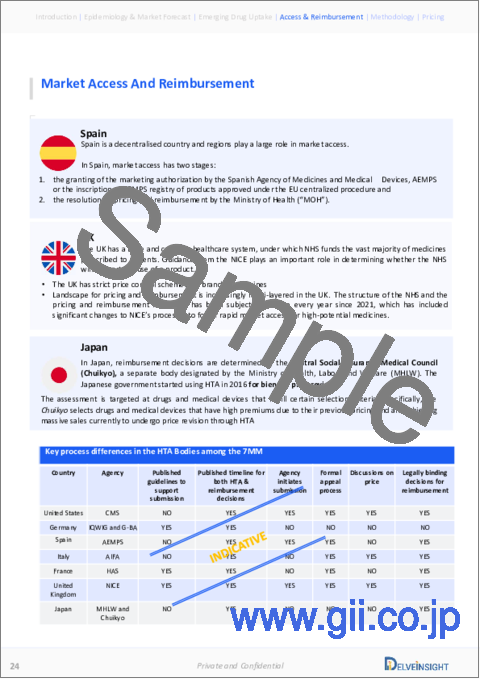
The report further provides detailed insights on the country-wise accessibility and reimbursement scenarios, cost-effectiveness scenario of currently used therapies, programs making accessibility easier and out-of-pocket costs more affordable, insights on patients insured under federal or state government prescription drug programs, etc.
Scope of the Report:
- The report covers a segment of key events, an executive summary, descriptive overview of Peripheral Neuropathic Pain (PNP), explaining its causes, signs and symptoms, pathogenesis, and currently available therapies.
- Comprehensive insight has been provided into the epidemiology segments and forecasts, the future growth potential of diagnosis rate, and disease progression, along with country-specific treatment guidelines.
- Additionally, an all-inclusive account of both the current and emerging therapies, along with the elaborative profiles of late-stage and prominent therapies, will have an impact on the current treatment landscape.
- A detailed review of the Peripheral Neuropathic Pain (PNP) market, historical and forecasted market size, market share by therapies, detailed assumptions, and rationale behind our approach is included in the report, covering the 7MM drug outreach.
- The report provides an edge while developing business strategies by understanding trends through SWOT analysis and expert insights/KOL views, patient journey, and treatment preferences that help in shaping and driving the 7MM Peripheral Neuropathic Pain (PNP) market.
Peripheral Neuropathic Pain (PNP) Report Insights
- Patient Population
- Therapeutic Approaches
- Peripheral Neuropathic Pain (PNP) Pipeline Analysis
- Peripheral Neuropathic Pain (PNP) Market Size and Trends
- Existing and future Market Opportunity
Peripheral Neuropathic Pain (PNP) Report Key Strengths
- Eleven Years Forecast
- The 7MM Coverage
- Peripheral Neuropathic Pain (PNP) Epidemiology Segmentation
- Inclusion of country-specific treatment guidelines
- KOL's feedback on approved and emerging therapies
- Key Cross Competition
- Conjoint analysis
- Drugs Uptake and Key Market Forecast Assumptions
Peripheral Neuropathic Pain (PNP) Report Assessment
- Current Treatment Practices
- Unmet Needs
- Pipeline Product Profiles
- Market Attractiveness
- Qualitative Analysis (SWOT and Conjoint Analysis)
FAQs:
- What is the growth rate of the 7MM Peripheral Neuropathic Pain (PNP) treatment market?
- What was the Peripheral Neuropathic Pain (PNP) total market size, the market size by therapies, market share (%) distribution in 2020, and what would it look like in 2034? What are the contributing factors/key catalysts for this growth?
- Is there any unexplored patient setting that can open the window for growth in the future?
- What are the pricing variations among different geographies for approved and off-label therapies?
- How would the market drivers, barriers, and future opportunities affect the market dynamics and subsequent analysis of the associated trends? Although multiple expert guidelines recommend testing for targetable mutations before therapy initiation, why do barriers to testing remain high?
- What are the current and emerging options for the treatment of Peripheral Neuropathic Pain (PNP)?
- How many companies are developing therapies for the treatment of Peripheral Neuropathic Pain (PNP)?
- What are the recent novel therapies, targets, mechanisms of action, and technologies developed to overcome the limitations of existing therapies?
- Patient/physician acceptability in terms of preferred treatment options as per real-world scenarios?
- What are the country-specific accessibility issues of expensive, recently approved therapies?
Reasons to buy:
- The report will help in developing business strategies by understanding the latest trends and changing treatment dynamics driving the Peripheral Neuropathic Pain (PNP) Market.
- Insights on patient burden/disease prevalence, evolution in diagnosis, and factors contributing to the change in the epidemiology of the disease during the forecast years
- Understand the existing market opportunities in varying geographies and the growth potential over the coming years.
- Distribution of historical and current patient share based on real-world prescription data along with reported sales of approved products in the US, EU4 (Germany, France, Italy, and Spain), the United Kingdom, and Japan.
- Identifying strong upcoming players in the market will help devise strategies to help get ahead of competitors.
- Detailed analysis and ranking of class-wise potential current and emerging therapies under the conjoint analysis section to provide visibility around leading classes.
- Highlights of access and reimbursement policies of approved therapies, barriers to accessibility of expensive off-label therapies, and patient assistance programs.
- To understand Key Opinion Leaders' perspectives around the accessibility, acceptability, and compliance-related challenges of existing treatment to overcome barriers in the future.
- Detailed insights on the unmet needs of the existing market so that the upcoming players can strengthen their development and launch strategy.
Table of Contents
1. Key Insights
2. Report Introduction
3. Peripheral Neuropathic Pain (PNP) Market Overview at a Glance
- 3.1. Market Share (%) Distribution of PNP by Therapies in the 7MM in 2020
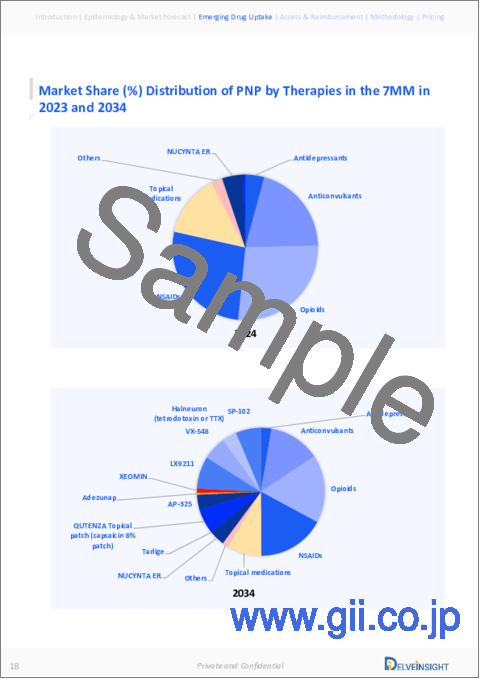
- 3.2. Market Share (%) Distribution of PNP by Therapies in the 7MM in 2034
4. Executive Summary of Peripheral Neuropathic Pain (PNP)
5. Key Events
6. Disease Background and Overview
- 6.1. Introduction
- 6.2. Peripheral Mechanisms of Neuropathic Pain
- 6.3. Lumbosacral Radiculopathy (LSR)
- 6.3.1. Clinical Presentation
- 6.3.2. Symptoms
- 6.3.3. Pathophysiology and Etiology
- 6.4. Diabetic Peripheral Neuropathy (DPN)
- 6.4.1. Classification of Diabetic Neuropathies
- 6.4.2. Signs and Symptoms of Diabetic Neuropathy
- 6.4.3. Risk Factors of Diabetic Neuropathy
- 6.4.4. Pathogenesis of Diabetic Neuropathy
- 6.5. Chemotherapy Induced Peripheral Neuropathy (CIPN)
- 6.5.1. Clinical Features
- 6.5.2. Symptoms of CIPN
- 6.5.3. Grading of CIPN
- 6.5.4. Pathophysiology of CIPN
- 6.5.5. CIPN: Clinical Presentation
- 6.5.6. Genetics of CIPN
- 6.6. Post-operative Peripheral Neuropathic Pain
- 6.6.1. Definition
- 6.6.2. Pathophysiology
- 6.6.3. Risk Factors of CPSP
- 6.7. Post-traumatic Peripheral Neuropathic Pain
- 6.8. Postherpetic Neuralgia
- 6.8.1. Etiology
- 6.8.2. Pathophysiology
- 6.9. Diagnosis
- 6.9.1. Diagnostic Algorithm
7. Treatment and Management
- 7.1. Treatment Algorithm
- 7.2. Treatment Guidelines
- 7.2.1. NICE Recommendations
- 7.2.2. French Guidelines for Neuropathic Pain
- 7.2.3. Japan Guidelines for the Pharmacologic Management of Neuropathic Pain
8. Methodology
9. Epidemiology and Patient Population
- 9.1. Key Findings
- 9.2. Assumptions and Rationale
- 9.3. Total Cases of PNP in the 7MM
- 9.4. The United States
- 9.4.1. Total Cases of PNP in the United States
- 9.4.2. Type-specific Cases of PNP in the United States
- 9.4.3. Treated Cases of PNP in the United States
- 9.5. EU4 and the UK
- 9.5.1. Total Cases of PNP in EU4 and the UK
- 9.5.2. Type-specific Cases of PNP in EU4 and the UK
- 9.5.3. Treated Cases of PNP in EU4 and the UK
- 9.6. Japan
- 9.6.1. Total Cases of PNP in Japan
- 9.6.2. Type-specific Cases of PNP in Japan
- 9.6.3. Treated Cases of PNP in Japan
10. Patient Journey
11. Marketed Therapies
- 11.1. Key Cross of Marketed Therapies
- 11.1.1. TARLIGE (mirogabalin besilate): Daiichi Sankyo
- 11.1.2. Product Description
- 11.1.3. Regulatory Milestones
- 11.1.4. Other Developmental Activities
- 11.1.5. Clinical Development
- 11.1.6. Safety and Efficacy
- 11.2. ZTlido (lidocaine): Scilex Pharmaceuticals
- 11.2.1. Product Description
- 11.2.2. Regulatory Milestones
- 11.2.3. Other Developmental Activities
- 11.2.4. Safety and Efficacy
- 11.3. HORIZANT (gabapentin enacarbil): Azurity Pharmaceuticals
- 11.3.1. Product Description
- 11.3.2. Regulatory Milestones
- 11.3.3. Other Developmental Activities
- 11.3.4. Clinical Development
- 11.3.5. Safety and Efficacy
- 11.4. QUTENZA (capsaicin): Grunenthal and Averitas Pharma
- 11.4.1. Product Description
- 11.4.2. Regulatory Milestones
- 11.4.3. Other Developmental Activities
- 11.4.4. Clinical Development
- 11.4.5. Safety and Efficacy
- 11.5. NUCYNTA ER (tapentadol): Grunenthal and Collegium Pharmaceutical
- 11.5.1. Product Description
- 11.5.2. Regulatory Milestones
- 11.5.3. Other Developmental Activities
- 11.5.4. Clinical Development
- 11.5.5. Safety and Efficacy
12. Emerging Therapies
- 12.1. Key Cross of Emerging Therapies
- 12.2. LX9211: Lexicon Pharmaceuticals
- 12.2.1. Product Description
- 12.2.2. Other Developmental Activities
- 12.2.3. Clinical Developmental
- 12.2.4. Safety and Efficacy
- 12.2.5. Analyst Views
- 12.3. XEOMIN (IncobotulinumtoxinA): Merz Therapeutics
- 12.3.1. Product Description
- 12.3.2. Clinical Developmental
- 12.3.3. Analyst Views
- 12.3.4. AP-325: Algiax Pharmaceuticals
- 12.3.5. Product Description
- 12.3.6. Other Developmental Activities
- 12.3.7. Clinical Development
- 12.3.8. Analyst Views
- 12.4. Adezunap (AP707): Apurano Pharmaceuticals
- 12.4.1. Product Description
- 12.4.2. Other Developmental Activities
- 12.4.3. Clinical Development
- 12.4.4. Analyst Views
- 12.5. Suzetrigine (VX-548): Vertex Pharmaceuticals
- 12.5.1. Product Description
- 12.6. Other Developmental Activities
- 12.7. Clinical Development
- 12.8. Safety and Efficacy
- 12.9. Analyst Views
- 12.10. HALNEURON (Tetrodotoxin or TTX): WEX Pharmaceuticals
- 12.10.1. Product Description
- 12.10.2. Other Developmental Activities
- 12.10.3. Clinical Development
- 12.10.4. Safety and Efficacy
- 12.10.5. Analyst Views
- 12.11. SEMDEXA (SP-102): Scilex Holding Company
- 12.11.1. Product Description
- 12.11.2. Other Developmental Activities
- 12.11.3. Clinical Development
- 12.11.4. Safety and Efficacy
- 12.11.5. Analyst Views
- 12.12. Peripheral Neuropathic Pain (PNP) - Seven Major Market Analysis
- 12.12.1. Key Findings
- 12.12.2. Market Outlook
- 12.12.3. Conjoint Analysis
- 12.12.4. Key Market Forecast Assumptions
- 12.12.5. Total Market Size of PNP in the 7MM
- 12.12.6. Market Size of PNP by Therapies in the 7MM
- 12.12.7. United States Market Size
- 12.12.7.1. Total Market Size of PNP in the United States
- 12.12.7.2. Market Size of PNP by Therapies in the United States
- 12.12.8. EU4 and the UK Market Size
- 12.12.8.1. Total Market Size of PNP in EU4 and the UK
- 12.12.8.2. Market Size of PNP by Therapies in EU4 and the UK
- 12.12.9. Japan Market Size
- 12.12.9.1. Total Market size of PNP in Japan
- 12.12.9.2. Market Size of PNP by Therapies in Japan
13. KOL Views
14. Unmet Needs
15. SWOT Analysis
16. Market Access and Reimbursement
- 16.1. The United States
- 16.1.1. Centre for Medicare & Medicaid Services (CMS)
- 16.2. EU4 and the UK
- 16.2.1. Germany
- 16.2.2. France
- 16.2.3. Italy
- 16.2.4. Spain
- 16.2.5. United Kingdom
- 16.3. Japan
- 16.3.1. MHLW
- 16.4. Market Access and Reimbursement of Peripheral Neuropathic Pain
17. Appendix
- 17.1. Acronyms and Abbreviations
- 17.2. Report Methodology
- 17.3. Bibliography