
|
市場調査レポート
商品コード
1636288
軍用空輸市場:タイプ別、用途別、地域別、2025-2033年Military Airlift Market Report by Type (Rotary-Wing Aircraft, Fixed-Wing Aircraft), Application (Transporting Military Personnel, Transporting Military Supplies, Humanitarian Relief Operations, and Others), and Region 2025-2033 |
||||||
|
|
|||||||
カスタマイズ可能
|
|||||||
| 軍用空輸市場:タイプ別、用途別、地域別、2025-2033年 |
|
出版日: 2025年01月10日
発行: IMARC
ページ情報: 英文 128 Pages
納期: 2~3営業日
|

全表示
- 概要
- 図表
- 目次
軍用空輸市場の世界市場規模は2024年に51億7,310万米ドルに達しました。今後、IMARC Groupは、市場は2033年までに78億8,860万米ドルに達し、2025年から2033年にかけて4.56%の成長率(CAGR)を示すと予測しています。国境を越えた活動の増加、空中戦の強化への注目の高まり、政府機関による投資の増加は、市場を牽引する主な要因のいくつかです。
軍用空輸とは、遠隔地への人員、装備品、車両、武器、医療・食料物資の空輸を指します。輸送機、貨物機、ヘリコプターなど、さまざまな航空機を使用し、戦闘地域や悪天候といった厳しい条件下でも大量の貨物を運べるよう設計・装備されています。一般に、より短く舗装された滑走路からの着陸や離陸が可能な、より小型で機敏な航空機に依存しながら、戦術的な目的のために実行されます。傷病兵を戦闘地域から施設に避難させるのに役立ちます。また、地上の脅威にさらされる機会を最小限に抑えることで、兵力保護を強化することにも役立っています。
軍用空輸市場動向:
国境を越えた紛争や領土紛争の増加により、軍隊の間で軍用空輸の需要が高まっていることは、世界市場の成長を後押しする重要な要因の一つです。さらに、レーダー妨害システムやミサイルの脅威を撃退する対策など、脅威から保護するための高度な電子戦システムを軍用空輸機に統合することが、市場の成長を後押ししています。さらに、戦争中や敵の攻撃中に空中戦を強化することに重点が置かれるようになり、戦略的・戦術的な空輸作戦が重視されるようになっていることも、市場にプラスの影響を与えています。これとは別に、多くの国の統治機関は、新世代の技術と機能を備えた既存の軍用空輸機のアップグレードに投資しています。これは、優れた敏捷性、高速性、操縦性、悪天候下での高い生存率を提供する先進的な軍用空輸機の発売と相まって、市場の成長を強化しています。さらに、世界中で事業を展開する大手企業は、ブリーフィング、プログラム開発、将来の要件に関する軍用空輸会議を地域社会に提供しています。彼らはまた、市場での地位を拡大するために、協力や合併・買収(M&A)にも注力しています。このほか、自然災害や気候変動の増加により、暴風、竜巻、ハリケーン、地滑り、洪水などの悪天候に見舞われやすい地域での軍用空輸機の利用が増加していることも、市場の成長に寄与しています。さらに、防衛・軍事産業における資金の増加が、市場に明るい見通しをもたらしています。
本レポートで扱う主な質問
- 世界の軍用空輸市場はこれまでどのように推移してきたのか?
- 世界の軍用空輸市場における促進要因、抑制要因、機会は何か?
- 各促進要因、抑制要因、機会が世界の軍用空輸市場に与える影響は?
- 主要な地域市場とは?
- 最も魅力的な軍用空輸市場はどの国か?
- タイプ別の市場内訳は?
- 軍用空輸市場で最も魅力的なタイプは?
- 用途別の市場内訳は?
- 軍用空輸市場で最も魅力的な用途は?
- 世界の軍用空輸市場の競合構造は?
- 世界の軍用空輸市場における主要プレイヤー/企業は?
目次
第1章 序文
第2章 調査範囲と調査手法
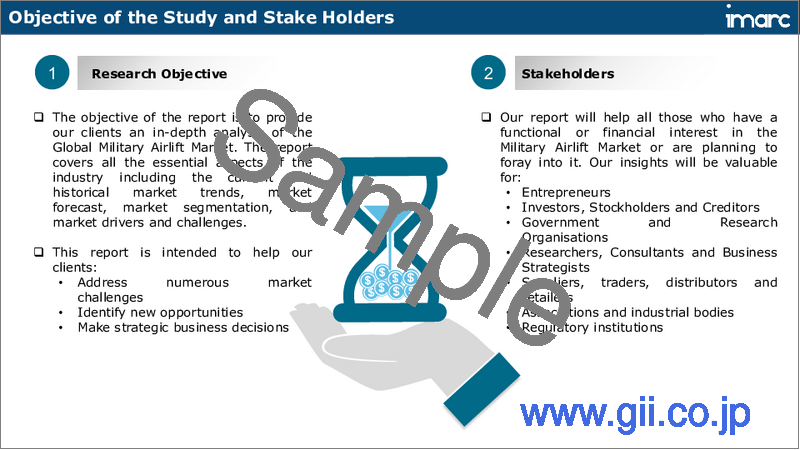
- 調査の目的
- ステークホルダー
- データソース
- 一次情報
- 二次情報
- 市場推定
- ボトムアップアプローチ
- トップダウンアプローチ
- 調査手法
第3章 エグゼクティブサマリー
第4章 イントロダクション
- 概要
- 主要業界動向
第5章 世界の軍用空輸市場
- 市場概要
- 市場実績
- COVID-19の影響
- 市場予測
第6章 市場内訳:タイプ別
- 回転翼機
- 市場動向
- 市場予測
- 固定翼機
- 市場動向
- 市場予測
第7章 市場内訳:用途別
- 軍人輸送
- 市場動向
- 市場予測
- 軍事物資輸送
- 市場動向
- 市場予測
- 人道支援活動
- 市場動向
- 市場予測
- その他
- 市場動向
- 市場予測
第8章 市場内訳:地域別
- 北米
- 米国
- カナダ
- アジア太平洋地域
- 中国
- 日本
- インド
- 韓国
- オーストラリア
- インドネシア
- その他
- 欧州
- ドイツ
- フランス
- 英国
- イタリア
- スペイン
- ロシア
- その他
- ラテンアメリカ
- ブラジル
- メキシコ
- その他
- 中東・アフリカ
第9章 促進要因・抑制要因・機会
- 概要
- 促進要因
- 抑制要因
- 機会
第10章 バリューチェーン分析
第11章 ポーターのファイブフォース分析
- 概要
- 買い手の交渉力
- 供給企業の交渉力
- 競合の程度
- 新規参入業者の脅威
- 代替品の脅威
第12章 価格分析
第13章 競合情勢
- 市場構造
- 主要企業
- 主要企業のプロファイル
- Airbus SE
- Embraer S.A.
- Kawasaki Heavy Industries Ltd.
- Lockheed Martin Corporation
- The Boeing Company
List of Figures
- Figure 1: Global: Military Airlift Market: Major Drivers and Challenges
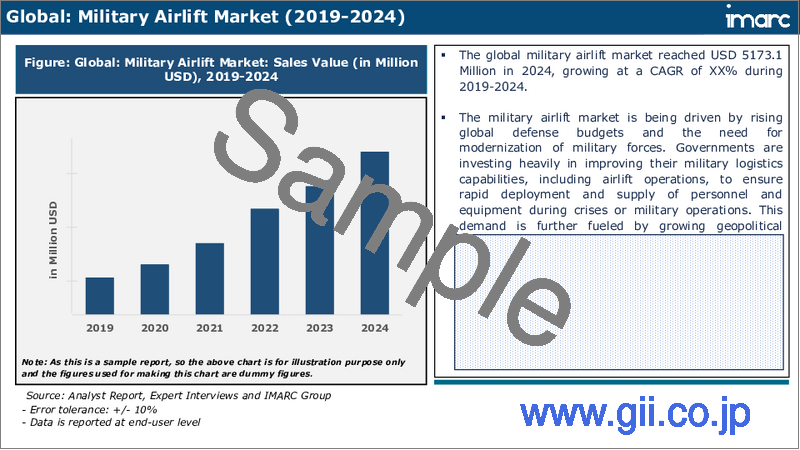
- Figure 2: Global: Military Airlift Market: Sales Value (in Million USD), 2019-2024
- Figure 3: Global: Military Airlift Market Forecast: Sales Value (in Million USD), 2025-2033
- Figure 4: Global: Military Airlift Market: Breakup by Type (in %), 2024
- Figure 5: Global: Military Airlift Market: Breakup by Application (in %), 2024
- Figure 6: Global: Military Airlift Market: Breakup by Region (in %), 2024
- Figure 7: Global: Military Airlift (Rotary-Wing Aircraft) Market: Sales Value (in Million USD), 2019 & 2024
- Figure 8: Global: Military Airlift (Rotary-Wing Aircraft) Market Forecast: Sales Value (in Million USD), 2025-2033
- Figure 9: Global: Military Airlift (Fixed-Wing Aircraft) Market: Sales Value (in Million USD), 2019 & 2024
- Figure 10: Global: Military Airlift (Fixed-Wing Aircraft) Market Forecast: Sales Value (in Million USD), 2025-2033
- Figure 11: Global: Military Airlift (Transporting Military Personnel) Market: Sales Value (in Million USD), 2019 & 2024
- Figure 12: Global: Military Airlift (Transporting Military Personnel) Market Forecast: Sales Value (in Million USD), 2025-2033
- Figure 13: Global: Military Airlift (Transporting Military Supplies) Market: Sales Value (in Million USD), 2019 & 2024
- Figure 14: Global: Military Airlift (Transporting Military Supplies) Market Forecast: Sales Value (in Million USD), 2025-2033
- Figure 15: Global: Military Airlift (Humanitarian Relief Operations) Market: Sales Value (in Million USD), 2019 & 2024
- Figure 16: Global: Military Airlift (Humanitarian Relief Operations) Market Forecast: Sales Value (in Million USD), 2025-2033
- Figure 17: Global: Military Airlift (Other Applications) Market: Sales Value (in Million USD), 2019 & 2024
- Figure 18: Global: Military Airlift (Other Applications) Market Forecast: Sales Value (in Million USD), 2025-2033
- Figure 19: North America: Military Airlift Market: Sales Value (in Million USD), 2019 & 2024
- Figure 20: North America: Military Airlift Market Forecast: Sales Value (in Million USD), 2025-2033
- Figure 21: United States: Military Airlift Market: Sales Value (in Million USD), 2019 & 2024
- Figure 22: United States: Military Airlift Market Forecast: Sales Value (in Million USD), 2025-2033
- Figure 23: Canada: Military Airlift Market: Sales Value (in Million USD), 2019 & 2024
- Figure 24: Canada: Military Airlift Market Forecast: Sales Value (in Million USD), 2025-2033
- Figure 25: Asia-Pacific: Military Airlift Market: Sales Value (in Million USD), 2019 & 2024
- Figure 26: Asia-Pacific: Military Airlift Market Forecast: Sales Value (in Million USD), 2025-2033
- Figure 27: China: Military Airlift Market: Sales Value (in Million USD), 2019 & 2024
- Figure 28: China: Military Airlift Market Forecast: Sales Value (in Million USD), 2025-2033
- Figure 29: Japan: Military Airlift Market: Sales Value (in Million USD), 2019 & 2024
- Figure 30: Japan: Military Airlift Market Forecast: Sales Value (in Million USD), 2025-2033
- Figure 31: India: Military Airlift Market: Sales Value (in Million USD), 2019 & 2024
- Figure 32: India: Military Airlift Market Forecast: Sales Value (in Million USD), 2025-2033
- Figure 33: South Korea: Military Airlift Market: Sales Value (in Million USD), 2019 & 2024
- Figure 34: South Korea: Military Airlift Market Forecast: Sales Value (in Million USD), 2025-2033
- Figure 35: Australia: Military Airlift Market: Sales Value (in Million USD), 2019 & 2024
- Figure 36: Australia: Military Airlift Market Forecast: Sales Value (in Million USD), 2025-2033
- Figure 37: Indonesia: Military Airlift Market: Sales Value (in Million USD), 2019 & 2024
- Figure 38: Indonesia: Military Airlift Market Forecast: Sales Value (in Million USD), 2025-2033
- Figure 39: Others: Military Airlift Market: Sales Value (in Million USD), 2019 & 2024
- Figure 40: Others: Military Airlift Market Forecast: Sales Value (in Million USD), 2025-2033
- Figure 41: Europe: Military Airlift Market: Sales Value (in Million USD), 2019 & 2024
- Figure 42: Europe: Military Airlift Market Forecast: Sales Value (in Million USD), 2025-2033
- Figure 43: Germany: Military Airlift Market: Sales Value (in Million USD), 2019 & 2024
- Figure 44: Germany: Military Airlift Market Forecast: Sales Value (in Million USD), 2025-2033
- Figure 45: France: Military Airlift Market: Sales Value (in Million USD), 2019 & 2024
- Figure 46: France: Military Airlift Market Forecast: Sales Value (in Million USD), 2025-2033
- Figure 47: United Kingdom: Military Airlift Market: Sales Value (in Million USD), 2019 & 2024
- Figure 48: United Kingdom: Military Airlift Market Forecast: Sales Value (in Million USD), 2025-2033
- Figure 49: Italy: Military Airlift Market: Sales Value (in Million USD), 2019 & 2024
- Figure 50: Italy: Military Airlift Market Forecast: Sales Value (in Million USD), 2025-2033
- Figure 51: Spain: Military Airlift Market: Sales Value (in Million USD), 2019 & 2024
- Figure 52: Spain: Military Airlift Market Forecast: Sales Value (in Million USD), 2025-2033
- Figure 53: Russia: Military Airlift Market: Sales Value (in Million USD), 2019 & 2024
- Figure 54: Russia: Military Airlift Market Forecast: Sales Value (in Million USD), 2025-2033
- Figure 55: Others: Military Airlift Market: Sales Value (in Million USD), 2019 & 2024
- Figure 56: Others: Military Airlift Market Forecast: Sales Value (in Million USD), 2025-2033
- Figure 57: Latin America: Military Airlift Market: Sales Value (in Million USD), 2019 & 2024
- Figure 58: Latin America: Military Airlift Market Forecast: Sales Value (in Million USD), 2025-2033
- Figure 59: Brazil: Military Airlift Market: Sales Value (in Million USD), 2019 & 2024
- Figure 60: Brazil: Military Airlift Market Forecast: Sales Value (in Million USD), 2025-2033
- Figure 61: Mexico: Military Airlift Market: Sales Value (in Million USD), 2019 & 2024
- Figure 62: Mexico: Military Airlift Market Forecast: Sales Value (in Million USD), 2025-2033
- Figure 63: Others: Military Airlift Market: Sales Value (in Million USD), 2019 & 2024
- Figure 64: Others: Military Airlift Market Forecast: Sales Value (in Million USD), 2025-2033
- Figure 65: Middle East and Africa: Military Airlift Market: Sales Value (in Million USD), 2019 & 2024
- Figure 66: Middle East and Africa: Military Airlift Market: Breakup by Country (in %), 2024
- Figure 67: Middle East and Africa: Military Airlift Market Forecast: Sales Value (in Million USD), 2025-2033
- Figure 68: Global: Military Airlift Industry: Drivers, Restraints, and Opportunities
- Figure 69: Global: Military Airlift Industry: Value Chain Analysis
- Figure 70: Global: Military Airlift Industry: Porter's Five Forces Analysis
List of Tables
- Table 1: Global: Military Airlift Market: Key Industry Highlights, 2024 & 2033
- Table 2: Global: Military Airlift Market Forecast: Breakup by Type (in Million USD), 2025-2033
- Table 3: Global: Military Airlift Market Forecast: Breakup by Application (in Million USD), 2025-2033
- Table 4: Global: Military Airlift Market Forecast: Breakup by Region (in Million USD), 2025-2033
- Table 5: Global: Military Airlift Market: Competitive Structure
- Table 6: Global: Military Airlift Market: Key Players
The global military airlift market size reached USD 5,173.1 Million in 2024. Looking forward, IMARC Group expects the market to reach USD 7,888.6 Million by 2033, exhibiting a growth rate (CAGR) of 4.56% during 2025-2033. The increasing cross border activities, rising focus on enhancing aerial combat, and the growing investment by governing agencies represent some of the key factors driving the market.
Military airlift refers to the transportation of personnel, equipment, vehicles, weapons, and medical and food supplies by air to remote locations. It involves the use of various aircraft, such as transport planes, cargo planes, and helicopters, which are designed and equipped to carry a large amount of cargo during challenging conditions like combat zones or adverse weather conditions. It generally runs for tactical purposes while relying on smaller and more agile aircraft that are more capable of landing or taking off from shorter and paved runways. It helps evacuate wounded or injured soldiers from combat zones to facilities. It also assists in enhancing force protection by minimizing exposure to ground threats.
Military Airlift Market Trends:
The increasing demand for military airlift among armed forces on account of rising incidences of cross border and territorial conflicts represents one of the key factors bolstering the market growth around the world. Moreover, the integration of advanced electronic warfare systems to protect against threats, such as radar jamming systems and countermeasures to defeat missile threats in military airlift aircraft, is favoring the growth of the market. In addition, the growing focus on enhancing aerial combat during the war and enemy attacks and the increasing emphasis on strategic and tactical airlift operations is influencing the market positively. Apart from this, governing agencies of numerous countries are investing in upgrading their existing military airlift aircraft with newer generation technologies and features. This, coupled with the launch of advanced military airlift aircraft that offer superior agility, higher speed, maneuverability, and a high survival rate in adverse weather conditions, is strengthening the growth of the market. Furthermore, leading players operating worldwide are offering military airlift conferences for the community concerning briefings, program developments, and future requirements. They are also focusing on collaboration and mergers and acquisitions (M&A) to expand their market position. Besides this, the increasing usage of military airlifts in areas prone to windstorms, tornadoes, hurricanes, landslides, flooding, and other severe weather conditions due to the rising events of natural disasters and climate changes is contributing to the market growth. Additionally, the growing funds in the defense and military industries are creating a positive outlook for the market.
Key Market Segmentation:
Type Insights:
- Rotary-Wing Aircraft
- Fixed-Wing Aircraft
Application Insights:
- Transporting Military Personnel
- Transporting Military Supplies
- Humanitarian Relief Operations
- Others
Regional Insights:
- North America
- United States
- Canada
- Asia-Pacific
- China
- Japan
- India
- South Korea
- Australia
- Indonesia
- Others
- Europe
- Germany
- France
- United Kingdom
- Italy
- Spain
- Russia
- Others
- Latin America
- Brazil
- Mexico
- Others
- Middle East and Africa
- The report has also provided a comprehensive analysis of all the major regional markets, which include North America (the United States and Canada); Asia Pacific (China, Japan, India, South Korea, Australia, Indonesia, and others); Europe (Germany, France, the United Kingdom, Italy, Spain, Russia, and others); Latin America (Brazil, Mexico, and others); and the Middle East and Africa. According to the report, Asia Pacific (China, Japan, India, South Korea, Australia, Indonesia, and others) was the largest market for military airlift. Some of the factors driving the Asia Pacific military airlift market included marketing strategies, government initiatives, rising mergers and acquisitions (M&A), etc.
Competitive Landscape:
- The report has also provided a comprehensive analysis of the competitive landscape in the global military airlift market. Competitive analysis such as market structure, market share by key players, player positioning, top winning strategies, competitive dashboard, and company evaluation quadrant has been covered in the report. Also, detailed profiles of all major companies have been provided. Some of the companies covered include Airbus SE, Embraer S.A., Kawasaki Heavy Industries Ltd., Lockheed Martin Corporation, The Boeing Company, etc. Kindly note that this only represents a partial list of companies, and the complete list has been provided in the report.
Key Questions Answered in This Report:
- How has the global military airlift market performed so far, and how will it perform in the coming years?
- What are the drivers, restraints, and opportunities in the global military airlift market?
- What is the impact of each driver, restraint, and opportunity on the global military airlift market?
- What are the key regional markets?
- Which countries represent the most attractive military airlift market?
- What is the breakup of the market based on the type?
- Which is the most attractive type in the military airlift market?
- What is the breakup of the market based on the application?
- Which is the most attractive application in the military airlift market?
- What is the competitive structure of the global military airlift market?
- Who are the key players/companies in the global military airlift market?
Table of Contents
1 Preface
2 Scope and Methodology
- 2.1 Objectives of the Study
- 2.2 Stakeholders
- 2.3 Data Sources
- 2.3.1 Primary Sources
- 2.3.2 Secondary Sources
- 2.4 Market Estimation
- 2.4.1 Bottom-Up Approach
- 2.4.2 Top-Down Approach
- 2.5 Forecasting Methodology
3 Executive Summary
4 Introduction
- 4.1 Overview
- 4.2 Key Industry Trends
5 Global Military Airlift Market
- 5.1 Market Overview
- 5.2 Market Performance
- 5.3 Impact of COVID-19
- 5.4 Market Forecast
6 Market Breakup by Type
- 6.1 Rotary-Wing Aircraft
- 6.1.1 Market Trends
- 6.1.2 Market Forecast
- 6.2 Fixed-Wing Aircraft
- 6.2.1 Market Trends
- 6.2.2 Market Forecast
7 Market Breakup by Application
- 7.1 Transporting Military Personnel
- 7.1.1 Market Trends
- 7.1.2 Market Forecast
- 7.2 Transporting Military Supplies
- 7.2.1 Market Trends
- 7.2.2 Market Forecast
- 7.3 Humanitarian Relief Operations
- 7.3.1 Market Trends
- 7.3.2 Market Forecast
- 7.4 Others
- 7.4.1 Market Trends
- 7.4.2 Market Forecast
8 Market Breakup by Region
- 8.1 North America
- 8.1.1 United States
- 8.1.1.1 Market Trends
- 8.1.1.2 Market Forecast
- 8.1.2 Canada
- 8.1.2.1 Market Trends
- 8.1.2.2 Market Forecast
- 8.1.1 United States
- 8.2 Asia-Pacific
- 8.2.1 China
- 8.2.1.1 Market Trends
- 8.2.1.2 Market Forecast
- 8.2.2 Japan
- 8.2.2.1 Market Trends
- 8.2.2.2 Market Forecast
- 8.2.3 India
- 8.2.3.1 Market Trends
- 8.2.3.2 Market Forecast
- 8.2.4 South Korea
- 8.2.4.1 Market Trends
- 8.2.4.2 Market Forecast
- 8.2.5 Australia
- 8.2.5.1 Market Trends
- 8.2.5.2 Market Forecast
- 8.2.6 Indonesia
- 8.2.6.1 Market Trends
- 8.2.6.2 Market Forecast
- 8.2.7 Others
- 8.2.7.1 Market Trends
- 8.2.7.2 Market Forecast
- 8.2.1 China
- 8.3 Europe
- 8.3.1 Germany
- 8.3.1.1 Market Trends
- 8.3.1.2 Market Forecast
- 8.3.2 France
- 8.3.2.1 Market Trends
- 8.3.2.2 Market Forecast
- 8.3.3 United Kingdom
- 8.3.3.1 Market Trends
- 8.3.3.2 Market Forecast
- 8.3.4 Italy
- 8.3.4.1 Market Trends
- 8.3.4.2 Market Forecast
- 8.3.5 Spain
- 8.3.5.1 Market Trends
- 8.3.5.2 Market Forecast
- 8.3.6 Russia
- 8.3.6.1 Market Trends
- 8.3.6.2 Market Forecast
- 8.3.7 Others
- 8.3.7.1 Market Trends
- 8.3.7.2 Market Forecast
- 8.3.1 Germany
- 8.4 Latin America
- 8.4.1 Brazil
- 8.4.1.1 Market Trends
- 8.4.1.2 Market Forecast
- 8.4.2 Mexico
- 8.4.2.1 Market Trends
- 8.4.2.2 Market Forecast
- 8.4.3 Others
- 8.4.3.1 Market Trends
- 8.4.3.2 Market Forecast
- 8.4.1 Brazil
- 8.5 Middle East and Africa
- 8.5.1 Market Trends
- 8.5.2 Market Breakup by Country
- 8.5.3 Market Forecast
9 Drivers, Restraints, and Opportunities
- 9.1 Overview
- 9.2 Drivers
- 9.3 Restraints
- 9.4 Opportunities
10 Value Chain Analysis
11 Porters Five Forces Analysis
- 11.1 Overview
- 11.2 Bargaining Power of Buyers
- 11.3 Bargaining Power of Suppliers
- 11.4 Degree of Competition
- 11.5 Threat of New Entrants
- 11.6 Threat of Substitutes
12 Price Analysis
13 Competitive Landscape
- 13.1 Market Structure
- 13.2 Key Players
- 13.3 Profiles of Key Players
- 13.3.1 Airbus SE
- 13.3.1.1 Company Overview
- 13.3.1.2 Product Portfolio
- 13.3.1.3 Financials
- 13.3.1.4 SWOT Analysis
- 13.3.2 Embraer S.A.
- 13.3.2.1 Company Overview
- 13.3.2.2 Product Portfolio
- 13.3.2.3 Financials
- 13.3.3 Kawasaki Heavy Industries Ltd.
- 13.3.3.1 Company Overview
- 13.3.3.2 Product Portfolio
- 13.3.3.3 Financials
- 13.3.3.4 SWOT Analysis
- 13.3.4 Lockheed Martin Corporation
- 13.3.4.1 Company Overview
- 13.3.4.2 Product Portfolio
- 13.3.4.3 Financials
- 13.3.4.4 SWOT Analysis
- 13.3.5 The Boeing Company
- 13.3.5.1 Company Overview
- 13.3.5.2 Product Portfolio
- 13.3.5.3 Financials
- 13.3.5.4 SWOT Analysis
- 13.3.1 Airbus SE
Kindly, note that this only represents a partial list of companies, and the complete list has been provided in the report.