
|
市場調査レポート
商品コード
1684821
ブロックチェーン技術の市場機会、成長促進要因、産業動向分析、2025年~2034年予測Blockchain Technology Market Opportunity, Growth Drivers, Industry Trend Analysis, and Forecast 2025 - 2034 |
||||||
カスタマイズ可能
|
|||||||
| ブロックチェーン技術の市場機会、成長促進要因、産業動向分析、2025年~2034年予測 |
|
出版日: 2025年01月16日
発行: Global Market Insights Inc.
ページ情報: 英文 160 Pages
納期: 2~3営業日
|
全表示
- 概要
- 目次
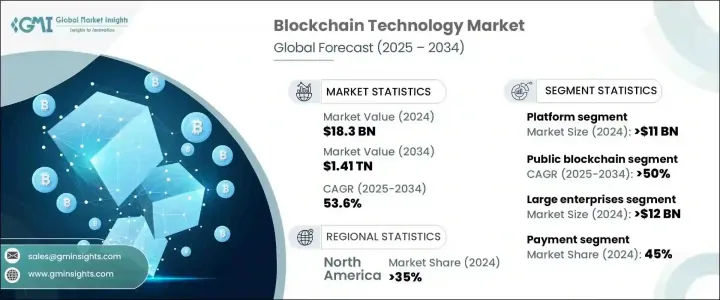
世界のブロックチェーン技術市場は、2024年に183億米ドルと評価され、2025~2034年にかけてCAGR 53.6%で拡大すると予測されています。
この急成長の背景には、分散型ネットワークの利用拡大とパブリック・ブロックチェーンソリューションの進歩があります。企業はデータ取引の効率性、安全性、透明性を高めるためにブロックチェーンを統合しています。暗号取引プラットフォームに対する需要の高まりは、より多くの投資家がデジタル資産の安全でシームレスな取引方法を求めているため、市場の拡大にさらに拍車をかけています。産業は、アルゴリズムベースの取引ツールやリアルタイムの市場洞察などのイノベーションによって進化し続けています。
ブロックチェーンの導入が進むにつれ、金融サービス、サプライチェーン管理、デジタルID認証の導入が広がっています。企業はブロックチェーンを活用して業務の合理化、クロスボーダー取引の改善、規制遵守の強化を図っています。この技術は、セキュリティを維持しながらプロセスの最適化を目指す企業にとって不可欠な要素になりつつあります。企業のエコシステムにおけるブロックチェーンの導入が増加していることは、現代のビジネスインフラにおけるブロックチェーンの重要性を浮き彫りにしています。
| 市場範囲 | |
|---|---|
| 開始年 | 2024年 |
| 予測年 | 2025~2034年 |
| 開始金額 | 183億米ドル |
| 予測金額 | 1兆4,100億米ドル |
| CAGR | 53.6% |
ブロックチェーン技術市場は、コンポーネント別にプラットフォームとサービスに区分されます。プラットフォームセグメントは2024年に110億米ドル以上を生み出し、分散型アプリケーションの開発にとって引き続き重要です。これらのプラットフォームは、企業用途に合わせた許可制ネットワークとプログラム可能なスマートコントラクトを記載しています。金融や物流セグメントの企業は、取引の安全性とプロセスの効率性を確保するためにブロックチェーンプラットフォームに依存しています。サービスセグメントは、コンサルティング、実装、マネージドサービスのニーズによって高い成長を遂げています。組織は、規制基準を満たしながらブロックチェーンを既存システムと統合するソリューションを求めています。サービスプロバイダーは、企業のブロックチェーンネットワークの最適化を支援する上で重要な役割を果たしています。
同市場は技術別にパブリック・ブロックチェーン、プライベート・ブロックチェーン、ハイブリッドブロックチェーンに分類されます。パブリック・ブロックチェーンは、透明性と信頼性がオープンアクセスアプリケーションでの採用を促進するため、2025~2034年にかけてCAGRが50%を超えると予想されています。プライベート・ブロックチェーンは、安全で許可されたデータ共有ネットワークを求める企業の間で支持を集めています。これらのシステムは、医療や不動産など、データセキュリティが優先される産業で採用が進んでいます。ハイブリッドブロックチェーンモデルは、パブリックシステムとプライベートシステムの両方の要素を兼ね備えており、企業は外部取引の透明性を維持しながら情報共有をコントロールすることができます。
組織規模に基づき、市場は大企業と中小企業に分けられます。大企業は2024年に120億米ドル以上を占め、金融、物流、製造のカスタムアプリケーションにブロックチェーンを活用しています。これらの企業はブロックチェーンを利用してセキュリティを強化し、運用コストを削減し、ワークフローを合理化しています。この技術は、サプライチェーンの追跡や金融取引にコスト効率の高いボーダレスなソリューションを記載しています。中小企業も、従来の業務に代わる効率的で透明性の高い選択肢を提供するブロックチェーンの恩恵を受けています。
ブロックチェーン市場は用途別に決済、サプライチェーン管理、スマートコントラクト、ID管理、ガバナンス、リスク、コンプライアンスに区分されます。決済セグメントは2024年に市場シェアの約45%を占め、ブロックチェーンが仲介者を排除し、取引効率を向上させています。サプライチェーン管理では、企業がブロックチェーンを利用して透明性を高め、不正リスクを低減するため、導入が増加しています。スマートコントラクトは取引を自動化し、手作業の必要性を減らすことで契約締結に革命をもたらしています。ID確認管理ソリューションは、安全なデータ保存と検証のためにブロックチェーンを活用し、企業や政府はデータのプライバシーとコンプライアンスを確保するためにブロックチェーンを統合しています。
北米は2024年に35%以上のシェアを獲得し、米国を筆頭に世界のブロックチェーン技術市場をリードしました。米国の金融セクターは、国境を越えた取引、契約管理、デジタル資産取引にブロックチェーンを統合し続けています。小売や物流を含むあらゆる産業の企業が、トレーサビリティ、セキュリティ、業務効率を高めるためにブロックチェーンを活用しています。金融機関と技術企業の連携が進むことで、ブロックチェーンの普及が促進され、北米は同市場における支配的な勢力として位置付けられています。
目次
第1章 調査手法と調査範囲
- 調査デザイン
- 調査アプローチ
- データ収集方法
- 基本推定と計算
- 基準年の算出
- 市場推定の主要動向
- 予測モデル
- 一次調査と検証
- 一次情報
- データマイニングソース
- 市場スコープと定義
第2章 エグゼクティブサマリー
第3章 産業洞察
- エコシステム分析
- サプライヤーの状況
- 技術プロバイダー
- ソフトウェア開発企業
- サービスプロバイダー
- エンドユーザー
- 利益率分析
- 技術とイノベーションの展望
- 特許分析
- ブロックチェーン技術統計(2024年)
- 世界のブロックチェーンウォレット利用者総数
- ブロックチェーン利用人口の普及率
- 銀行業務におけるブロックチェーンのコスト効率への影響
- 規制状況
- 影響要因
- 促進要因
- 安全で透明性の高い取引のためのブロックチェーン採用の増加
- 分散型金融(DeFi)ソリューションに対する需要の高まり
- 様々な産業におけるスマートコントラクトへの関心の高まり
- サプライチェーン管理におけるブロックチェーンの応用拡大
- 政府や企業によるブロックチェーン技術への投資の加速
- 産業の潜在的リスク・課題
- 大量の取引処理における課題
- パブリックとプライベートのブロックチェーンネットワーク間の相互運用性の懸念
- 促進要因
- 成長可能性分析
- ポーター分析
- PESTEL分析
第4章 競合情勢
- イントロダクション
- 企業シェア分析
- 競合のポジショニングマトリックス
- 戦略展望マトリックス
第5章 市場推定・予測:コンポーネント別、2021~2034年
- 主要動向
- プラットフォーム
- BaaS(Blockchain-as-a-Service)
- スマートコントラクトプラットフォーム
- ブロックチェーン開発プラットフォーム
- その他
- サービス
- コンサルティング&インテグレーションサービス
- 保守サポートサービス
- トレーニング・教育サービス
第6章 市場推定・予測:技術別、2021~2034年
- 主要動向
- パブリック・ブロックチェーン
- プライベート・ブロックチェーン
- ハイブリッドブロックチェーン
第7章 市場推定・予測:組織規模別、2021~2034年
- 主要動向
- 中小企業
- 大企業
第8章 市場推定・予測:用途別、2021~2034年
- 主要動向
- 決済
- サプライチェーン管理
- スマートコントラクト
- ID管理
- ガバナンス、リスク、コンプライアンス
- その他
第9章 市場推定・予測:最終用途別、2021~2034年
- 主要動向
- BFSI
- IT・通信
- 医療
- 小売・eコマース
- 政府機関
- エネルギー&公益事業
- メディア&エンターテインメント
- 運輸・物流
- その他
第10章 市場推定・予測:地域別、2021~2034年
- 主要動向
- 北米
- 米国
- カナダ
- 欧州
- 英国
- ドイツ
- フランス
- イタリア
- スペイン
- ロシア
- 北欧
- アジア太平洋
- 中国
- インド
- 日本
- オーストラリア
- 韓国
- 東南アジア
- ラテンアメリカ
- ブラジル
- メキシコ
- アルゼンチン
- 中東・アフリカ
- アラブ首長国連邦
- 南アフリカ
- サウジアラビア
第11章 企業プロファイル
- Algorand
- Amazon Web Services(AWS)
- Binance
- Bitfury
- Blockstream
- Cardano
- Chainalysis
- Coinbase
- ConsenSys
- Digital Asset Holdings
- Filecoin
- Hedera Hashgraph
- Hyperledger
- IBM
- Microsoft
- Oracle
- R3
- Ripple
- Stellar Development Foundation
- VeChain
The Global Blockchain Technology Market was valued at USD 18.3 billion in 2024 and is projected to expand at a CAGR of 53.6% from 2025 to 2034. This rapid growth is driven by the increasing use of decentralized networks and advancements in public blockchain solutions. Businesses are integrating blockchain to enhance efficiency, security, and transparency in data transactions. The rising demand for crypto trading platforms is further fueling market expansion as more investors seek secure and seamless ways to trade digital assets. The industry continues to evolve with innovations such as algorithm-based trading tools and real-time market insights.
As blockchain adoption grows, financial services, supply chain management, and digital identity verification are seeing widespread implementation. Companies are leveraging blockchain to streamline operations, improve cross-border transactions, and enhance regulatory compliance. The technology is becoming an essential component for enterprises aiming to optimize processes while maintaining security. The increasing deployment of blockchain in enterprise ecosystems highlights its significance in modern business infrastructure.
| Market Scope | |
|---|---|
| Start Year | 2024 |
| Forecast Year | 2025-2034 |
| Start Value | $18.3 Billion |
| Forecast Value | $1.41 Trillion |
| CAGR | 53.6% |
The blockchain technology market is segmented by component into platform and service. The platform segment generated over USD 11 billion in 2024 and remains crucial for the development of decentralized applications. These platforms offer permissioned networks and programmable smart contracts tailored for enterprise use. Businesses in finance and logistics rely on blockchain platforms to ensure transaction security and process efficiency. The services segment is experiencing high growth, driven by the need for consulting, implementation, and managed services. Organizations are seeking solutions to integrate blockchain with existing systems while meeting regulatory standards. Service providers play a key role in helping businesses optimize their blockchain networks.
The market is categorized by technology into public, private, and hybrid blockchains. Public blockchains are expected to witness a CAGR of over 50% from 2025 to 2034, as transparency and trust drive their adoption in open-access applications. Private blockchains are gaining traction among enterprises looking for secure and permissioned data-sharing networks. These systems are being increasingly adopted in industries such as healthcare and real estate, where data security is a priority. Hybrid blockchain models combine elements of both public and private systems, allowing businesses to control information sharing while maintaining transparency in external transactions.
Based on organization size, the market is divided into large enterprises and SME. Large enterprises accounted for over USD 12 billion in 2024, leveraging blockchain for custom applications in finance, logistics, and manufacturing. These businesses use blockchain to enhance security, reduce operational costs, and streamline workflows. The technology provides cost-effective, borderless solutions for supply chain tracking and financial transactions. SMEs are also benefiting from blockchain, as it offers efficient and transparent alternatives to traditional business operations.
The blockchain market is segmented by application into payments, supply chain management, smart contracts, identity management, governance, risk, and compliance. The payments segment held approximately 45% of the market share in 2024, with blockchain eliminating intermediaries and improving transaction efficiency. Supply chain management is seeing increased adoption as companies use blockchain to enhance transparency and reduce fraud risks. Smart contracts are revolutionizing contract execution by automating transactions and reducing the need for manual processes. Identity management solutions are leveraging blockchain for secure data storage and verification, while businesses and governments integrate blockchain to ensure data privacy and compliance.
North America led the global blockchain technology market with over 35% share in 2024, with the US at the forefront. The US financial sector continues to integrate blockchain into cross-border transactions, contract management, and digital asset trading. Companies across industries, including retail and logistics, are utilizing blockchain to enhance traceability, security, and operational efficiency. The increasing collaboration between financial institutions and technology firms is driving widespread blockchain adoption, positioning North America as a dominant force in the market.
Table of Contents
Chapter 1 Methodology & Scope
- 1.1 Research design
- 1.1.1 Research approach
- 1.1.2 Data collection methods
- 1.2 Base estimates & calculations
- 1.2.1 Base year calculation
- 1.2.2 Key trends for market estimation
- 1.3 Forecast model
- 1.4 Primary research and validation
- 1.4.1 Primary sources
- 1.4.2 Data mining sources
- 1.5 Market scope & definition
Chapter 2 Executive Summary
- 2.1 Industry 3600 synopsis, 2021 - 2034
Chapter 3 Industry Insights
- 3.1 Industry ecosystem analysis
- 3.2 Supplier landscape
- 3.2.1 Technology providers
- 3.2.2 Software developers
- 3.2.3 Service providers
- 3.2.4 End users
- 3.3 Profit margin analysis
- 3.4 Technology & innovation landscape
- 3.5 Patent analysis
- 3.6 Blockchain technology statistics, 2024
- 3.6.1 Total worldwide blockchain wallet users
- 3.6.2 Adoption rate of population using blockchain
- 3.6.3 Cost efficiency impact of blockchain in banking
- 3.7 Regulatory landscape
- 3.8 Impact forces
- 3.8.1 Growth drivers
- 3.8.1.1 Increasing adoption of blockchain for secure and transparent transactions
- 3.8.1.2 Rising demand for decentralized finance (DeFi) solutions
- 3.8.1.3 Growing interest in smart contracts across various industries
- 3.8.1.4 Expanding applications of blockchain in supply chain management
- 3.8.1.5 Accelerated investment in blockchain technology from governments and enterprises
- 3.8.2 Industry pitfalls & challenges
- 3.8.2.1 Challenges in processing large volume of transactions
- 3.8.2.2 Interoperability concern between public and private blockchain networks
- 3.8.1 Growth drivers
- 3.9 Growth potential analysis
- 3.10 Porter’s analysis
- 3.11 PESTEL analysis
Chapter 4 Competitive Landscape, 2024
- 4.1 Introduction
- 4.2 Company market share analysis
- 4.3 Competitive positioning matrix
- 4.4 Strategic outlook matrix
Chapter 5 Market Estimates & Forecast, By Component, 2021 - 2034 ($Bn)
- 5.1 Key trends
- 5.2 Platform
- 5.2.1 Blockchain-as-a-Service (BaaS)
- 5.2.2 Smart contract platform
- 5.2.3 Blockchain development platform
- 5.2.4 Others
- 5.3 Service
- 5.3.1 Consulting & integration service
- 5.3.2 Maintenance & support service
- 5.3.3 Training & education service
Chapter 6 Market Estimates & Forecast, By Technology, 2021 - 2034 ($Bn)
- 6.1 Key trends
- 6.2 Public blockchain
- 6.3 Private blockchain
- 6.4 Hybrid blockchain
Chapter 7 Market Estimates & Forecast, By Organization Size, 2021 - 2034 ($Bn)
- 7.1 Key trends
- 7.2 SME
- 7.3 Large enterprises
Chapter 8 Market Estimates & Forecast, By Application, 2021 - 2034 ($Bn)
- 8.1 Key trends
- 8.2 Payments
- 8.3 Supply chain management
- 8.4 Smart contracts
- 8.5 Identity management
- 8.6 Governance, risk, and compliance management
- 8.7 Others
Chapter 9 Market Estimates & Forecast, By End Use, 2021 - 2034 ($Bn)
- 9.1 Key trends
- 9.2 BFSI
- 9.3 IT & telecommunications
- 9.4 Healthcare
- 9.5 Retail & E-commerce
- 9.6 Government
- 9.7 Energy & utilities
- 9.8 Media & entertainment
- 9.9 Transportation & logistics
- 9.10 Others
Chapter 10 Market Estimates & Forecast, By Region, 2021 - 2034 ($Bn, Units)
- 10.1 Key trends
- 10.2 North America
- 10.2.1 U.S.
- 10.2.2 Canada
- 10.3 Europe
- 10.3.1 UK
- 10.3.2 Germany
- 10.3.3 France
- 10.3.4 Italy
- 10.3.5 Spain
- 10.3.6 Russia
- 10.3.7 Nordics
- 10.4 Asia Pacific
- 10.4.1 China
- 10.4.2 India
- 10.4.3 Japan
- 10.4.4 Australia
- 10.4.5 South Korea
- 10.4.6 Southeast Asia
- 10.5 Latin America
- 10.5.1 Brazil
- 10.5.2 Mexico
- 10.5.3 Argentina
- 10.6 MEA
- 10.6.1 UAE
- 10.6.2 South Africa
- 10.6.3 Saudi Arabia
Chapter 11 Company Profiles
- 11.1 Algorand
- 11.2 Amazon Web Services (AWS)
- 11.3 Binance
- 11.4 Bitfury
- 11.5 Blockstream
- 11.6 Cardano
- 11.7 Chainalysis
- 11.8 Coinbase
- 11.9 ConsenSys
- 11.10 Digital Asset Holdings
- 11.11 Filecoin
- 11.12 Hedera Hashgraph
- 11.13 Hyperledger
- 11.14 IBM
- 11.15 Microsoft
- 11.16 Oracle
- 11.17 R3
- 11.18 Ripple
- 11.19 Stellar Development Foundation
- 11.20 VeChain